Toby the Tenor

    • About me

  • Hollywood and Opera

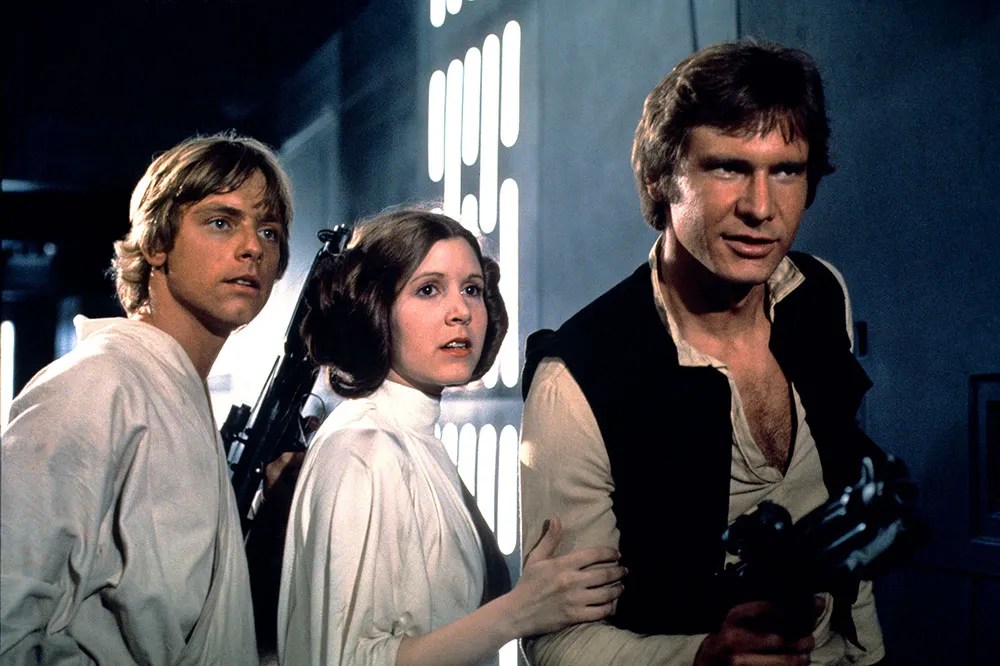
    Tamino, Pamina and Papageno in Star Wars

    Hollywood owes more to opera than it would ever admit. At cinema’s beginnings, the pioneers were more interested in developing the new technologies and selling the hardware than they were in building a library of what we would now call content. 

    Thomas Edison had the Black Maria Studio that he charged with finding uses for his new invention, the Kinetoscope. The studio developed celluloid loops containing thirty second motion picture entertainment to be partnered with phonographic recordings. When he showcased his new invention in 1893, many of Edison’s Kinetoscope movies showcased popular vaudeville acts. 

    In France, the Lumière brothers gave the first commercial screening of their Cinématographe in 1895 for which they filmed actuality films such as Workers Leaving The Lumière Factory. They also included a staged mini-comedy called L’Arroseur Arrosé. For its naturalism and simplicity it’s worth a look on YouTube. The Cinématographe was an instant hit and made the Lumières rich overnight. 

    In the beginning, people were drawn to the novelty of the invention. It wasn’t long before the novelty wore off and the pioneers had to find new material to keep people buying tickets. An echo of the gold rush rang around inventors in both the United States and Europe with the result that the new technology developed fast. 

    Soon Edison remarked “With each succeeding month new possibilities are brought into view. I believe that in coming years by my own work and that of Dickson, Muybridge, Marié (all worked in his studio) and others who will doubtless enter the field, that grand opera can be given at the Metropolitan Opera House at New York without any material change from the original, and with artists and musicians long since dead.”

    He imagined that opera could be presented with the visuals being projected onto a screen and the sound being captured phonographically and that somehow this would be as satisfying for the Metropolitan audience as the real thing. At the end of the C19th, opera was thought to be the highest form of theatrical entertainment and its stars were as famous in their time as film stars are today. 

    In the frenzy to capture material that may be of interest to ticket buyers, the new cinematographers set about filming operas. The static nature of the staging worked well with the fixed nature of the tripod cameras being used to capture the images. In 1900, Clément Maurice, a protégé of the Lumière brothers, exhibited film footage of Victor Maurel singing arias from Don Giovanni and Falstaff as well as Emile Cossira performing an aria from Roméo et Juliette at the Paris Exhibition. 

    In 1901, Robert W. Paul’s film “Scrooge, or Marley’s Ghost” was notable for inter-titles – card inserts on the film providing narration and dialogue. 

    Inter-titles paved the way for longer scenes and in 1907 British Gaumont released Gounod’s opera, Faust, in full. There was still no recorded sound for these films and any music would have to be provided live by an improvising pianist in order to synchronise. 

    In 1904, the Metropolitan Opera’s production of Parsifal was filmed by Edwin S. Porter, another Edison employee. At the time, Parsifal was still a global hot ticket, having only been performed at Bayreuth to that point. Anyone who had seen Parsifal at Bayreuth, talked about it with a religious zeal and cognoscenti everywhere who had not seen it were eager to do so. To film and present it made good business sense. 

    Wagner’s widow, Cosima, tried to prevent the filming of Parsifal but Marlen Merry acquired the rights and Porter went ahead anyway. Edison had been experimenting with ways to combine silent film with recorded music. Porter used Edison’s Kinetophone for his Parsifal of which Opera Quarterly’s Solveig Olsen wrote, “a primitive, synchronized sound-mix device, but this machine does not represent the end of the era of silent film, since it had a short life with no great success.”

    After the Great War, Enrico Caruso, the biggest global star of the day, was cast in two silent films, My Cousin (1918) and The Spendid Romance (1919).

    In 1926, Robert Weine created a film of Richard Strauss and Hugo von Hofmannsthal’s opera, Der Rosenkavalier, originally premiered in 1911. Hofmannsthal wrote new scenes for the screenplay and Strauss arranged the film score for orchestra alone, adding new music. The footage added scenes shot in the countryside, lending a context of pure rural Austria versus the moral decay of urban Vienna embodied by Baron Ochs. 

    Watching it, we see how the two mediums of opera and film bonded to create what we now think of as melodrama. The exaggerated stagy make-up, lingering moody shots of female protagonists and static scenes in which dialogue is implied but the actors, like marionettes, are mute while inter-titles tell us what’s going on. Interestingly, the Octavian is played by a young male actor as opposed to the role being taken by a female playing a pubescent young man in the opera. 

    Der Rosenkavalier is a fascinating document of how music came to be the life-blood of film, imbuing it with drama, intimacy and scope. A decade later, Max Reinhardt lured the Viennese prodigy, opera composer Erich Korngold, over to Hollywood to arrange Felix Mendelssohn’s incidental music for his film adaption of A Midsummer Night’s Dream, recently a success on stage at the Salzburg Festival. The Warner Brothers assigned every in-house star to the project and it was a hit. Korngold was taken on by the studio, going on to write many dynamic scores for the swashbucklers starring Errol Flynn, the box office staples of the time. With Captain Blood, Robin Hood, The Private Lives of Elizabeth and Essex, The Sea Hawk and The Sea Wolf Korngold established himself as indispensible for guaranteeing success at the box office. 

    Soon, all the musical talent was being drawn away from the opera houses of Europe and over to Hollywood where the studios were fast becoming global brands. They were attracted by the glamour and the financial rewards promised by what was fast becoming mass-produced opera, namely film. 

    The link between opera and film stretched well into the C20th. Sergio Leone said of his trilogy of A Fistful of Dollars, For A Few Dollars More and The Good, The Bad and the Ugly that they were filmed to be “operas in which the arias are sung by the eyes”. Leone’s school friend from their youth in Rome who had gone on to be a composer, Ennio Morricone, provided the film score. 

    In the ‘70s, perhaps the most intriguing blend of operatic dramaturgy and Hollywood technology hit the big screen: George Lucas launched his hugely successful series of films, starting with Star Wars. The film was a blatant adaption of Mozart’s Die Zauberflöte (The Magic Flute). Lucas himself termed his new film “a space opera”.
    10th Sep 2024

  • What does the conductor do? Part 2

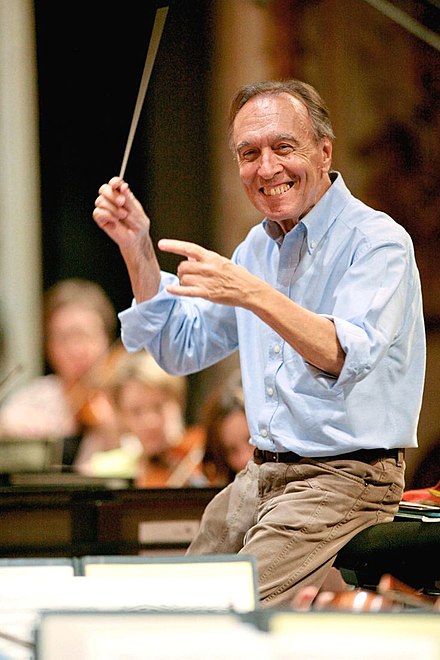
    Claudio Abbado

    On the podium, the conductor is responsible for all the decisions made during the rehearsals regarding shaping, tempo, balance, silences. Unilateral decisions by players on the give and pull of phrasing or space for taking a breath can lead to surprises which in turn can lead to a loss of ensemble, or togetherness. The conductor’s job is to get the best from the musicians while realising his or her ideas for how a piece of music should sound and be shaped.

    As Sir Charles MacKerras once said: “The whole art… is to will the interpretation he wants and that the players submit willingly to it.”

    Ensemble

    The most important role of the conductor is to keep the orchestra playing together. Detailed preparation of the score and clarity in their conducting technique are vital to achieve good ensemble. An organised rehearsal process enables the orchestral players to feel comfortable with the music. Identifying challenging passages of the music and repeating them until the players feel confident is part of the process. 

    The last point seems obvious but I am occasionally surprised when a conductor runs out of time in a rehearsal and passages that need repeating are left to a wing and a prayer for the performance. 

    Musical phrases are subdivided into bars. The metre of the music, like poetic metre, is ordained by the number of beats in a bar. A bar can have any number between one and twelve beats in it. For every number of beats there is a pattern the conductor can show with their baton for the musicians to orientate where they are in any given bar. Generally speaking, the first beat, called the downbeat because the conductor indicates it with a downward movement of their baton, has the most emphasis.

    Diplomacy

    Mistakes can happen. Conductors have to judge which mistakes are worth letting go by without correction in rehearsal. Too much stopping and starting to correct small, acknowledged mistakes will waste precious time and eat into the orchestra’s will to work. Psychologically, orchestras are both a unanimous union and a crowd of individuals. The politics between the players are ever present in rehearsals and every orchestra has a member whom the other players think lets the side down. 

    Conductors require the acumen to navigate the practicalities of the work in hand without being drawn into the politics of the orchestra.

    Calm

    If the conductor is relaxed, it’s easier for everyone else to be in control. Like everyone, musicians produce their best work when they are focused and calm.

    Some conductors breathe instinctively with the music, making the preparation and shaping of a phrase organic for singers and instrumentalists alike. 

    In performance it must be the hardest thing for a conductor to remain composed if something goes wrong. They have to keep going and they can’t disturb the music by speaking directives. They have to maintain their place in the score, keep going at the same pace and try to indicate to those who are out of kilter how they can get back into step with everyone else. It can happen. 

    Slip-ups can be distracting for many pages of music after the mistake has been made. For inexperienced conductors and performers it can set off a cascade of emotions from embarrassment to regret to anger to giggles. If we don’t put it behind us the emotions can contaminate a whole performance. Experience and discipline helps to put the slip out of our minds, only to be revisited for any lessons to be learnt after the performance. 

    I remember a performance of Britten’s War Requiem when the conductor indicated to a percussionist to play the bell at the very beginning of the work. Nothing happened. He had to keep going and immediately indicate for the tenors in the choir to sing “Requiem”. The very experienced conductor (no names, obvs) said “F**king bells!” loud enough for it to drown out the tenors in the choir. 

    Imbuing calm is like sprinkling magic dust on the performance. It can lead to “flow”, a state in which the music seems locked into a timeless, disembodied, almost spiritual state. It’s rare but when it happens it’s very special. 

    No-nos

    The conductor’s job is to get the best reading of a work out of their players. Through silent means they have to conjure harmonious sound from a team of individuals. Below is a short list of bad habits conductors can develop that help no-one, least of all the music. 

    Knee bending

    Bouncing on the knees in time with the music can make the music heavy and the conductor finds it harder to achieve a nifty shift in gear where it might be required. The greats all stand on straight legs and show tempo through their hands. Günter Wand, Colin Davis, Roger Norrington were some of the masters of this. 

    Loud conducting

    It must be so tempting for a conductor to move like they’re generating the sound. A wild, flailing beat of ecstasy can look impressive to non-musicians but to musicians it looks indulgent and unnecessary. I find it distracting. Great conductors know how to release the sound they want from an orchestra without dancing for it. Bernard Haitink was a model of nobility on the podium and his music never lacked excitement. 

    Stop beat

    When a conductor wants to be emphatic or when things are going awry, the beat can take on a staccato, stop-go quality. For calm orientation and a keen sense of tempo, there’s no substitute for keeping the baton moving. The smoother the better. A beautiful shape to the beat creates beautiful music. Look at Riccardo Muti and Carlos Kleiber for their elegant stick technique. 

    Top heavy

    Being over conscious of the movement in the upper torso and arms can make the arms spidery and chaotic. The cause often comes down to blocking the breath. By breathing naturally, conductors root their movement low in the abdomen, enabling the conductor to relax the shoulders. When the shoulders drop the beat becomes embodied and organic. Günter Wand and Yevgeny Svetlanov were paragons of a centred technique. 

    Head down

    Relying on the score and having the head buried in it betrays insecurity. If the conductor can’t look at the players, how can they expect the players to look at them?

    Eye contact with the players is paramount. The more familiar conductors are with the score, the less they have to look at it. Some conductors specialise in memorising scores – Gustavo Dudamel must have an eidetic memory. It liberates him to listen and to keep the orchestra alert.

    The best can conduct and listen at the same time. Not only can they anticipate, they can respond. Claudio Abbado used to point with his left hand at the instrument to which he wanted his players to listen at any moment. He’d look around the players as if to ask “Are you hearing this?” and his performances seemed to be filled with love as well as music because of it. 

    10th Sep 2024

  • What does the conductor do? Part 1

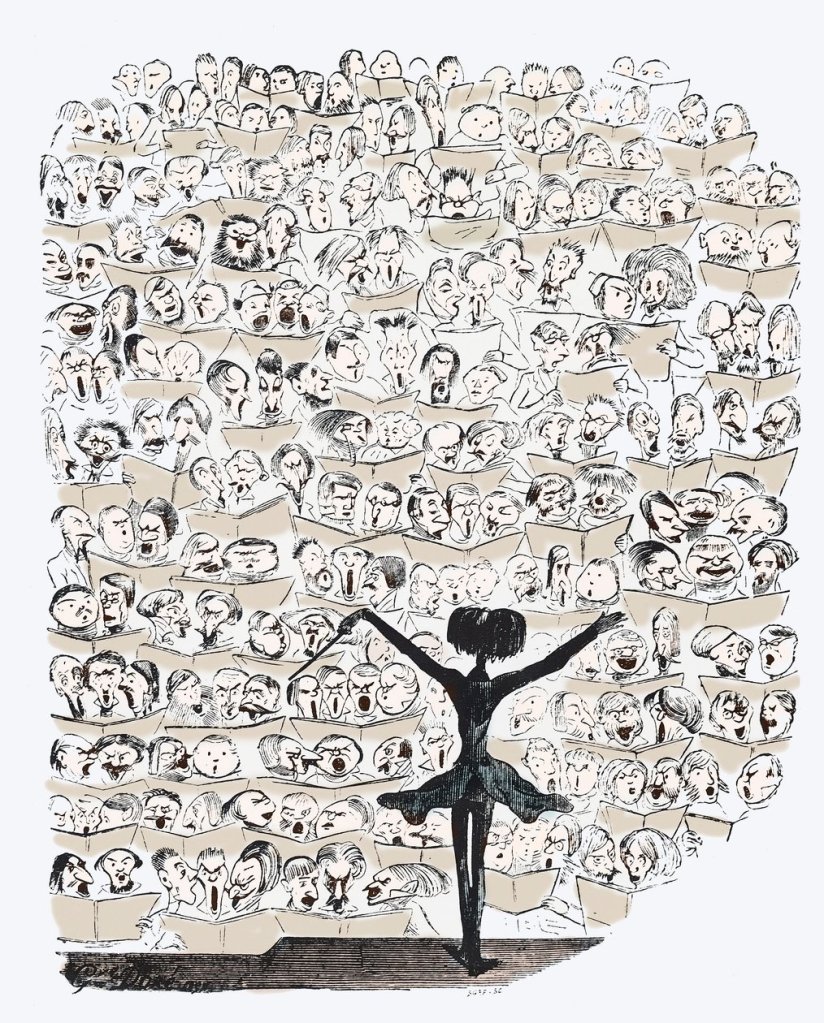
    Cartoon of Berlioz by Gustav Dore (1850)

    It’s one of the questions musicians hear from time to time. For those of us who work as performing musicians it’s an almost impertinent question because conductors, especially the good ones, carry the most responsibility of anyone on stage for the performance. 

    I heard a conductor answer the same question once by recommending to the person asking the question that they listen to two different recordings of the same piece. The difference between the recordings is some measure of what they do. It’s a good shorthand answer. 

    As composers wrote more complex music for larger orchestras during the C19th, the need arose for a director to organise and co-ordinate the performance process. The first people to define the central all-important job of the conductor were the composer-conductors – Louis Spohr, Hector Berlioz and Felix Mendelssohn. Then came the specialist conductors like Hans von Bülow (1830-1894) and Hans Richter (1843-1916). 

    The process of preparing and performing a full score (the big book that has all the composer’s annotated music and markings) starts long before the performance. First, if required, soloists will be selected and contracted with the artistic manager of the orchestra or the casting director of the opera company. This can happen years in advance for an opera. For a concert repertoire piece bookings happen later in the process. 

    An organised conductor will liaise months in advance of the rehearsals to confirm the distribution, the number of players in the string section, preferred section leaders, the minimum number of percussionists who can multi-task the specified percussion instruments in the score, and the layout of the orchestra – where instruments sit in relation to each other is an important precedent for ensemble. An extreme example of the need for a carefully considered seating plan can be found in Berlioz’s Grande Messe des Morts. There is a section in the Hostias where three high flutes have a duet section with eight trombones playing at the extreme lower end of their range. It’s a nerve-racking moment and can be painfully difficult to tune. If the trombones are too far from the flutes it makes the intonation all the more difficult. 

    The next part of the assimilation of the score is to specify bowing for the strings where it is not obvious. To get specific colours and emphasis from the strings it helps to mark in their parts whether the phrase is to be played starting with an up bow or a down bow, pushing or pulling the bow across the strings. 

    Not all composers balance the sound of their orchestras. Most conductors are unguarded about sharing their experience, observations and fixes with their conductor colleagues. They share solutions to problems of balance that composers wrote into their scores. A common solution is to temporarily reduce the number of string instruments playing at a delicate moment. The ranks of strings are divided into “desks”. A desk comprises two players sharing the same music stand. By reducing the number of desks playing at a certain moment, the conductor can effectively alter the balance. 

    The conductor will work with the orchestral manager to specify the number of rehearsals required for each part of the programme. Repertoire pieces require less rehearsal while new or rarely performed works will need more time. 

    Each piece has a different orchestration. The conductor has to specify which instruments are required for each rehearsal. Freelance musicians are paid by the rehearsal so it’s important for managements to book them for the minimum number of rehearsals possible for cost reasons. Strings will be required for most, if not all, rehearsals while a celeste player might only be required for one rehearsal. This part of scheduling is more knotty and detailed than you’d think. 

    All of the above usually has to be fitted around a busy performance schedule. Conductors often carry heavy bags of full scores to be studied and administrated for future appearances while on their travels. 

    If it is an opera, work with the singers starts four to six weeks before the opening night. This can be a fun, relaxed period of exploration and experimentation with ideas both for the staging and the musical preparation. In an ideal world, the stage director and the conductor work in consort to present something that looks and sounds cohesive. It isn’t always thus. 

    The first part of the rehearsal process with an orchestra is called the orchestral read through. It’s exactly what it says – the conductor leads the orchestra through the whole work for the first time. It’s the first step in the process of assimilating the score with the orchestra. Basics of tempo are established and challenging passages may be repeated. After that the conductor will have a rehearsal with the soloists, if so required. Then all the forces, including full orchestra, soloists and/or choir, are drawn together for tutti rehearsals which will take a day or two for a full programme. The last part of the rehearsal process is the dress rehearsal on a day before the first performance or on the day itself. 

    So far we’ve covered the rehearsal process. Tomorrow I will break down what a conductor does on the podium in performance. 

    10th Sep 2024

  • In Your Own Time

    A quick one for this entry because the blog entry I was going to post is taking longer to write than expected. 

    Today’s post is an observation and a question. In Our Time, BBC Radio 4’s long-running flagship discussion programme, chaired by Lord Bragg, passed a significant milestone last year. On 21st September, 2023 the series reached its thousandth episode. On BBC Sounds, the caption for the programme says “Melvyn Bragg and guests discuss the ideas, people and events that have shaped our world”. 

    I listen to In Our Time whenever I can. Melvyn Bragg’s willingness to engage with any subject, drawing out informative discussion and sometimes thorny debate is a wonder of broadcasting. 

    Since the beginning of 2020 there have been twenty-two episodes on topics relating to literature in the modern age. Why then have there only been three editions in all the episodes since the first edition on 15th October, 1998 about music? One on Beethoven, one on Wagner and one titled Mathematics and Music. 

    10th Sep 2024

  • Next!

    Jacques Brel

    Some weeks ago I revisited a song I haven’t sung for fifteen years. I was invited to appear at an opera gala in London. Opera galas are usually hit parades of grand opera. Puccini, Verdi, a smattering of Don Giovanni and perhaps the Lakmé duet British Airways appropriated for its TV ads.

    I prefer to break the mould and contribute less well-trodden songs or arias. For the gala in June I sang an aria from Mozart’s Idomeneo and Jacques Brel’s Au Suivant. “Jacques Brel’s Whaty-What?” I hear you say. You heard me right… I sang a popular French song from 1963. Well, strictly speaking it’s a Belgian song because Brel was from Brussels and sang in Flemish as well as French.

    Brel is a private passion of mine. His poetry and music synthesise into art song of such taught construction and complexity that I place him in the same club as Schubert, Schumann, Ravel and Britten. He’s not a song writer, he’s a songwright in that his songs are wrought and, in the same way a shipwright’s vessels are built to be watertight, his songs withstand the scrutiny of time.

    I decided to perform the song fifteen years ago before I had thought about the song’s meaning. I loved the drama in Brel’s performances of it on YouTube. Have a look for yourself. He stands there behind his microphone, picked out by a follow-spot in the pitch black, his band lost somewhere in the darkness behind him. What I saw first in his performance was the fun he had as he threw off lines in what seems like sarcasm and mockery. What lies in the character he portrays is a better-than-you intelligence that thumbs his nose to fate. It’s all self-evident, even if you, like me, don’t speak French well enough to get the subtlety of his text.

    Subsequently, when I translated the song and started to think about it, I found myself brushing away layers of meaning like an archaeologist on a dig and finding a trove of such importance that I found it hard to believe all this poetic treasure could be contained within one short song. 

    The song starts with a truncated staccato introduction, pointed with short, angry stabs on the xylophone and accordion. The crisp chromatic rising figure sets a mood of strength and defiance. The punctuating rhythmic phrases that close the introduction as Brel sings the words “Au Suivant’ for the first time tell us that we are dancing a tango.

    A sudden silence out of which Brel tells us “Naked apart from my towel, which serves for a loincloth, I had rouge on my forehead and soap in my hand.” Where are we? In medias res is the answer, plunged into the darkest of nightmares. When the lights go up, but for a towel, we’re naked on stage. More than that we don’t know. “Au Suivant”. “Next” he instructs. “I was just twenty-one and there were a hundred and twenty of us, all of us following the person next to us who was in turn following someone else.” It’s no clearer where we are. Another command of “Next!” follows. There’s no time to think, we just follow orders and shuffle along in whatever this queue is. “I was just twenty-one and in denial at that ambulent bordello for an army at the front.” 

    When I first read that last line of the first strophe, I looked at the page and could hardly believe my eyes. This was a song about a young private at a mobile knocking shop behind the French frontline during the First World War. Brel’s graphic despair in the song carries us, the listener, into the ghastly scene and we are fully exposed to the worst horrors of humanity. It’s noteworthy that Brel wrote the song the same year that Joan Littlewood devised and wrote the musical, “Oh! What a Lovely War”, a send-up of World War I.

    “I would have liked a little more tenderness, or a simple smile, or even just a little more time, but onto the Next!” Now he reveals the human cost for this poor traumatised young lad who can’t perform under the pressured circumstances. “It wasn’t Waterloo, no no, but neither was it Arcole, it was the time to regret having not showed up at school.” In a moment of mock pedagogic authority, he admits his situation wasn’t a rout like Napoleon’s defeat at Waterloo, but neither was it a victory like Napoleon’s triumph at the Battle of Arcola. He continues, saying it was the kind of humiliation to make him wish he had worked harder at school and gone on to be an officer instead of a private. “Next!” 

    “But I swear, to hear this adjutant from my ass, these are blows that will turn us into armies of the impotent.” The command of “Next!” is coming from the officer charged with telling the foot soldiers when to jump out of the trench and advance into the enemy gunfire. Would that be same person in both the role of line monitor at the ambulant bordello and sending the same soldiers over the top to almost certain death? I doubt it. The boy is confused, perhaps he has PTSD or “shell shock” as it was known then. He can’t compute whether “Next!” is the command from his adjutant or the Madame of the brothel.

    He continues in the third strophe: “I swear on the head of my first lesion that, since then, I hear this voice all the time.” This is definitely a graphic account of PTSD and now we learn that he has syphillis to boot, a death sentence at the time of the First World War. “This voice that smells of garlic and cheap booze, it’s the voice of nationhood and the voice of blood.” Whoever the voice belongs to, we are close enough to smell their bad breath, the command of “Next!” driving the adventurism and bloodshed of war. Tied up in the ambiguity here is a double truth that war is fed by a chain of command allied to humanity’s baser instincts.

    “Next!” Now we learn the psychological legacy of this victim’s abuse. “And since then, every woman in my emaciated arms at the moment of succumbing seems to whisper to me… next!” All within the unyielding strut of a tango that never yields in tempo, like the unrelenting march of time. In this third strophe, Brel has turned up the heat and intensity. The whole orchestra are playing, the intimacy of a secret whisper is gone and the protagonist starts to scream his nightmare.

    In the fourth and final strophe, we hear in the violins and accordion the sound of ordnance whistling overhead and raining down on the trenches. The heavy downbeat is now the rhythmic pounding of shells as they hit the ground. In his parting words of experience Brel says “All the followers of the world should join hands, that’s what I cry out in my delirium at night. Next! And when I’m no longer delirious I manage to say to myself that it is more humiliating to be followed than to be the follower. Next! One of these days I will be legless, or a nurse or hanged. Finally one of those things where I will never again be… the next!”

    And as the song closes with the same tango pulsing louder and louder, you realise that your dance partner in this macabre tango is Death itself.

    In the song’s three minutes we have been to Hell and back. I can think of no song that delivers more horror or delivers more catharsis than the relief we feel to be back in our seat at its conclusion and not trapped at the Verdun front in 1916. No-one has ever asked me to nominate the greatest song I know. Were they to do so, it would be “Au Suivant”.

    10th Sep 2024

  • Rebrand?

    Janacek’s manuscript – Jenufa


    Why do we call it “classical”… Part 3

    If the word “classical” is an inaccurate term for the genre of music under its umbrella, what classification might be better? 

    Where am I going with this string of blog posts? The genre of music collectively termed “classical” has outgrown the word. It’s time for a rebrand. 

    I’m not kidding myself that by writing about this I will bring about an international collective decision to start calling a whole genre of music by another name. Of course I’m not. I do want to have the discussion, nonetheless. 

    What would the alternatives be? “Serious” music is a starting place. It requires no explanation but it’s both inaccurate and off-putting. How do you sell a concert of “serious” music and it doesn’t do justice to lighter music or comic opera. Similarly, “formal” music seems boxed in and doesn’t help those of us who prefer not to wear white tie on the concert platform. 

    I prefer “Western art” music to “classical”. Calling it “art” places the music on an altar and doesn’t help non-musicians claim it for themselves. I’m not sure what a composer like Tan Dun would think of being classified as a Western art composer. Such a geographical specification would jar with composers like Tan Dun, whose compositions channel Asian musical traditions. 

    I also like “unpopular” music to some extent. It acknowledges its relative appeal alongside pop music with a wry smile. It wouldn’t work, obviously – I can’t think of anyone who wants to be an “unpopular” musician. 

    “Erudite” music? Pompous. No thanks. Similarly, “Legitimate” music. What does that say about other music categories? Making outlaws of other genres is not going to help the cause. 

    The problem with most of these alternatives is that they tend towards putting the genre on a pedestal, above other types of music. Even “classical” makes me think of marble depictions of emperors on horseback raised on a plinth. 

    Is there a term that relates to every type of music we call classical without aggrandising it, reducing it or mislabeling it?

    “Historical” music? What about the music being written today that is performed by the same musicians who play Beethoven or Bartok? No, but there is something within “historical” that I like. It’s to do with the way the music is recorded by the composer for it to be played accurately by musicians anywhere and in any decade. All the music we are considering is manuscripted in the same way, using the same method of clefs, keys, time signature, staves for pitch and a system of dots and tails indicating the length of a note relative to the other notes being played. All of the music we are considering here is annotated. 

    I hear you say, “Hang on, I’ve seen a book of Billy Joel songs in a music shop before. Wasn’t that annotated?” Yes, but in a generalised way. What you get in a collection of well-known pop songs are transcriptions of songs that were written as words and music organically, mostly at the keyboard and then sketched in manuscript. Such music owes a lot to improvisation and is never set in stone for its instrumentation or the way it is to be interpreted by the performer. 

    The music of which I am talking has been the reason for the development of a precise and universal system of annotation. Gustav Mahler and Edward Elgar peppered their scores with words and phrases to help performers find the precise mood they were looking for in their music. Benjamin Britten wrote horizontal lines over the notes of many of his melodies, reminding the musician to make each note vibrant and sonorous. Janacek’s chaotic scores contained dynamic markings (ppp for ultra soft through to fff for very loud) of such precision that musicians often think there is a mistake in their score when some instruments are required to play very quietly while others are asked to play at full-tilt. 

    The miracle of musical annotation, evolved over centuries since medieval times, means we know exactly how the plainchant and organum (an early form of polyphony in which singers took parallel lines at different pitches) of the early Christian liturgy is to be sung even now. 

    Talking of performance, what do we mean when we say someone is “classically trained”? I can’t think of a classical method of training a musician, like the training of a ballet dancer who learns the basics of technique and form. The meaning of “classically trained” has come to mean the musician has learnt to read music and has developed their ability to play the instrument through reading, studying and practising annotated music for their instrument. The challenges of the music that leads to advanced technical skill and musicianship can only be manifested through annotation. It takes a musician of rare talent to imagine and write works like Schubert’s Impromptus and the skill to play them would not be attainable without the works being written down. 

    To get the ball rolling on my wished-for rebrand of classical music my offering is “annotated music”. And if anyone wants to split hairs, I’d call it “precision annotated music” because composers, since the system for writing music was formulated, are prescriptive about the way their music is performed and a large part of the skill set required to be a performer is to read, understand and convey the wishes of the composer. 

    10th Sep 2024

  • Is “classical” right?

    John Cage

    Why do we call it “classical”… Part 2

    The problem with the word “classical” in relation to music is that it comes freighted with specificity. As I explained yesterday, the word was originally applied to music that adhered to strict standards of structure and tonality from 1750 to about 1830 – N.B. roughly the same dates as the Industrial Revolution.

    Of the broad classical music genre, only a small percentage of the canon can be accurately termed “classical”. It wasn’t long after 1830 that composers became increasingly experimental. Berlioz wrote for new distributions of instruments and started to write long, sinuous melodies that stretched far beyond the metered four bars of the melodies during the classical period. Liszt wrote programmatic instrumental music that followed a narrative for its form, deploying thematic variation for nuance. 

    Wagner, a protégé of Liszt, said he couldn’t write music that didn’t have a story to tell. He somehow fabricated a new kind of music and tailored it for the specific mood in each of his operas. In Tristan und Isolde, his most tonally adventurous work, Wagner more-or-less abandoned the established rules of harmony altogether to explore the human emotions of erotic love, betrayal and guilt (I will expand on this in another blog). Until Wagner came along, clashes between neighbouring notes were expected to be resolved immediately from a dissonance to a consonance, in which the notes making up the harmonic chord are spaced and pleasantly balanced to the ear. 

    Arnold Schönberg, later in the C20th, credited Wagner with the “emancipation of the dissonance”. By that, Schönberg meant Wagner found a sound world in which dissonant chords no longer begged to be resolved in order to make harmonic sense. Already, in 1865, we are a long way from the classical ideals of Haydn and Mozart.

    In 1902, Schönberg heard Debussy’s treacly new sound world in Pélléas et Mélisande. Pélléas itself was Debussy’s own riposte to Wagner’s Tristan und Isolde after hearing it for the first time in 1887. Schönberg set about writing his vast symphonic poem Gurrelieder while, at the same time, Stravinsky was writing Le Sacre du Printemps. Simultaneously, in the Paris and Vienna of 1911, the rules of harmony and structure, held to be sacred and unshakeable to that point, crumbled and collapsed as both works received their scandalised and now celebrated first outings. 

    Some people couldn’t stand the lack of harmony in the modernist sound world. During the Third Reich, the Nazi Party called it “Entartete Musik” or degenerate music, a label they attached to any music that did not align with their ideology, including works by Jewish composers, modernist music and jazz.

    Lagging behind the societal shift from court to city during the Industrial Revolution, music no longer bowed to the authority of monarchy. It had become an act of revolution in itself and served its purpose to shock anyone who clung to old ideologies for self-serving purposes. 

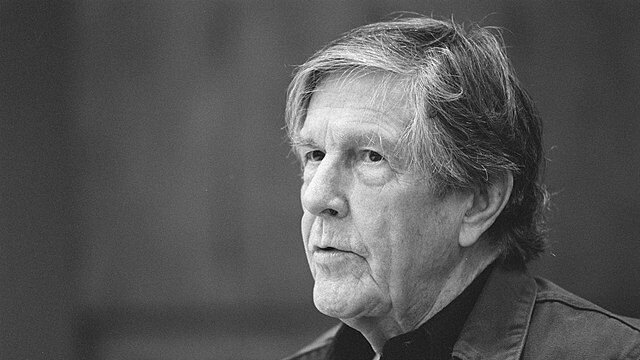
    The revolutionaries were ever more brazen through the second half of the C20th. In America, John Cage sought to tear down all the preconceptions anyone might have of what music is. The Darmstadt School of Pierre Boulez, Luigi Nono and Karlheinz Stockhausen were unequivocal and renounced music that wasn’t provocatively avant-garde. And so it went on until the present day. 

    I hope you’re still with me, reader. I also hope you see where I’m going with this potted history of musical developments from the classical era to the modernist era. Tomorrow I will consider alternative terms that work for all musics in the genre known as “classical”. 

    10th Sep 2024

  • Why do we call it “classical” music?

    Charles II (1630 – 1685) by John Michael Wright, c1676


    Part 1

    The word is a catch-all for the music of serious composers, even the ones who are anything other than conventional, formal or conservative. Despite forging careers out of writing music that questions the formalities of classical music, Charles Ives and John Cage are themselves pigeonholed as “classical” composers. 

    Where did the term come from and when was it first applied to music? There are no prizes for knowing the word derives from Latin. “Classicus” denotes the top stratum of Roman society who were the landowners. We still deploy the word when we refer to the British class system. 

    In time, the Latin word came to denote anything that was of the highest quality. The Roman author Aulus Gellius ranked writers such as Demosthenes and Virgil as “classicus”. Come the renaissance, the term took on a more general meaning. Randle Cotgrave’s 1611 A Dictionarie of the French and English Tongues  gives us one of the earliest extant definitions, translating classique as “classical, formall [sic], orderlie, in due or fit ranke; also, approved, authenticall, chiefe, principall”. 

    Soon the word came to define qualities of literature in two ways: that of 1. formal discipline and 2. a model of excellence. In France, the reign of Louis XIV(1638–1715) saw a cultural renaissance, by the end of which writers like Molière, Jean de La Fontaine and Jean Racine were considered to have surpassed the achievements of classical antiquity. They were thus characterised as “classical”, as was the music of Jean-Baptiste Lully and Jean-Philippe Rameau. 

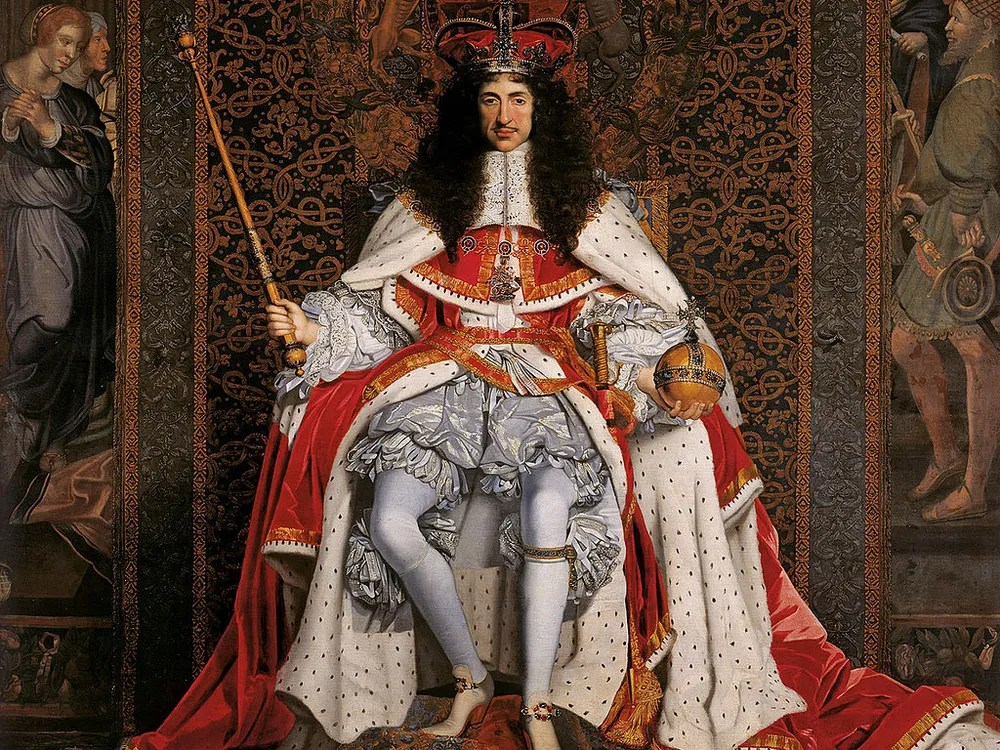
    How did the word jump to Great Britain and the English language? My gut tells me it made the crossing with the court of Charles II after the Restoration, as he adopted all the cultural trappings of the French court for his own. Sheridan’s plays and, in time, Handel’s operas were deemed classical for both their formal discipline and their excellence. 

    The new music that came after Handel until Beethoven was characterised by the development of new structures allowing composers – Mozart, Glück and Haydn – to probe deeper psychological complexities. With sonata form, a cohesive architecture was established in which thematic and tonal argument could be explored while holding the audience’s attention for a movement’s duration. The longer a piece of music, the harder it is for the composer to maintain the audience’s interest. Conversely, the deeper a composer wants to explore complexity, the longer the piece will tend to be and, in kind, the more engineered the structure must be to sustain a sense of cohesion and orientation for the listener. 

    The state of the art structure for composers at the end of the C18th was sonata form. Its basic framework of exposition – development – recapitulation – coda formed the backbone of nearly all symphonies, concertos and sonatas for eighty years. The music of this period became known as “classical” music because it adhered to the strict formal qualities that were recognised to be both aesthetically complete and satisfying. 

    The term “classical music” began to spread into an umbrella term for all serious music towards the end of the C19th. In 1879 the British composer Charles Kensington Salaman, who was influential in his time, categorised Bach, Handel, Haydn, Mozart, Beethoven, Weber, Spohr and Mendelssohn as all being classical composers. From this point, the term was applied to all the composers we now categorise with the all-encompassing term, “classical”. 

    Apology, the above is more boggy than bloggy. If you’re still with me, thanks for hanging in there. 

    Tomorrow I will consider whether “classical” is the best word with which to categorise the music of all composers from Guillaume de Machaut through to Max Richter. 

    10th Sep 2024

  • Time Machine


    One of the many extraordinary and exciting things about classical music and the way we perform it is its durability. 

    The first violins in the form we know them today were designed and crafted by the master luthier, Andrea Amati of Cremona in 1564. Since then the only things to have changed in their structure are the strings (steel, as opposed to gut) and the mechanism with which we fine-tune the strings. After that, the instrument with which violinists from Paganini to Augustin Hadelich create colours, from exquisite sweetness to harrowing drama, hasn’t changed at all. Indeed, the finest soloists play on the very same instruments made by the master luthiers of Cremona all those centuries ago. 

    In a world where photographers update their cameras every year, where music producers update the software for their studios on a weekly basis, where gamers move onto the next console for its speed and graphics as soon as a new platform is released, I find it remarkable that an instrument made for the highest form of musical expression and virtuosity hasn’t been improved in all that time. 

    Even the design of a piano, perhaps the most complex and exactingly engineered instrument on the concert platform, hasn’t been significantly updated since the late C19th. That means when we attend a performance of a symphony or an opera, all the musical colour and range of expression that we hear, from thumping climaxes to delicate whisperings, is generated and projected without the use of electricity and instead maximising the laws of physics as known to Newton. 

    That fragile wooden box we call a violin projects all the warmth, lyricism and tenderness to thousands of listeners, throughout a huge concert hall by means of vibration and air alone. I find it miraculous. 

    Of course, composers have written many works that require electronic instruments. The combination of an orchestra with the unearthly force of the ondes martenot, an early electronic instrument, in Messiaen’s Turangalila Symphony is an example of acoustic and electronic music working together to great effect. 

    I think of music’s capability to transcend the need for technological updating as a refreshing escape from a world constantly on the lookout for “the next big thing”. I call it music’s Time Machine effect.

    When I walk into a concert hall, a theatre or a church to hear a piece of music there is nothing in my experience of the sound today that has been added since the day it was written. When I take my seat to listen to Haydn’s Creation, I am effectively setting a dial to take me to 1799. And there in sound I experience the post-enlightenment understanding of the cosmos as Haydn describes the movement of shooting stars, gas giants and the formation of galaxies in sound. 

    There is barely any difference between my London experience in 2024 and that enjoyed by the Viennese audience at the old Burgtheater on 19th March, 1799 when it was first performed. 

    If I use my imagination as I listen, I can enter the mindset of post-enlightenment Europeans and wonder at the new understanding of late C18th scientists about our universe and heliocentricity; the new and fast expanding discoveries of where humans and Earth stand in relation to other planets; Captain James Cook’s journey to Tahiti on the other side of the world to observe the transit of Venus across the face of the sun during an eclipse in 1769. These exciting recent discoveries of the time seem to be translated into Haydn’s overture for The Creation. 

    For the duration of the concert I have the ears of someone in 1799. If I’m especially involved, I try to expunge all the musics in my head that were written subsequent to 1799 – go with me here. If I try to imagine what it was like to hear Haydn’s music without the music of Schubert or late Beethoven, Berlioz, Brahms, Wagner, Mahler, Stravinsky and beyond that lives in my head, I hear it for its visionary modernity. How thrilling to have the complexity and wonder of the cosmos described in such poetic and digestible musical terms for the first time. 

    These are some of the thoughts that cross my mind as I sit and wonder at Haydn’s creativity and his courage to sit at the vanguard of his known musics and make new music of his own that bears a direct relation to scientific discovery and our understanding of the universe. 

    It’s in moments like that when I think of music as my Time Machine every time I go to a concert. 

    10th Sep 2024

  • Industrial Music


    In an interview for my entrance to university, I was asked “What effect did the Industrial Revolution have on music in Great Britain?” To that point, I had never considered music in terms of it being influenced by history or vice versa. I was stumped. I umm-ed and ah-ed for what felt like ten minutes. I eventually offered an answer that was both shallow and inaccurate. After the interview, I felt such a deep sense of failure and humiliation that I never got the question out of my head. 

    The question festered until I was working in Leeds during Covid in 2020. I had taken my bike to Leeds so I could commute easily back and forth to rehearsal. On a sunny day off I went for a ride along the canal that joins Leeds to Manchester and Liverpool in the West and Castleford in the East. It follows the course of the River Aire in its western reaches. 

    After riding for about twenty minutes I came to an old brick mill where a sign advertised that it contained the Leeds Industrial Museum at Armley Mills. I walked in and bought a ticket and in doing so, like Alice, fell down a rabbit hole that was to become a fascination and continues to be today.

    As I walked around the museum I reflected on John Milsom’s question in that interview in 1987. Walking around the museum, I could see no direct links to music in the shift from the waterwheels that drove the spinning machinery at the beginning of the industrial age to the steam turbines of the C19th. 

    Then I read about the rapid growth down the river in Leeds, where the newly built canal had allowed for the transport of coal from County Durham to power the turbines that drove the Industrial Revolution. 

    After realising the effect of the industrial age on musical Britain was sociological I saw its influence everywhere. The most profound change to life in Britain was the move from a rural, agriculture based economy to an urban, industrial economy. Towns and cities became hubs for the surrounding counties. 

    The Quakers and Methodists who developed the new industrial processes of the age, were as concerned for the welfare of the communities they built as they were for their profit margins. Schools and music societies were encouraged for the benefit of social cohesion. Town halls with impressive organs were built for events and concerts. Huddersfield Town Hall is an example of the draw of music in new urban growth. the home of the great Huddersfield Choral Society which, to this day, promotes loud and hearty performances of the great oratorios. 

    Perhaps more consequential than all of this was the rise of the new middle class that sprang out of the need for management and experts in the new technological age. Add the new stratum of society, with their bigger rooms in their now larger homes, and the economies afforded by simple advances like warehouses and manufactories in which new architectural developments allowed for wide open factory spaces for new mechanised construction lines. The profits rose as the economies of scale increased. 

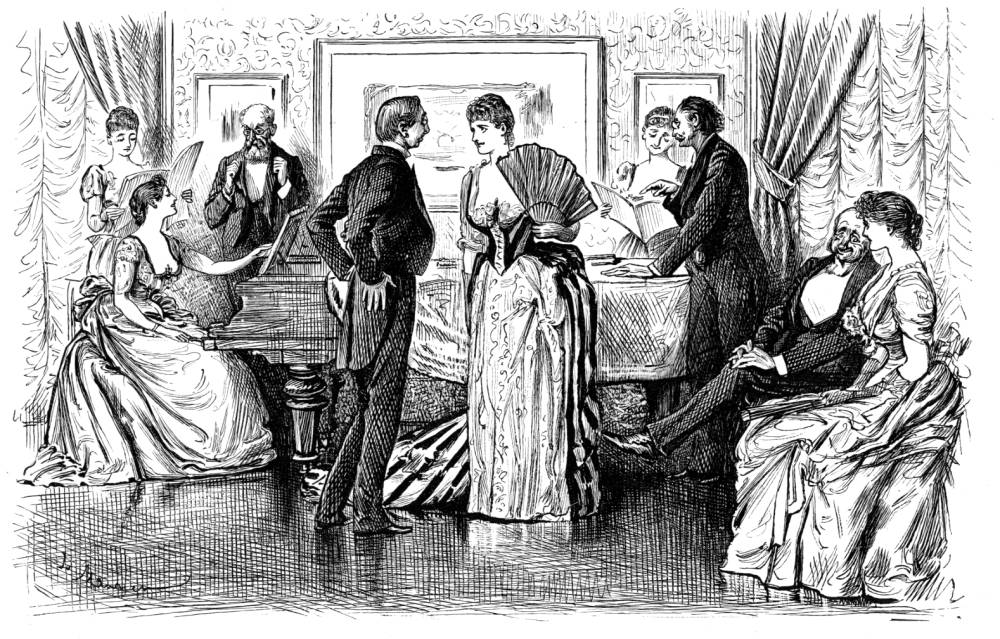
    One of the new must-have status symbols of the industrial age was a piano. Soon the business of building pianos itself was industrialised and it wasn’t long before every middle class home had one. My own grandfather, Eric Squire, was the son of a piano builder in Kentish Town, London – I still see Squire pianos advertised for sale from time to time. In the patrician world of Victorian Britain, the role of piano player within each home fell to daughters and suddenly homes had home-grown entertainment. 

    Composers and music publishers responded to the new market for sheet music, playable at varying standards. The Victorian ballad became an opportunity for men, accompanied by their daughters, to show off their sentiments and their baritone voice in song. 

    The knock-on effects of these developments roll on and on. Women who could play the piano could get regular work as piano teachers, enabling them to live happily as spinsters if they so desired. Choral societies grew in size and standard. German composers, starting all the way back at the beginning of the industrial age, from Haydn to Beethoven to Felix Mendelssohn, beat a path to Britain to have their choral works commissioned by the new large and wealthy choral societies. 

    Oskar Adolf Hermann Schmitz’s observation that Britain was “Das Land ohne Musik” (the country without music) was old-hat even as he coined the phrase in 1904. Parry, Sullivan, Stanford and especially Elgar couldn’t write fast enough to keep up with the demand for their new works.

    The industrialisation of music culminated with London becoming one of the world’s hubs for recording companies. British musicians and orchestras specialised in studio work, churning out and exporting reams of recordings all the way through the C20th. There was enough work to support four full-time orchestras and London became the European capital of the music business. 

    So, to John Milsom, I say thank you for the awkward silence as I fumbled for an answer in that interview in Oxford back in 1987. You spurred me to think differently about music. I now never hear a piece without wanting to know more about the time and place in which it was written. 

    This was the springboard that turned my passion for music into a passion for history, and where music sits within its wider context. 

    10th Sep 2024

Previous Page

Blog at WordPress.com.


Loading Comments...
 

    • Subscribe Subscribed
      • Toby the Tenor
      • Already have a WordPress.com account? Log in now.
      • Toby the Tenor
      • Subscribe Subscribed
      • Sign up
      • Log in
      • Report this content
      • View site in Reader
      • Manage subscriptions
      • Collapse this bar