Toby the Tenor

    • About me

  • GSMD Fellowship acceptance speech, 1st November, 2024

    Hello everyone and many congratulations for completing your studies at Guildhall School.

    It is my great privilege to stand here and share some reflections on the UK’s creative landscape in 2024 and what you, as graduates of Guildhall, will be able to contribute to it.

    Aside from developing your technical skills specific to your chosen discipline, be it an instrument, dramatic, academic or technical training, you will have benefited from the what I call the institutional DNA of Guildhall. In my view, every institution has a specific character that it hands to its constituents. All the people who have been part of that institution through time, the location, the architecture, fashions and zeitgeists alchemise to form its DNA.

    The DNA of this school is infused with creative energy, with collaboration and with colleagiality like no other. In the gathering space of the central atrium you will have brushed elbows with the future of both British theatre and British music. I remember, when I was a student here, watching an excited young Daniel Craig run down the full length of the atrium to throw himself into the arms of the young Ewan MacGregor. I have no idea what they were celebrating in that moment but all of us together were the next generation in the Great British tradition of artistic endeavour, as you are now.

    The energy, the chats, the shared confidences, the gossip and the caffeine of which you have partaken in that (let’s face it) brutal, modernist thoroughfare is the lifeblood of this school and I hope it will inspire you, as it has me, for your whole careers.

    Since leaving last summer you will have been discovering what it is to be pursuing work in your chosen careers and, by now, you will be aware that the opportunities to perform and follow your dream are not as forthcoming as they were when you started your studies.

    There is less work than there used to be and the compensation for that work has not kept pace with inflation.

    I want to say to you that you have agency over the future of our global cultural offering. You are now the ones who have to reach out to new audiences and convince them of what we can contribute to make their lives richer and more meaningful. It is not for you to fit into the status quo of that offering but to redefine it, improve it and to help it grow.

    I believe you, as graduates of Guildhall and therefore recipients of its creative DNA, are well positioned to achieve such a redefinition because of three life skills you have learnt here that your contemporaries in other colleges and universities will not have learnt. You may not be aware what those exceptional gifts are, so I will list them for you now.

    1. Sociability – the conversations I have had with some of you eclipse conversations I have had with your contemporaries elsewhere. Guildhall seems to have nurtured general interest and I encourage you to maintain that interest, to look outside your immediate circles and to be interested in the world beyond.

    2. Collegiality – I have witnessed the support you give to each other, working together with mutual respect and encouragement.

    3. Confidence – I visited two of the country’s top universities last week and spoke with undergraduates and post grads. To a person, they lacked the confidence of the students I have met at Guildhall.

    To be able to follow your ambition, many of you will have to supplement your daily life with extra work in the first years of your career – you may consider teaching, office temp work, service in a restaurant or work in the retail sector. Believe in yourselves when you consider what it is you can offer. Your social skills will enable you to stand out and reach for something that will be more than simply a means to make ends meet. It could be work in theatre administration or a library, it could be work in the care sector. Whatever it is, believe that the extra work can be an opportunity to grow as a person and more than a means to an end.

    I encourage you to be more than performers. Have something to relate; have stories to tell; stand for something and have convictions. After all, it is our aim to speak to audiences, not simply to entertain them but to change them for the better.

    I want to end with a quote from John F. Kennedy’s address to the students of Amherst College, a liberal arts college in Massachusetts. He delivered his speech on the 26th October, 1963, four weeks before he was shot in Dallas, Texas.

    Here it is:

    “The artist, however faithful to his personal vision of reality, becomes the last champion of the individual mind and sensibility against an intrusive society and an officious state. The great artist is thus a solitary figure. He has, as (Robert) Frost said, a lover’s quarrel with the world.”

    Once again, congratulations to you all. Go forward into the world with confidence and make it a better place.

    2nd Nov 2024

  • Looks Like An Opera

    RBO’s most recent La Boheme

    The most damning appraisal of a new production I ever heard was about Billy Budd in Munich, of which someone said “It looked like an opera”. What was the catty critic saying? I took it to mean the production was like a parody of all the clichés to be found on the opera stage. A bare set with austere lighting, the pistol MacGuffin, quirky under-rehearsed choreography, characters standing on chairs for moments of heightened emotion and sitting on the floor for “down” scenes are the trope traps into which directors lacking a feel for how to bring opera to life often fall. Last night’s Bernstein double bill of Trouble in Tahiti and A Quiet Place in the Linbury, while a bold and laudable production of two difficult pieces, had ‘em all.

    Ollie Mears, the director, encouraged the performers to be lured into the music’s mood to inform their every movement. Bernstein’s swinging rhythms became the underpinnings of cushion-throwing dance numbers. It reminded me of the wriggle classical pianists do when they’re playing funky music that tells us they’re outside their comfort zone and haven’t danced since their first school disco.

    Attached to this blog you’ll see a post of Gershwin playing I Got Rhythm as an encore at a concert in the Manhattan Theater in 1931. You’ll notice, if you turn the sound down, that you could be forgiven for thinking he’s playing Beethoven, so still and technical is his playing. For Gershwin, and by extension for Bernstein, his music isn’t written to be light; it’s as serious as any music you find on the concert platform and is to be spoken as American poetry with an American accent. But we non-Americans hear jazz, jive and jauntiness in its synchopations and immediately think it’s dance music. It isn’t, it’s C20th American musical vernacular. Ravel understood this when he met Gershwin in 1928 and asked him, “Why would you want to be a second rate Ravel when you can be a first rate Gershwin?”

    I’m not a critic and I don’t write reviews but, after thirty years of treading the boards, I do have opinions on what works and doesn’t work on the opera stage. I wrote in a previous blog (Hit Rate) about the need for more consistency in the quality of new productions on the opera stage, both here in the UK and elsewhere. Opera bosses have got used to rolling the dice with hundreds of thousands of pounds at stake and hoping for a hit that audiences will want to see again in a revival but they are not challenging their directors to produce watertight work. In short, they tolerate too much risk.

    Repeating my thoughts from previous posts, the easiest way to mitigate the risk is to do more work in the studio. Repetition releases singers from the shackles of producing work that “looks like an opera”. Repetition to the point where singers get bored and start complaining gets the physicality deeper into their bodies. They start to line up their movement with their breathing and singing which makes their portrayals organic and natural. It’s when this happens that opera transcends being drama set to music and becomes so much more than the sum of its parts.

    I observed the same symptoms of under-rehearsed work in the new production of Eugene Onegin last week on the main stage at RBO. Some of the cast were slick and believable but some crucial characters were stiff and unconvincing. I’ve worked with broadway directors in my time. They conduct rehearsals with an energy that never drops. “From the top” is the cry you hear the very second notes and adjustments have been dispersed around the studio by assistants. For them, repetition ad infinitum is the key to making their work look wrought and convincing.

    Another observation I make of new productions is the ubiquitousness of open sided and empty sets. The cavernous stage of Onegin made it hard for singers to project if they stepped behind the curtain line. Singers are the last people to find out what a new production will look like. Too often, on first days of rehearsal, I’ve seen looks exchanged between colleagues as set designs are revealed. The look says, “Here we go. Another unhelpful set.”

    There are ways to produce work that’s looks fresh, modern and even challenging without sacrificing priorities like audibility and credibility. Modular trucks, like those in RBO’s brilliant current production of La Boheme that are wheeled into the space between scenes, enable the audience’s attention to be focused with lighting while providing singers with a resonating back wall that acts as a springboard for their voices.

    The Onegin was a missed opportunity for creating another cash cow production that comes back regularly at little cost above the contracts of a fresh cast and set storage. For years, the RBO has relied on a handful of solid productions to balance the books – Richard Eyre’s La Traviata, Jonathan Kent’s Tosca and David MacVicar’s Magic Flute among them. The new Onegin should have been another but its lacklustre first run-out will mean the marketing department will doubt its revivability and it will become a rarity in the RBO’s planning until they get a better production in ten years time – a shame because Tchaikovsky’s masterpiece is a ravishing portrayal of how, in G.B. Shaw’s words, “Youth is wasted on the young.”

    16th Oct 2024

  • Criticism and Taking It

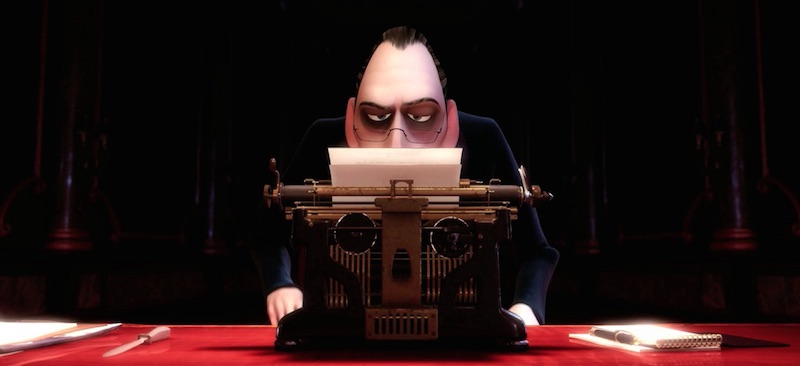
    Anton Ego, the feared restaurant critic in Pixar’s Ratatouille

    I wish more people could see the view from a set in an opera rehearsal room. The set tends to be squeezed into a large room, taking up 95% of the space. Lined along the remaining strip in front of the set are the piano, the language coach, a member of music staff, the conductor, the director, the director’s assistant, a staff director, the stage manager and the props manager all seated behind behind desks. Each looks onto the set with a mixture of fixed attention, sleepy boredom and everything in between.

    Often, especially in UK opera houses, there is a container of baked goods or Haribo at one end of the row of desks, towards which hands are extended, treats withdrawn and then inserted into mouths. We on stage work on as if this constantly tantalising distraction isn’t happening.

    Above coping with long periods spent away from home, the stress of performance and the constant pressure to be on top of preparation, perhaps the hardest lesson to learn for any performer is how to take criticism. Even before stepping on stage, performers are appraised with notes in coaching sessions, studio rehearsals and in music calls. Sometimes there are three sets of notes to be received and absorbed in one rehearsal – music notes, staging notes and language notes, all from different quarters.

    When I’m fresh and confident, I receive the notes gratefully, knowing the intention of the person giving them to me is to make me a better performer. At the end of a day towards the end of the week, when I am tired and doubting myself, I can forget to receive the criticism as gratefully as I should. My insecurity can get the better of me and I can be over-sensitive to imagined subtext within the notes. “You do it then,” I hear my inner voice say as someone gives me a note I’d prefer not to receive.

    I’m a very poor multi-tasker and if my focus is on one aspect of my preparation at any one time, the rest of it can fall apart. Caught at the wrong moment, I can be monosyllabic and curt as I take someone’s observation on board.

    Over the years I have developed methods for taking in lots of information in a given moment. I mark staging with small Post-It notes in my score because a stage director can change their mind about what’s called the blocking or the movement on stage. Musical notes I mark in pencil in the score, while language notes are marked in my own made-up phonetic alphabet.

    When the running of a section stops, conductors give musical notes from their podium while directors tend to walk onto the set to converse about the story telling. Last and always tentatively, the language coach approaches with their score to point out a linguistic slip. At 4pm on a Friday, the poor language coach draws the short straw and can be lashed unfairly with “Not now, please. Can you write it down for me?”

    The best of the true pros among singers are always, without fail, courteous and receptive to the notes they are given, even if they turn upstage to their colleagues and roll their eyes as the note-giver retreats to their chair. I have to remind myself that it is for my good that they give me the notes and that I have to be grateful. I’m not as infallible as some of my colleagues.

    And then there is criticism of the printed kind. Having worked for weeks in the studio and then on stage to present the production, we have our opening night. In theatre, actors have a week’s grace, sometimes more, to perform their play to a paying audience in previews before critics are allowed to review it. In opera there is no such safety net. We have our dress rehearsal and then, a few days later, we open to critics and audience for the first time. The reason for the lack of run-out in opera is two-fold: operas run for no more than eight performances over short periods so the sooner reviews can be released the better for publicity reasons, the other reason is the high cost of opera that makes performing to empty seats unviable.

    Up until 2012, I used to run out to buy newspapers to read reviews, be they good or bad. I was eager to read what the critics thought of me and the work of my collective team. Sometimes the reviews were good and sometimes middling. The truth is that, no matter how good the reviews were, I would always read bad things into them. “The tenor had a compact voice…” A COMPACT VOICE? What does that mean? I’d make myself miserable by ruminating on the inner meaning of every word.

    In 2012, I was diagnosed with cancer and lost my voice following surgery, as some readers will know. The journey to find my voice again was long and difficult. Many would say I started to perform in public too soon but I was advised that the only way to find my voice again was to get back on stage. For a long time I was over-exposed and underperforming. It was a very difficult time of my life and I find it hard to reflect on those years even now. To survive I stopped reading reviews. It would have been too painful even to read the kind ones. Until today, I have no idea what was written about me at that time. To believe good reviews, it follows that one has to put stock by the bad ones and to read the bad ones is an act of self harm, so I avoid both.

    The way opera is reviewed has changed in the past decade. It used to be the case that the most knowledgeable critics worked for daily and Sunday newspapers. These days, many papers have laid off their music critics and coverage has been siloed to specialist websites and periodicals. To find reviews one has to go looking for them. They have become avoidable now that the greater part of publicity has transferred to social media like Instagram and TikTok and is less reliant on critics.

    And so it is, by way of choice and shifting trends in the way performances of music and opera are covered in the press, that I am barely ever confronted by criticism of my own performances.

    I mourn the demise of music criticism because we have a long and celebrated history of it in the UK. G. B. Shaw made his bread and butter covering the music scene of London in The Star and later The world under the pen name Corno di Bassetto. The London based monthly magazine Opera is still the most comprehensive collection of reviews from theatres around the world in existence. Its late editor, Rodney Milnes, had an encyclopaedic knowledge of operatic history and edited the four volume Grove History of Opera. Today, I would trust the opinion of the UK’s best critics over the opinion of any other European critic but for how much longer will the noble profession of music criticism exist without the support of mainstream print media?

    14th Oct 2024

  • Geneva Story

    At 8am on Wednesday 20th December, 2006, I was sitting in departures at City Airport, East London, waiting to catch a flight to Geneva. With one eye on the screen for my call to the gate, I blithely drank a coffee feeling smug about having stolen two quick nights at home between performances of Wagner’s Die Meistersinger von Nüremberg without anyone knowing or leave to do so.

    Contractually, singers are required to get permission to leave a city between performances, so the theatre knows where they are if a cast member falls ill and extra rehearsals are required to help a jump-in learn the production. In Geneva there are other clauses to do with not going skiing or climbing for the duration of the contract, probably added after hard-won experience.

    On this occasion, I had flown home without asking for permission because I was missing my girlfriend and wanted to get away from Geneva, a city which loses its charm after six weeks. Geneva Airport is a short tram ride from the opera house, so I calculated the 8.30am flight would get me back in good time for lunch, a snooze and a leisurely walk to the theatre in time for curtain-up at 4pm local time – Meistersinger is six hours long, hence the early start.

    As I watched the screen, I noticed the word “cancelled” appear alongside a couple of departing flights. Hello, I thought and calmly carried on feeling smug and sipping my coffee, now with two eyes on the screen. Another “cancelled” appeared. People around me let out the soft sighs of inconvenience, rose to their feet and made for the information desk.

    My SwissAir flight was still due to land, I was in denial and busily batting away the possibility of it being diverted, despite more flights racking up with the “cancelled” status. Then, at 8.35am the dreaded word dropped onto the screen, next to my SwissAir flight.

    I immediately grabbed my phone and rang Eurostar. There was no combination of trains that could get me to Geneva in time for 4pm. Flights from other London airports? All cancelled. A blanket of thick fog had blown into the Thames Valley from the North Sea and short-haul flights from Heathrow, Gatwick and City were all grounded. I took out my phone and dialled.

    “Babs,” I said as she answered, “are you busy this morning? Could you help me?”

    “Spence, what have you done? I thought you were on a plane to Geneva.”

    “Hmmm. All the flights are grounded. I’ll be in deep doo-doo if I don’t get to Geneva.”

    “Spence! I’m not driving you to Switzerland.”

    “I won’t make you do that. I’m going to get the monorail to Bank, can you get my car keys and meet me there with the car? I’ll have a plan by then.”

    “Okay. I’ll be there.” I heard Barbara’s voice switch from confused to engaged as she said it.

    I took my overnight bag and headed for the channel to exit the departure lounge. Once through, back into the check-in area, I dialled my agent at Askonas Holt.

    “Peter.”

    “Hello Tobes.”

    “Hi, I’ve screwed up. I’m at City Airport and my Geneva flight has just been cancelled. All the flights have been cancelled.”

    “You as well. Do you have an N/A to be in London?”

    “I don’t.”

    “Say no more. Get going towards the centre of London. We will make some enquiries and call you back.”

    “Thanks. Speak soon.” I then made a dash for the monorail.

    Thirty minutes later, I stepped out of Bank tube station and a text arrived saying “I’m waiting on Graham St.”

    I looked at a map at the tube exit and couldn’t find Graham St.

    “Babs, I can’t see Graham St on the map.”

    “Oops, it says Gresham St. Sorry.”

    “Coming now.”

    Running down the side of the Bank of England, I looked for my car and found it opposite the Guildhall.

    “Where to?”

    “I’ve no idea. Let’s drive to the North Circular so at least we’re on a fast road.”

    As we drove up Holloway Road, my phone rang and Peter’s name flashed up on the screen.

    “Hi.”

    “Hello. Where have you got to?”

    “Holloway Road, en route to the North Circular.”

    “Good. Keep going that way.”

    “Is there a plan?”

    “There is. Listen carefully. We’ve had a look at your contract and I’m afraid the news is not good.”

    “How so?”

    “If you don’t make it in time for the performance you will be liable for, brace yourself, reimbursing the tickets, paying the orchestra, paying the chorus, paying the soloists, paying the stage technicians, wigs and makeup people and reimbursing lost revenue from the bars and restaurant.”

    “Oh shit.”

    “Oh shit exactly.” He said calmly. “At a rough guess, it could cost you half a million.”

    I broke out in a cold sweat.

    “What’s the plan?”

    “We’re working on something and will call you back shortly to tell you what to do.”

    “Okay. God, thank you so much Peter.”

    “All part of the service. Stay calm and keep your phone at hand.”

    Barbara and I continued up the A1 in silence, me anxiously looking at my phone. It rang.

    “Hi”

    “Okay, this is the plan and there is no plan B so you’re going to have to do this and hope.”

    “Yikes. Hit me with the plan.”

    “Drive to Oxford Airport” (who knew Oxford had an airport?) “where there is a plane waiting for you that will take you to Geneva. Have you got your credit card with you?”

    “I have.”

    “What’s the limit?”

    “Five thousand.”

    “You’d better call your bank and raise the limit.”

    “How much?” Peter told me and I shuddered.

    After hanging up, I turned to Barbara and said, “Well, at least I get to say I’ve been on a private jet.”

    Two hours later we rolled up to the gate of Oxford Airport. It wasn’t an airport. It was an airstrip, with a wind sock, sheds and a Nissen hut for paperwork and bad coffee. Geographically, it possessed the two vital qualities I needed that day – it was within a short drive from London and perched at the edge of Cotswolds, above the fog line.

    In the Nissen hut, three men were waiting with the paperwork ready for me to sign and a credit card paper receipt copier, the type that went crunch-crunch as you swipe the plastic sliding contraption back and forth. I was half horrified by the many thousands of pounds being drained out of my bank account and half popping with excitement about the beautiful jet, complete with gold taps, cinema screen, Champagne and a uniformed hostess with a toothy smile saying, “Good morning Mr Spence. You look important and impressive today. You must be one hell of a swanky dude to be flying this amazing craft to Geneva. Do you know the Queen?”

    Paperwork completed, bank called to confirm the payment will be made and then a final, grateful kiss for Barbara, I walk out to the tarmac to behold the magnificent jet for which I had just paid.

    Except it wasn’t magnificent. It wasn’t even a jet. It was a mini-cab with wings. I looked to see if there was an illuminated plastic light on the top saying “For Hire”. It was a small, twin prop Cessna.

    “Is that it? Can it get to Geneva without refuelling?”

    “It can. Climb in.”

    Climb was the right word. I clambered up through the tiny door, pulling myself into a ball to be able to get my limbs in.

    “Can you sit at the back, to help with the weight distribution?”

    I crawled through the fuselage to the back of four rows and buckled myself into a tight-fitting chair.

    “Here,” the pilot shouted over his shoulder, “I picked these up on the way over for you.” He was holding a plastic shopping bag which he flung back to me. Inside were two Co-op sandwiches, an apple, an orange, a biscuit and a bottle of water. The luxury!

    The noise as the engines cranked up to speed was deafening. The pilot turned his head again.

    “WEAR YOUR HEADPHONES. THAT WAY WE CAN TALK.” Grumpily, I declined. “THE VIEWS OVER PARIS WILL BE SUPERB TODAY. YOU’RE IN FOR A TREAT.”

    And so I was, albeit a rather cold treat. The inside of the flying mini-cab was freezing at altitude. We flew directly over Paris with not a cloud to obscure the view. I took lots of photos for bragging rights.

    Eventually, the plane swung over the Geneva mountains and we descended to the runway. As we landed I sent out a few texts, the first one to Peter.

    “Made it. Phew. Thank you for getting all this arranged. You’ve been a brick. And thanks for not bollocking me.”

    “Here to be of service.”

    And then another text flashed in.

    “Just to warn you, J-MB is not happy. Try to avoid him until after the performance.”

    Jean-Marie Blanchard was the intendant of Geneva Opera. As I stepped out of the Cessna, I reflected on him as being a nice, straightforwardly amenable kind of boss. How bad can it be, I thought as a I looked at my watch. 1.45pm. Bags of time. And then I remembered I hadn’t adjusted the time for Europe. Not bags of time.

    A car was waiting for me at the little private terminal, ready to waft me down to the opera house. I arrived at the stage door on the dot of 3.20pm, forty minutes before the start of the opera, for which I would be on stage from the beginning of the overture. I quickly threw on my costume and slumped into the makeup chair.

    In that instant Jean-Marie appeared and I was trapped. My gleeful relief was washed away as he gave me the Alec Ferguson hairdryer treatment. By the time he had finished delivering his dressing down I was a nervous heap again. On reflection, the day had been at least as stressful for him as it had for me. Could the day get any worse, I wondered as I stepped onto the stage.

    I’m happy to record that the day went very well from Wagner’s orchestral opening. In fact, with all the nervous tension I was able to remain focused and present for the whole of the long opera as an account of my day buzzed around the cast like wildfire. At the end, we all had a beer in a bar near the theatre and I was not allowed to pay for the drinks.

    Drinks in Geneva are not cheap, so I was glad for one small mercy.

    7th Oct 2024

  • Mackerras and Janacek

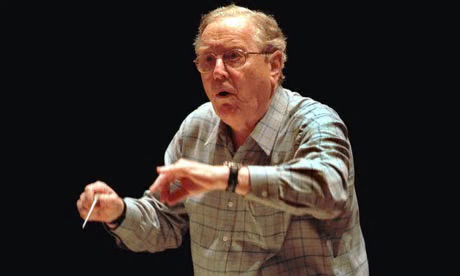
    The young Charles Mackerras

    Sitting in a cafe in South Kensington, studying a new full score of Dvorak’s D minor Symphony, a man turned to the 21 year-old Charles Mackerras and said “Ah, I see you are reading the music of my country.” The comment led to a conversation in which Mackerras told the new acquaintance, an amateur cellist called Josef Weisslitzer, that he was “anxious to become a conductor but that all the conductors in the UK were so busy that they didn’t have time to teach.” The gentleman told him to apply for a British Council scholarship to study in Prague. “At that time, Prague was the place where you could find great conductors who had time for you.”

    In February 1947, soon after the end of the war, Mackerras travelled to London on one of the first boats from Sydney to pursue his dream of becoming a conductor. On arrival, Mackerras got a job at London’s Sadler’s Wells Theatre as rehearsal pianist and second oboe. Soon after his arrival at the theatre, he formed a relationship with Judy Wilkins, the principal clarinet in the house orchestra.

    In August 1947, newly married and with his wife in tow, Mackerras travelled by train across post-war Europe. By the time he arrived in Prague he was devastated by what he had seen on the journey. He described Prague as being in a traumatised state of its own, despite the city being more-or-less spared of the destruction that had afflicted the rest of Europe. Among the few European cities where the theatres and concert halls were left intact, Prague was one of the first places to revive its musical tradition.

    Commenting on the shocking food shortages, Mackerras said they “fanned the flame that enabled the communists to say, well, you know, all this poverty was produced by the capitalist system. Why not try our system?”

    He was in Prague when the communists came to power in Czechoslovakia and witnessed the imprisonment of friends who had become political activists. One friend, having been in a concentration camp under the Nazis, immediately fell foul of the new regime. The friend was forced to work in a uranium mine where he developed radiation poisoning and died soon afterwards.

    He forged a frieindship with the principal oboist of the Czech Philharmonic, Jiří Tancibudek. Tancibudek took Mackerras to hear Václav Talich conduct Leoš Janáček’s opera, Kat’a Kabanova. Mackerras had never heard Janáček’s music before and later described experiencing “the first opening chords swelling out of the cellos and basses. (In that moment) I fell in love with Janáček and all of his operas.”

    Mackerras went on to study conducting with Talich, who schooled him in understanding Janacek’s difficult music. A year later, Mackerras returned to London with the published scores of Janáček’s operas. He said years later, “because I became such a fanatical enthusiast for the music, I brought a score of Kat’a Kabanova to Norman Tucker at Sadler’s Wells… so we put on this opera.” Sadler’s Welsh planned a production for 1951. In the event, Michael Mudie fell seriously ill and had to relinquish the role of conductor to his assistant, the 25 year-old Charles Mackerras.

    Sixty years later, I had the fortune to work with Charlie on Kat’a Kabanova. During the process, I asked him about the first performances – he was reserved when it came to talking about his life and experience until he was asked about it, then he’d always be delighted to share his memories. He told me that the theatre scheduled an incredible amount of time with the orchestra because the printed parts for the players were extremely badly edited. Not only that, he felt he needed the time to teach the orchestra Janáček’s style and for the players to assimilate the difficult music. If I remember rightly, he said the theatre scheduled thirty hours of orchestral rehearsal for him to straighten out score and to get it sounding how he believed it should. For a relatively short opera like Kat’a Kabanova, it equates to twenty minutes of rehearsal for every minute of music.

    The opening performances received a sensational response. Aside from a few performances of Janáček’s work in Germany, Vienna and a very unsuccessful production at the Met in New York, his music had never been heard outside Czechoslovakia. When asked by Sue Lawley on Desert Island Discs in 1999, whether it was entirely because of him that Janáček entered the mainstream repertory, he said, “In a way, I suppose you could say that that is true because… after the war nobody played Janáček’s music at all.”

    At the time Sadler’s Wells was performing its sensational new production of Kat’a, it was simultaneously presenting a new ballet, called Pinapple Poll, that Charles had arranged, based on the music of Gilbert and Sullivan’s operettas. The double headed success launched Mackerras’s career as a conductor of authority that lead to him being the chief conductor of English National Opera, Welsh National Opera, the Scottish Chamber Orchestra and emeritus of countless orchestras and festivals.

    He produced his own editions of Janáček’s operas that remain the urtext editions today. Janáček’s manuscripts were famously difficult for his publisher to decipher. The painstaking work that must have gone into Mackerras’s editions for Universal Music is remarkable. Nothing is clear in Janáček’s hand. The self-doubt from trying to understand what the composer was hearing in his head through the scrawls, crossings out, approximations and mistakes in his manuscripts must have undermined Mackerras’s belief in his quest.

    Thanks to Charlie’s “fanatical enthusiasm”, we inherit music like no other, that springs from the Moldavian folk music of Janáček’s home in Brno, the unusual speech patterns of the Czech language and Janáček’s fevered sound imagination.

    In preparation for writing this post, I listened to his 1977 recording of Kat’a. In the first chords I was put in mind of the young Charles sitting in the Gods of the opera house in Prague hearing Kat’a for the first time. With him, I felt the insistent charisma of Janáček’s writing, its unique seriousness that forces the young conductor to lean in and be touched in new ways by the composer’s forever-new music. As the music continues, I can’t help but remember Sir Charles in the glow of the Royal Opera House orchestra pit in 2007, hunched over his score as the humping hamster, gaze fixed on the stage, churning his baton, his tongue twisting in concentration, giving to me and rest of his singers the Janáček he loved so much, as he had given the great composer to London and the world beyond.

    30th Sep 2024

  • Sir Charles Mackerras, 1925 – 2010

    Next year will be the centenary of Charles Mackerras’s birth. In anticipation, I’ve decided to write about my memories of working with him. In preparation, I’ve read some of the interviews he gave and had a look at his obituaries, of which there are many. None of them goes to any length to describe what it was like to work with him because the people who write about him tend not to be practitioners of music. I want to put that right by remembering the fifteen years I spent working with him. I had the privilege to work with him on works by Handel, Mozart, Beethoven and Janacek (among others) of which his authority was unequalled.

    The first time I met Sir Charles, or Charlie as we called him when he wasn’t listening, was in an audition for the role of Idamante in Mozart’s Idomeneo. Welsh National Opera were planning a revival of their successful production from 1992, directed by Howard Davies, and were casting around for a young tenor to take the important role.

    Mozart rewrote the role of Idamante for a tenor after a bad experience with the castrato, Vincenzo del Prato, in the first production at Munich’s Cuvillés Theatre. These days, most theatres cast the role as a “trouser” role, to be taken by a mezzo-soprano who can affect a boyish demeanour. Sir Charles preferred Mozart’s chosen alternative, on account of its historic precedence.

    My audition took place at Cecil Sharp House, near Regent’s Park, in 1994, when I was still a student at the Guildhall School. My standard audition technique at the time was to present less obvious choices of aria. On this occasion, I had prepared Idamante’s “other” aria. The role has two arias and everyone auditions the one titled “Non ho colpa” (It’s not my fault), it being the longer and more taxing of the two arias. Knowing I was up against stiff competition, I prepared the short, easy one titled “Il padre adorato” (The beloved father), thinking it would be a nice change for Sir Charles and that I could show off my strengths better than with the tricky one.

    To my surprise, he sat on a chair in the middle of the large room with the full score balanced on his knees, four feet away from me. I would have preferred him to sit towards the side of the room to give me space but the room was resonant and I imagine he wanted to hear the detail inside my sound to know what was going on with my technique.

    As I sang, he followed his score and occasionally looked up, wrinkling his nose to raise the lenses of his glasses as if to study me. I did my bit and then he asked why I hadn’t prepared the other aria.

    “I thought everyone else would prepare that one and reckoned you’d be glad of a change.”

    He chuckled, then said, “You were a choral scholar, yes?” I nodded. “Then you can sight read the other one, can’t you?” I’m not a great reader, being dyslexic.

    “I’ll give it a go.” I said, hoping courage would win me some points and hiding the fact that I wouldn’t be sight reading at all; I knew the longer, tricky aria as well as I knew the easy short one.

    I got the job and found myself in Cardiff a year later, almost immediately after finishing my post-grad at the Guildhall, stepping into rehearsals for my first professional opera job. I soon learnt Charlie was a stickler for precision and observance of what the composer intended.

    As well as a baton, Charlie always brought a well stocked pencil case out of which he would take various coloured pencils for specific types of note taking. He would also produce little pieces of paper on which he had taken the time to write out ornaments and embellishments in between rehearsals. Collectively, we didn’t like this as a cast because memorising and remembering his notes added to the workload but he would insist on us learning and inserting them into our portrayals.

    Repeating mistakes would be met with a surly impatience. He’d stop, shake his head and say with his gravelly Australian bur, “No. No. You’ve done it again.” He would then go over what he wanted with a pedantic manner that irritated me. “Again,” he’d say. I’ve always strived to exceed expectations in the rehearsal studio but I felt like I could not live up to Charlie’s high standards.

    It wasn’t long before I found out why he insisted on embellishments being done his way. He had spent his life researching historical performance practice of Mozart’s time and was the first practioner to apply the research to modern performance. Other academics had researched treatises and manuscripts from Mozart’s time and had theorised about it but no-one, until Sir Charles came along, had been both researcher and practitioner.

    Allow me to take a paragraph to explain the kinds of unwritten embellishments I mean. In Mozart’s time, the rules of writing music were such that, for practical reasons to do with the way music was printed, composers had to adhere to strict conventions and rules in order to avoid criticism for stepping outside what were held to be classical ideals of all things aesthetic. Mozart, in order to imbue his music with the squeeze-release of dissonance to resolution that gives music a sense of forward motion, asked his performers to add them in their performance. Such an unwritten addition could be as simple as a passing note between two notes divided by a two pitch interval. The pitch between the notes is not written because that would break the rules of the time but the performer would know to link the two notes with the note in between. The added material could also be an extended cadenza, inserted to show-off the soloist’s specific skills. Mozart asked for such additional detailing because it was like seasoning in his music. It added flavour, colour and emotion, at the same time, giving the music flow and direction. Subsequently, the singers and chroniclers of the time would write treatises on the practice so it could be replicated elsewhere. When the music of Mozart’s time fell out of fashion, the conventions for how it should be performed were lost. It wasn’t until music historians of the C20th mined libraries for clues as to how to more faithfully perform the music to Mozart’s time that the conventions came to light again.

    In 1956, after being encouraged to pursue his interest in historically informed performance by, among others, the conductor and repetiteur, Maurits Sillem, Mackerras travelled to Donaueschingen with his young family in tow for a holiday, planned to be strategically close to various libraries where important historical documents were archived. He visited the Fürstliches Museum to look at the famous, incomplete manuscript full score of Mozart’s Le Nozze di Figaro that predates the first edition and contains annotated embellishments that never made it into print.

    In 1995, Mackerras commented to the scholar, H C Robbins Landon, “Not only was the version of the whole score quite different from any other, but it was also full of ornamentation of the various arias.”

    In 1965 at Sadler’s Wells in London, Sir Charles conducted The Marriage of Figaro, deploying for the first time in performance since the C18th the unprinted Mozartian embellishments of the Donaueshingen manuscript so vital in bringing his music to life, along with pastiche embellishments in the third and fourth acts that followed the conventions established in the known manuscript. The performance of Figaro was a departure point for historically informed performance and caused a sensation. The headline in The Times on its revival in December of that same year read “A Figaro that beats all others.”

    Suddenly the music made sense because the recitatives flowed like conversation, melodies had a quality of improvisation and cadences lost their stodginess. In general, the music sounded modern, sharp, focused and all but the hardiest traditionalists were immediately convinced that this was how Mozart should be performed.

    Sir Charles’s study into historical performance never ended. At the time I was working with him, when he was seventy, he had a library that included the world’s largest collection of manuscript fragments – small pieces of music manuscript on which composers and performers, including Mozart himself, had written ideas for musical embellishments, much like the small handwritten fragments Charlie handed out to his Idomeneo cast in 1995.

    One might think Charlie’s attention to the detail would impede the life in the music once we started to run the work in chunks. This was the extraordinary thing: while he was a stickler and a bit of a bugger when it came to detail, when the time came to make music, he was right there for us. He would fix his attention on us, alert and listening intently, while supporting and driving us at the same time. His concern was that the music should be the best possible representation of itself and he knew what we needed in order to help him achieve his goal.

    Privately, and to make my colleagues laugh at the irreverence, I’d call him the Humping Hamster on account of his fixed gaze from the conductor’s podium, hunched over his score, his tongue visibly churning inside his mouth like a scribe in deep concentration. His conducting style wasn’t the most elegant but it was crystal clear and he never made mistakes.

    His sense of tempo was pinpoint accurate. There was a story from a time when he was working at the Met in New York: in a rehearsal he was seen to take an electronic metronome out of his pencil case and dial in a speed to check it with the marking in his score – “Some people call this genius” he quipped to his assistant.

    If there was anything approaching genius, it was born of painstaking preparation and service to the music. Charlie wasn’t grand but he demanded respect. He knew he was special and could be intolerant of collaborators who were unable to live up to his exacting standards.

    To have his influence right at the start of my professional life was a huge privilege and spurred me to look deeper into music for the clues that lead us to its truth, its universality and that “time traveller” quality I wrote about in my previous blog post titled “Time Machine”.

    I will continue with my recollections of Sir Charles in my next post.

    24th Sep 2024

  • Preparing a Role

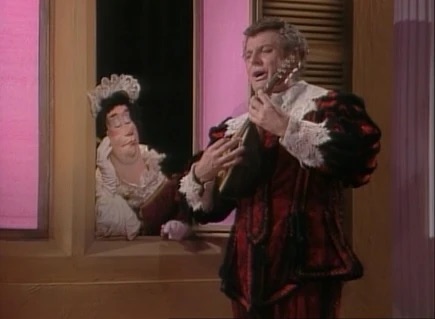
    Thomas Allen and Fughetta Fafner as Don Giovanni and Donna Elvira on the Muppet Show in 1989

    Some of my blog posts are for students and young singers who are trying to find their way onto the stage but I hope the same posts lift the lid on the strange world of opera for anyone interested.

    Student opera singers start the training process by learning to sing Vaccai, a book of songs which double as exercises for developing breath control and the bel canto style of singing. Soon, students will learn the simpler arias from well known operas and, if they are at a music academy, they will start to string the rudiments of singing while moving and telling a story together in a scene with their fellow students.

    It takes time to learn to coordinate, think and sing at the same time. At post-graduate level, singers start to think about complete roles they would like to learn. It’s important their teacher helps them find a role that fits their voice, their character and their musical ability – not all singers are technically skilled musicians, so learning a musically complex role might be beyond them.

    Not many baritones are born Don Giovannis but the role of the Don’s sidekick, Leporello, is as interesting and as demanding as any role in the same opera. For most budding baritones, the effort it takes to study and learn a role is better spent on learning Leporello than the Don.

    The first full role I ever learnt was Count Almaviva in Rossini’s Barber of Seville. It was a fun and central role which required me to act in various guises. It was a good choice for me, being a light, high-lying tenor role while the comedy required me to think about ensemble play and timing. Almaviva became my stock-in-trade for the first ten years of my career.

    Learning roles from frequently performed operas is a good preparation for a singer’s early years. The down side is that we tend to learn by copying the vocal mannerisms and characteristics of the singers well known for a certain role. When I was a student, all the baritones copied Thomas Allen and Thomas Hampson. Then Erwin Schrott came along and everyone wanted to perform it like him. If you want to develop your authentic stage persona, to find the real you in a role, learn a role without referencing someone else’s performance of it. I wrote the same thing in the auditions posts… be authentic, be YOU.

    So much of what we portray when we sing comes from deep within us. It’s the nature of singing; we can’t hide who we are when we sing, so the more of ourselves we can put into a role the more believable and three dimensional we will become on stage. I remember approaching my first roles as if I had to fulfil their prescribed requirements. It’s a natural mistake to make because the performers we see taking roles when we are students are usually very accomplished performers who have sung roles many times and have countless stage miles on their professional tachometer. Copying them is a way to accelerate the process of creating one’s characterisation but it’s not a portrayal born of individuality, of thought, of authenticity.

    Reading around the piece is a more robust route to building an interpretation of one’s own – it’s the fun part of learning a new role, anyway. Operas are nearly always based on literary texts – read the original. It sounds obvious but I am often surprised by how few singers read the original text. Herman Melville’s original novella of Billy Budd added reams of detail to the way I wanted to play Captain Vere. In preparing the role, I also visited Portsmouth to do a tour of HMS Victory to get a feel for life on a C18th 104-gun first-rate ship. I added to my research by studying the history of naval mutinies that kicked-off on board ships of the Royal Navy in the same period. I learnt about the strict discipline in the navy and the need for zero-tolerance public punishments that suppressed the powder keg of a ship’s crew’s animus towards its officers. The more I read, the more I knew how to be Captain Vere, caught in a dilemma between observing the rules of duty and trusting his instincts.

    I had the same experience when studying Lensky in Tchaikovsky’s Eugene Onegin. Pushkin’s poetic source text reveals all the characters in exquisite detail. after reading the original, I knew Pushkin’s characters like they were my friends. I invested in Lensky’s proud vanity and his insecurity, working with the director Deborah Warner to find simple ways to show the audience who he was. The word for a person who writes plays is a playwright. It’s a great word, especially in the case of Pushkin and Tchaikovsky’s opera, because the plot and characterisations are intricately engineered to inform each other like clockwork. Such a drama is wrought, like a ship is wrought, enabling it to sail without being vulnerable to implausibility or doubt.

    Deborah’s masterstroke in her production was to reveal Lensky’s pride and vulnerability when it was too late to excuse him for it. As he took his gun, he reached into his pocket and took out a wiry pair of glasses. Only at the last minute did we discover that he was out of his depth and horribly mismatched in the duel with Onegin. In Deborah’s version, the plot driver was as much Lensky’s ineptitude as it was Onegin’s ennui. It was a detail born of reading the source text and greatly informed my reading of the whole role.

    C19th opera was as close to mass produced popular culture as was possible to find at the time it was written. It was written to shock, entertain and change its audiences by holding the mirror up to them. It is the duty of opera singers to think of ways to make operas as relevant today as they were when they were written. Unearthing the detail to inform a full characterisation takes time and is better done during the learning process, as opposed to the rehearsal process, to allow ideas to take root.

    The first time I performed Death In Venice on stage, I arrived at the rehearsals thinking I would be wearing a linen suit, a hat and wandering around canals looking hot and bothered. The production team set about describing their concept on our first morning of rehearsals. No suit, no hat, no canals. Instead, I was to be Kurt Cobain and the story was a revisiting of his childhood as I, playing Cobain, spun out in the drug and booze addled final twenty four hours of his life before shooting himself. All my research was for nothing. I still think directors would be well advised to send out a treatment for their concept at least two weeks before rehearsals begin, allowing the cast to align their preparation with the creative team’s expectations. For some reason, no-one does.

    The learning itself is a laborious task. Memorising is mostly graft. I have discovered my memory is most absorbent before 9am. I learnt Philip Glass’s Satyagraha, written in Sanskrit and set to repetitive music, by getting up early in the morning and drilling the text over and over again in 20 minute bursts, testing myself as I went. After a break I would repeat the process for another 20 minutes. I would do this for two to three hours every day for a month until I had memorised it all. Packing texts and music into your head is the beginning of the memorising process after which you have to familiarise the newly absorbed material. A colleague once said to me that he did not consider a role learnt until he could sing it while distracted, by which he meant if could sing a role while ironing or doing the washing up then he was confident in his memorisation of a role.

    Once memorised, take it to be coached. An hour with a good coach who knows the opera and the repertoire is worth ten hours with one who doesn’t. An experienced coach will give you perspectives on a role that can only come from experience. The best ones will know where a singer can save their energy in order to be ready to give their all where it counts.

    Early in my career, I had the luck to be cast as David in Wagner’s Die Meistersinger von Nüremberg. It was to be Tony Pappano’s last production as Music Director of La Monnaie in Brussels before taking up the baton at Covent Garden. Tony was keen for me to be well prepared before rehearsals began and, knowing I was still young and inexperienced, took it upon himself to come to my flat in Highbury on three occasions at the end of long days of recording with Placido Domingo at Abbey Road Studios, to work on David with me. I still think of him sitting at my piano, schooling me in exaggerating the text as I sang, filling my David with his boundless energy and work ethic.

    Tony’s generosity with detail and experience equipped me with a full and individual reading of David with which I could make the role my own. After Brussels I went on to perform the role in Geneva, Edinburgh Festival, the Royal Opera and twice in Paris.

    16th Sep 2024

  • Aficionados

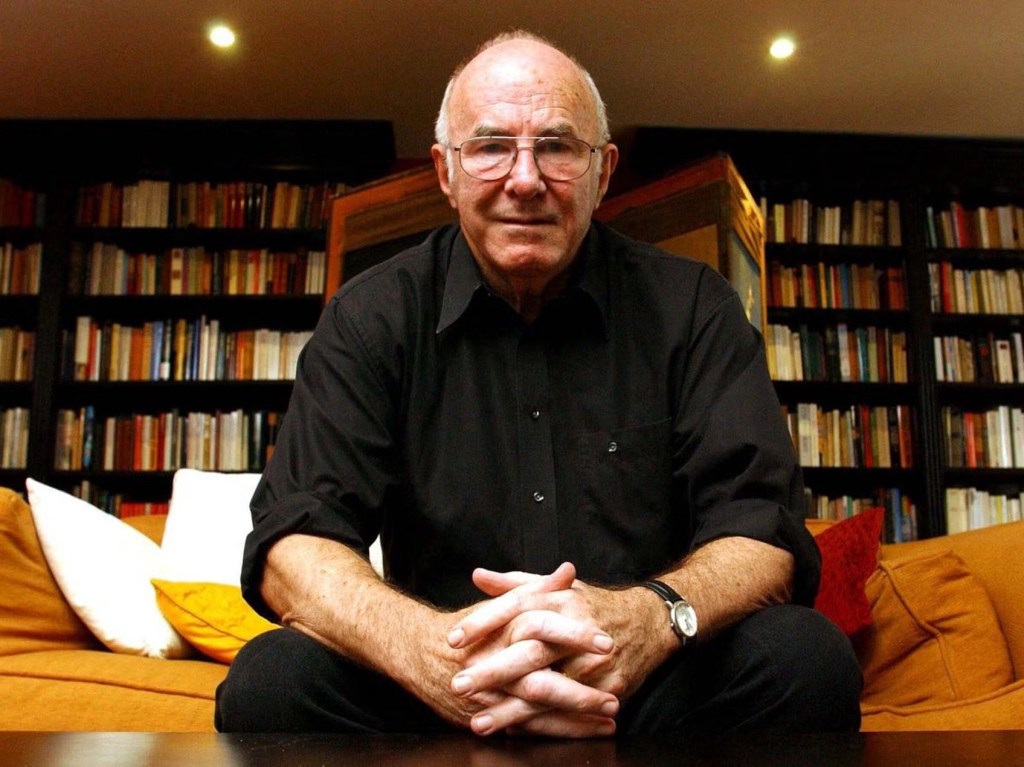
    Clive James

    This week, in a message to the Leeds Piano Competition, Sir Keir Starmer wrote “(Music) gave me the confidence to perform, and taught me so much about culture and creativity. Above all, it made me believe that music was something for me. I want that same belief for everyone. So as Prime Minister I am determined to put creativity at the heart of our school curriculum and ensure that every young person has access to music and all the arts – something I know was a lifelong passion of this competition’s long-time Founder, Chair and Artistic Director, the late Dame Fanny Waterman.” 

    At last we have a PM who recognises the value of music and the arts in education. Let’s hope he has some small change left over to fund arts in education after he fixes the NHS and fills the £22bn hole in government finances. 

    Following the loss of her seat at the general election on 4th July, champion for music (and the arts in general) Thangam Debbonaire is not Secretary of State for the Department of Culture, Media and Sport (DCMS). Instead, the post has been filled by Lisa Nandy, we’re told because she has a passion for football – I suspect she has a numbness for the arts. 

    Yet again, the expanding DCMS portfolio is represented by a minister for whom the post is a stepping stone to better things. Chris Smith was the last Secretary of State who had a genuine passion for the arts. Since Chris Smith stepped down in 2008, the post has been taken by eighteen ministers in succession, including Matt Hancock for six months in 2018. The worst was Nadine Dorries, who was set on executing the populist impulses of her buddy, Boris Johnson. “Level up” she said, to which ACE’s answer was to give us the parochial “Let’s Create” initiative and then level down London by setting ENO a disastrous ultimatum, axing support for the Britten Sinfonia and pulling funding from the Glyndebourne Tour. This to an industry which has been hammered by touring restrictions, thanks to Brexit, and struggles to lure aging audiences back to the concert hall since the Covid lockdowns. One could be forgiven for thinking someone has it in for classical musicians. 

    In an address for the International Opera Awards this year, Thangam Debbonaire chided parliamentarians when she said, “I’m never going to be a secretary of state who pretends they were at the football when they were at the opera.” She went on to say, “When you reduce funding for the arts, you make them more elitist”. Amen that. 

    I know I know, this is now a tired old trope. Rather than trot out numbers to reinforce why we should value culture and the arts, I thought I’d name a few people who are or were classical music enthusiasts. They tend not to shout about it.

    So, Edward Heath aside – terrible, awful, dreadful conductor – I’m outing the following:

    Frank Skinner (comedian and so much more) has the opera bug. If you don’t know his poetry podcast, I highly recommend it.

    Ruth Bader Ginsburg (RBG) went to every production at The Met in New York and holidayed at opera festivals. She would always come backstage to meet the cast and glowed in the company of musicians. 

    Alan Greenspan (Director of the Federal Reserve) studied clarinet at the Juilliard School in New York and started his career playing in various New York ensembles. 

    Condoleezza Rice studied piano at University of Denver, attending the famous Aspen Summer School before switching to academia. 

    Meryl Streep studied to be an opera singer at Yale. 

    Albert Einstein was an accomplished violinist and often said music helped him with his scientific thinking. 

    The novelist, James Ellroy, claims to have an affinity with Beethoven. When he appeared on Desert Island Discs, all his music choices were recordings of Beethoven. 

    The great Clive James had such a deep love of music that he chose not to write or talk about it for fear of failing to do it justice. His knowledge of C17th music was encyclopedic. 

    Hugh Laurie is a very fine pianist.

    James May, the TV presenter, is a keen pianist and a frequent concert goer. 

    Angela Merkel has Berlin Philharmonic season tickets for herself and her husband. Even when she was Chancellor, they would go to everything with no fanfare or pomp. They would simply show up, listen and leave. 

    I once saw Mark Rutte (Netherlands PM) at a performance of Bach’s St Matthew Passion. He sat in the front row, involved and visibly moved by the music. 

    French presidents Jacques Chirac and Francois Mitterand often went to L’Opéra de Paris. Mitterand prioritised the building of the Opéra de la Bastille as one of his Grands Projets. 

    Macron often attends concerts at the new Philharmonie concert hall in Paris. 

    The actor Simon Russell Beale was a chorister as a boy and remains a fine pianist. 

    Recent England cricket captain, Alastair Cook, was head chorister at St Paul’s Cathedral. 

    Matt Bellamy, lead singer of Muse, started his musical life as a classical pianist. Muse’s a cappella track “Drones” is a direct lift of the Benedictus from Palestrina’s Missa Papae Marcelli – niche!

    Stanley Kubrick listened to an eclectic mix of classical music when he edited his films. His quirky soundtrack choices often came as a result of happy accidents during the process. 

    Sir David Attenborough is a recording nerd with a huge collection of CDs and records, I hear.

    The late Barry Humphries, another Australian melophile.

    And last but not least, King Charles III loves and knows music, as we all witnessed at his Coronation, which was planned around the music. 

    If you like classical music, you’re in good company and if you know of any more to add to my list, please do so in the comments.

    13th Sep 2024

  • Audition Panels

    Adolfo Corrado and Beth Taylor at BBC Cardiff Singer of the World

    Can I squeeze out one more post about auditions? I’ve got the material but I don’t want you to think I’m fixated on the audition process. Happily, the rigmarole of stepping up to the plate and giving 100% in two songs is behind me but the intensity of those days remains etched on my memory.

    As I wrote in the previous post about preparing for an audition, I sometimes sit on panels these days. I very much enjoy the process and am inspired to hear and see how well trained and prepared young singers tend to be these days. While I am a relative newcomer to panels, many of the invigilators I sit with have been listening to young singers for years, some for decades. It’s the bread and butter for a casting director of an opera company.

    Among other things, panellists who are casting directors are on the look out for the “next big thing”. If they can catch that budding star early, they can build a working relationship from the beginning of the singer’s career. A working relationship puts the casting director in a position where they can influence a young singer, suggesting a ladder of roles that enable the singer to mature while developing their technique and expanding their repertoire.

    Stars are few and far between – right now there are about five supernova stars in the opera world. With only so many days in the year, a casting director will build a strong relationship with them to ensure they return to their opera house year after year.

    There are about ten full time opera houses in the world that can afford to pay top dollar for the biggest stars. They vie for the time of the top stars who are paid by the performance. Because the stars are not remunerated for rehearsing, they prefer to rehearse less and perform more.

    For an opera company to maintain its place in the golden circle of the top theatres, it has to include most, if not all, of the top stars in its casting for each season. That is a very big bill to foot and a strong relationship can help to persuade the star to return regularly and not make inordinate demands on the theatre’s coffers.

    After that, panels are made up of agents, teachers and singers, all with a proven track record. One doesn’t have to sit on a panel for long before patterns in the routine appear. In a day, one can hear up to thirty auditions, of which twenty-five will be average to good singers, two will be outstanding and the rest will be below par. There are national characteristics in the way singers are schooled. Germans tend to give one kind of presentation, Spanish another, French another and so on – I’m confident I will write about different schools of singing at some point.

    Many candidates present a bel canto aria to begin, followed by something tender and then end with a show-stopper. Occasionally, a singer will buck the trend and programme music they think plays to their strengths – in my view, a good call.

    I have devised a points system so I can make notes and establish a metric from the outset of each day of auditions. As each candidate sings, I award a maximum of 25 points – 5 for vocal technique, 5 for artistry, 5 for text, 5 for style (meaning their attention to the historical style of each piece) and 5 for what I call “magic”. Magic is when, for whatever reason, I put my pen down because I simply want to hear someone sing. They can have a low score in all four of the first categories and still possess magic. It can stem from their charisma, character, charm – all the words beginning with ch-.

    On one occasion, a co-panellist asked me “What’s your opinion on the Korean problem?” I was shocked because I know that person to be kind and intelligent. I assumed they were being ironic and replied “I think it’s a very nice problem to have.” Their implication was that the market is awash with excellent young singers from South Korea who could clean up at most competitions if they were judged on technical ability alone.

    On another occasion, it was apparent that one of the three provided pianists was a handicap for any singer with whom they were paired. I raised this observation at the end of the first day of the selection process. The chairman of the panel asked me to reveal which of the pianists I thought was inadequate. To me it was obvious but I didn’t want to become embroiled in internal politics. Detecting agreement from others in the room, I said “I’d prefer not to name them. As there are two remaining rounds of the competition, can we ensure that no singer has to sing with the same pianist twice?” I considered this a fair and neat way to circumvent any awkward scenario. My idea was implemented, I’m happy to record.

    Once, a casting director confided in me that if anyone presents the Jewel Song from Gounod’s Faust, they automatically put a strike through the name of the soprano. The Jewel Song happens to be a good audition piece and for this reason appears in many sopranos’ auditions. I understand that casting directors hear singers day in, day out and that familiarity breads contempt BUT to disqualify a singer at the beginning of their career because they chose a song you don’t like, to my mind, is beneath contempt. If it’s so bad, ask them not to bring the Jewel Song when the audition is scheduled.

    I like it when a singer comes with a story to tell, when they use the space and treat the piano as a prop. In my view, and within the bounds of taste, if a singer wants to make an impression, they might consider everything as an opportunity to be maximised. I also like it when a singer has the confidence and class to stand there and deliver good, uncomplicated, accurate singing.

    If the audition programme has high points, make sure you can hit them. If you decide to sing “Nessun dorma” in an audition, make sure you have a high B♮ you can rely on.

    I once heard a good Spanish baritone sing “Eri tu” from Verdi’s Un Ballo in Maschera. There aren’t many good Verdi baritones around. I thought he had real potential and he had the right devilish look about him. It was all good except he didn’t hit the big note that all the aficionados wait for. I wanted to put him through to the next round but, for the other panellists, not hitting the big note was a red line.

    I write all this because this is the process by which singers make it to the stage, or not. They often travel long distances, buying tickets they can ill-afford, staying in the cheapest accommodation they can find, prioritising the slender chance of making an impression over a social life. They have achieved heroic deeds, even before they make it to the opera stage. And for very little, if any, return.

    11th Sep 2024

  • Audition Story: Epic Fail

    Ton Koopman

    The story of my worst audition goes like this: in 1995 I left the Guildhall School of Music and Drama and walked more-or-less straight into my first professional opera production with Welsh National Opera. 

    It would be my first crack at the role of Idamante in Idomeneo, a good role and perhaps the character with the most pathos in Mozart’s early opera. In the cast were Anthony Rolfe Johnson and Rebecca Evans while Charles Mackerras was conductor. I knew how fortunate I was to be working at such a high level straight out of music college. 

    After opening at WNO’s home opera house, the New Theatre in Cardiff, we embarked on a tour of cities within a hundred mile radius of Cardiff. Late in the run, we had a performance at the Mayflower Theatre in Southampton. Southampton was near enough to London, my home town, for me to travel down on the day of the performance and there was plenty of time to catch the train home after the final curtain. 

    Except, on this occasion, for an unforeseeable reason, a handful of the cast – two chorus members, I think – were delayed in getting to the Mayflower and the curtain was held for 15 minutes, meaning the performance began at 7.45pm instead of 7.30pm. The 17 minute buffer at the end of the performance before the last train to London was suddenly reduced to 2 minutes. 

    “Yikes!” I said to my dresser, “I could miss my train home.”

    “You’ll have to stay here in Southampton. You might be able to get a room through the company at the place we’re all staying in.”

    “I’ve got a plane to catch at 6.30am tomorrow morning.”

    “Oh, that’s not ideal. Can you catch a later plane?”

    “I don’t think so. I’ve got an audition in Amsterdam at 10am.”

    “That’s very not ideal. You might get lucky if Sir Charles picks his feet up.” If there was certainty in anything it was Mackerras’s impeccable sense of tempo. It was very unlikely he would vary any of his studied speeds. 

    “Can someone make him an extra strong coffee at the interval? Failing that, can I change out of my final costume on stage. And could you bring my stuff to the stage so I can bolt for the train?”

    “What about the makeup? You’re covered in dragon’s blood in the last scene with those gashes and all.”

    “Oh-oh. Forgot about that.” I usually had a long shower to get the layers of makeup and Vaseline smeared all over my face and torso after each performance. “I’ll have to do that once I get home. I’ve got to catch that train or I’m screwed.”

    The last scenes of the opera seemed stubbornly slow as I willed the orchestra to accelerate. At the final curtain I snatched my clothes and in a whirlwind of movements changed, handed my costume to my dresser and headed for the exit. 

    As I ran across the foot bridge connecting the theatre to the train platforms I saw my train depart for London. I had no plan B. 

    I stood at the top of the steps that led down to the platform as the last carriage slipped past me below my feet. It was only now that I became aware of the rain that had started to fall. 

    Still carrying my hard-bound score of Idomeneo in my hand, I placed it in my shoulder bag to protect it from the rain. What now? In 1995 I didn’t have a mobile phone to call and make alternative arrangements. A taxi wasn’t an option, I simply could not afford one all the way to London. 

    As the rain began to fall harder and harder, I resolved to get a taxi to a motorway service station, outside Southampton, from where I would have more chance of catching a lift with someone travelling to London. By the time I arrived at the service station the rain was pelting down. Under the shelter of the petrol station canopy, I took out my Idomeneo score and, with a biro, scrawled into its back cover “LONDON PLEASE”. I then stepped out into the pouring rain and stood at the exit road holding my score out in the hope of flagging someone down. 

    The time was now 11.15pm. Drenched and cold, I would say “Please please please please please” as every car drove past me. Eventually, I returned to the petrol station to get out of the rain and caught the headlines on the newspapers that had now arrived in bundles ready to be sold the following morning. 

    “Rosemary West: Monster Is Guilty” read one. The rainy night on which I was trying to flag down a lift to London covered in dragon’s blood and looking like a drowned zombie had coincided with the day of the verdict in the trial of the accomplice of one of the most vile cases of serial murder of the C20th. Now I understood why everyone seemed to speed up as they saw me with my LONDON PLEASE sign. 

    Eventually, a technician who worked for Chubb and who had been sent from London to Southampton to fix a faulty alarm system took pity on me. The time was now about 1am and I had five and a half hours until my flight to Amsterdam. 

    The Chubb technician dropped me in Hounslow, where he lived. From there I got a taxi to my home in Highbury, arriving at 3.30am. I snatched forty minutes of sleep before rising again and catching a 4.30 taxi to Heathrow. I boarded my flight and slumped into my seat with a sense of relief that I was finally back on track. 

    From this point, all was smooth until I walked into the artist’s entrance of the Netherlands Opera. I presented myself to the guard and a rustling of papers followed as he looked for my name on a list. The phone was lifted and a call made which concluded quickly. 

    “There’s nothing here. You’re not on the list.” 

    “But I have an audition with Ton Koopman.”

    “Not here, you don’t.” The Dutch and their double negatives, I thought. I turned and looked for a public phone to call my agent in London.

    “Hello Annette,” I said nonchalantly as she picked up the phone in the office.

    “Hello dear. Everything alright?”

    “Yes yes. Absolutely fine thanks.” I said, not wanting to let on about the string of cockups that was unfolding. “Can I check the venue for my audition with Ton Koopman?”

    “Yes dear. Hold on.” A pause followed and then the sound of the receiver being picked up off the desktop. “It says here the Oude Kerk. Go to the side entrance and ring the bell.”

    I found the church and circled it, looking for a vestry or something like a side entrance. My stress levels were high again when I eventually found the door. I pressed the bell and a voice crackled from a speaker. 

    “Hello. Sorry I’m late. I’m Toby Spence. I’m here for an audition with Ton Koopman.”

    “No you’re not.”

    “I’m sorry?”

    “Your audition is on Monday. Today is Friday, yes? Your audition is on Monday.” And with that the voice hung up. 

    I stood there open-mouthed at my stupidity. On this one occasion I had opted to do all the organisation and travel planning myself, taking the burden off the agency. It was the last time I was to make that mistake. Shoulders sagging, I turned and trudged back to the Amsterdam Central Station, catching the train out to Schiphol to fly back to London with nothing to show for the exhaustion of the past 24 hours. 

    I returned home and made light of my stupidity, booking another flight to Amsterdam for the Monday. 

    By the time Monday arrived I had developed a cold, possibly from standing in the rain for hours on Thursday night. I walked into the audition room to meet Ton Koopman for the first time. I then howled the Bach aria he had specified for him, failing to show any élan, style or musicality with my now croaky voice. When I say howled, I mean yodelled; I had no control over my voice. It broke and cracked and seized and caught and sagged and I even ran out of breath in one long fast run of notes. I knew it had gone badly and that nothing would come of it. And, indeed, nothing did come of it. I remain a fan of Koopman’s Bach but my fandom never translated to working with him – a lifelong regret. 

    I was furious with myself for days afterwards. I never told my agent about any of the chaos in the run-up to my bad audition but resolved to ask them to do my travel and scheduling until I had more experience. 

    10th Sep 2024

Next Page

Blog at WordPress.com.


Loading Comments...
 

    • Subscribe Subscribed
      • Toby the Tenor
      • Already have a WordPress.com account? Log in now.
      • Toby the Tenor
      • Subscribe Subscribed
      • Sign up
      • Log in
      • Report this content
      • View site in Reader
      • Manage subscriptions
      • Collapse this bar