Toby the Tenor

    • About me

  • Subsidised Vowels 3

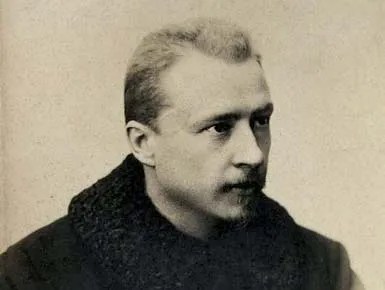
    Hugo Wolf

    Part 3

    Having fused the song with natural speech, the singer is on the right track to making song relatable. The principle behind making the sung words sound as close to the spoken sounds as possible is to remove any barriers between the listener and the performer. 

    If the listener is distracted by idiosyncrasies of pronunciation it’s going to be harder for them to be transported. If the listener believes in the authenticity of the pronunciation they can think about the interpretation. 

    Unlike any other instrument, singers have to enjoy language. I heard Frank Skinner on his poetry podcast recently talking about AE Housman. He talks about the value of reading verse aloud and that he wishes poets would sometimes indicate how to stress their poetry in order to reveal its intended meaning. I’m glad they don’t because the pleasure of reading poetry is to be found in mining the ambiguities for deeper significance. 

    Part of a singer’s art is to study the text separately from the music and to find his or her way into it for themselves. Taking in isolation the music of settings by different composers of the same text, the songs are often unrecognisable as flowing from the same poetic source. 

    Take Goethe’s poem Ganymed, as set by Hugo Wolf and Franz Schubert. Without the text the composers focus on completely different aspects of the poetry. Schubert’s pictographic version seems to focus on the pastoral setting, imbuing Ganymed with a nonchalance that Schubert imagined would have caught Zeus’s eye. This is a shepherd boy of pre-Freud insouciance, unaware of his allure for the über-God and passive in Zeus’s advances. We experience his privilege in being a chosen one through his excitement to be taken up by a father figure. 

    Wolf’s setting, also written in Vienna but after the explorations of the later C19th had taken hold of the psyche in the city, drips with erotic heat. The boy in his version is as much protagonist as chosen one. I enjoy programming two versions of the same text when I’m putting a recital together. This is where we can reveal the art of song in its starkest relief. Before we can live up to the demands of two versions of one song text we have to have lived our own experience to pull out the subtleties of the difference in the two composers lived experience. 

    I’ve been asked many times “What one piece of advice would you give a young singer?” The answer is always the same: be someone. In order to be a singer worth listening to you have to have something to sing about. Being able to read a text and recognising within it something of oneself is halfway to an interpretation. Singing is part interpretation and part autobiography in that the singer embodies the music and the text as one entity and synthesises it into something recognisable for the audience. 

    To provoke an emotional response in the audience, the singer often has to be mindful of working in opposites. Sad singing does not make audiences sad. If anything it distances the audience. To draw the audience in and trigger in them a sense of the sadness within a situation, the singer has to intelligently search for textual clues that lead to a truthful rationalisation for the journey between beginning and end. 

    In Schubert’s song cycle Die Schöne Müllerin, the further the protagonist descends into jealousy, heartache and despair the more it helps the audience to feel his journey if the singer focuses on the humour, denial and lack of self-awareness embedded in Wilhelm Müller’s text. The characteristics humanise him and in doing so point up the tragedy of his eventual suicide.

    Are there limits to interpretation? Only if the poet is too clever for their own good. WH Auden and Chester Kallman’s libretto for The Rake’s Progress is so dense with scholarship it’s hard to know what to do with it in a staging. Tom Rakewell’s manifesto aria, Here I Stand, is Martin Luther as interpreted by Shakespeare’s baddie in King Lear, Edmund. Clever clever but only useful as characterisation in the wider context of the opera. There’s no way the Tom can do justice to such detail in the moment without sailing over the heads of the audience. 

    The above are no more than examples of interpretation. The gift lies with the singer to look inside themselves to find common ground with the poet and composer. The more they have lived their life, gained experience and read with breadth, the more they will have to bring to the music and text. 
    10th Sep 2024

  • Subsidised Vowels 2

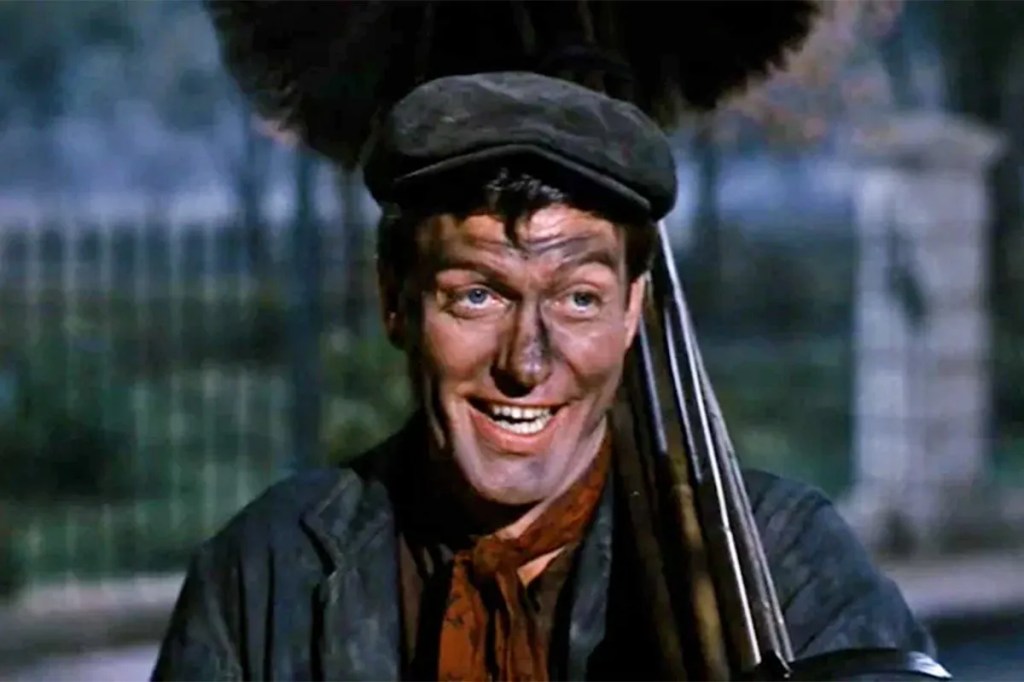
    Dick Van Dyke as Bert


    Part 2

    When I teach a class, I sometimes ask students to point to their instrument. After the quizzical looks they start to lift a hand and point either to their necks or their mouths. It’s a trick question. If singers have an instrument, it’s the text. 

    Every language is a different instrument for the singer and to master singing is to master the idiomatic specificities of each one. Too often I hear young singers forming sounds, in French for example, as if they could transfer English vowel formations directly. Very few French vowels have a direct relation to English. 

    In English there are two aspects of pronunciation that make it very difficult for second language English speakers to sound like first language speakers. The first is the schwa, the neutral “er” sound that colours almost every English vowel sound.

    Listening to the same students I was teaching in choir practice prior to writing this entry, I heard them sing “thu Holly Gost” instead of the “the Holy Ghost”. The difference is simply identifying the true sound we make when we say Holy and Ghost. It’s a blended vowel. The mouth shape is that of an O while the sound creates behind the mouth aperture is closer to an “er”. 

    The problem is that the distorted O sound has become an accepted mispronunciation of sung liturgical text. Because so many British singers spring from the UK’s choral tradition, there are many young British singers who get into the habit of distorting the true vowel sounds when they sing non-liturgical music. 

    The second omission of the true sound of the words in Holly Gost is the diphthong. As we lift the tongue to articulate the L of Holy, we close the stream of air as it passes through our mouth and the “er” sound shifts to an “oo” sound. We’re so used to hearing and forming diphthongs when we speak that we don’t realise we’re doing it. 

    Diphthongs are seasoning on English text. Too little and it remains colourless and bland; too much and it becomes distracting and mannered. My preferred method of deploying diphthongs is to delay them until the very last moment of the measured vowel, for them to be part of the next consonant. 

    When I hear a singer who has identified the true colour of vowels within words and who works to adapt their technique to sing the text as if they were speaking it, I know I’m hearing a born singer. That’s to say, someone who sings in order to enhance the text, to take its meaning into a meta realm where it channels the composer’s emotional and lyrical response to the words. 

    So far I’ve only touched on the art of singing in English. In second languages – French, Italian and German being the most commonly sung languages – we have to be studiously precise to convince native speakers that we have mastered their language. French and Italian audiences are particularly picky about authentic pronunciation. They react to poor pronunciation as if it were an affront. English audiences tend to be mildly amused, at worst, if they perceive inauthentic pronunciation – think Dick Van Dyke in Mary Poppins. I once heard a Parisian audience boo a singer for her poor French. 

    On stage, the opera singer’s mind is occupied by contact with the conductor, telling the story, breathing, pitch, remembering how the music goes, listening to the orchestra and singers, the location of the other performers on the stage, along with the meaning of the text. If we add pronunciation to the already long list of concerns we can reach overload. Language coaches are an important part of the preparation process. They are present in every rehearsal and the good ones are willing to make themselves unpopular to enforce their standards of clarity. 

    Mastery of language is the quality that distinguishes great singers from good singers. The precision engineering of technique required to find the natural sounds of words, often relying on the language coach to act as a mirror to help the singer find the right sounds through trial and error, takes time and patience. Repetition is a vital part of the process, allowing the technique to become second nature to alleviate the long list of things to process on stage.

    That is why I say language is the instrument of singers. Every language is a different instrument requiring a different set of disciplines and subtly modified technique. 

    Tomorrow I will write about text and interpretation: what it takes, once a singer has learnt to be disciplined about the fidelity of sung text to spoken text, to hold an audience’s attention and take them on a meaningful sung journey. 

    10th Sep 2024

  • Subsidised Vowels

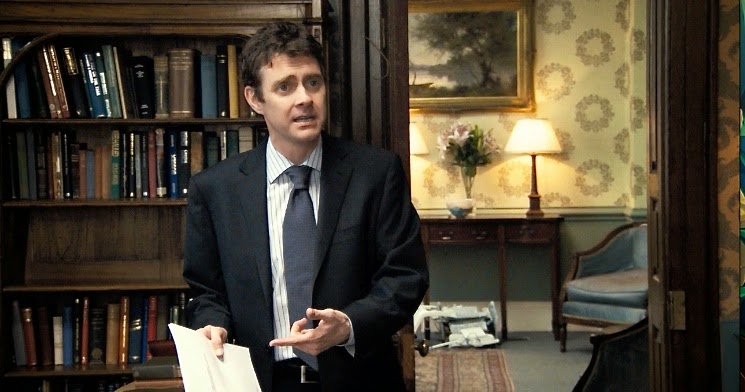
    Paul Higgins as Jamie MacDonald

    Part 1

    I taught a class of young aspiring singers last night. They were all natural and listenable singers, each with their own strengths. 

    The one thing I try to impress on students is the importance of text. Making a nice sound is arbitrary if the singer doesn’t convey the words in pronunciation or sense. 

    Young singers tend to work on vowel sounds in isolation. Exercises go ah-ah-ah-ah-ah-ah-ah or ee-ah-ee-ah-ee. It’s the way we’ve always taught singing and the result is that young singers have always undervalued consonants as tools for communicating through song.

    In Armando Iannucci’s film “In the Loop”, the gruff advisor Jamie MacDonald (played by Paul Higgins) walks into an office in which a Bach aria can be heard playing through a speaker. He points at the source and snaps “Turn that off. It’s just vowels. Subsidised vowels.” The line makes me guffaw every time. 

    Actors say vowels carry the emotion and consonants show the intention. I agree with them and work with young singers to accept that consonants are as much a part of singing as the vocalisations in between. Part of the challenge is to get the students to re-engineer their technique to accommodate the added effort of projecting the percussive sounds. Strong consonants require more air from the lungs and therefore more strength to support the extra intake of breath. 

    The extra support requires everything they used to think about singing to change. Often students struggle to accentuate their consonants as much I want them to so I have to win their trust. A look of alarm appears on their faces as I demonstrate how exaggerated I want them to be when they sing Your HaNDS Lie oPeN. If you try it yourself you will find that the vowels naturally balance with the consonants because the passage of breath releases into the vowels having being restricted by the articulation of the tongue, teeth and lips for the consonants. 

    One class is not enough time to establish all the changes that need to take place for a student to fulfil their potential but at least they discover there’s more than one way to sing and will hopefully explore their discovery after our class. As I said, to get them to do so, trust is imperative. 

    The teacher-pupil dynamic has changed since the millennium. When I was a student, masterclasses were a lottery in which students were never sure whether the person taking the class would be encouraging or demeaning. Elisabeth Schwarzkopf, the poster child for the post-war revival of music in Germany, was famous for her public humiliations of young singers. Thankfully, those days are gone. Building a young person’s confidence and self-belief yields positive results quicker than coercion with the added benefit of individuality thrown in. 

    Still, the look of surprise and uncertainty as I lead them into the unknown requires reassurance. I tell them “change feels strange” and hope the words resonate in all aspects of their lives, encouraging them to leave their comfort zone and try something new. 

    And that’s just the sounds. I will dig into text, poetry and song tomorrow. 

    10th Sep 2024

  • Lifting the hammer

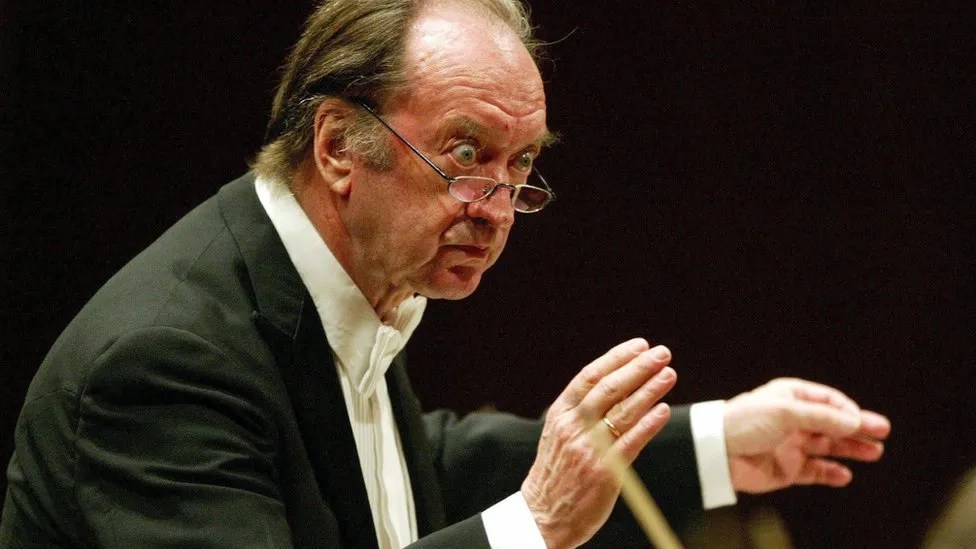
    Nikolaus Harnoncourt

    One of the best lessons in acting I ever learned was in conversation with a friend’s mother, Lynn, who happens to be an actor. Lynn drew my attention to natural speech patterns in which the rhythm ebbs and flows as we reach for the right words to convey our meaning. 

    That lift and drop of speech is the manifestation of improvisation, creative thought and action in the same moment. When we are occupied with simultaneous thoughts and deeds we have little processing space for anything else and we reveal our inner world to the outsider. We become vulnerable and it’s easier to see the truth, or lack of it, behind the words. 

    For an actor to credibly impersonate those hesitant processes takes practice and skill. When they achieve it the words lift off the page and become their own. They become the person the playwright imagined and we, the audience, have our disbelief suspended. We cease to be audience and become witness. 

    After Lynn described this skill to me as we said goodbye one evening, I walked home thinking about her words and how her gaze had fallen as she demonstrated to me what she meant. Lowering her eyes, she searched for the next word. Her hesitance made me reflect on “I think, therefore I am” and the gap between her last word and the next held my attention. 

    I vehemently believe music is a language and shares all the aspects of any other language. After an informal school concert, when I was a young boy, I remember my mother telling me how “musical” she thought I was. She was a musician herself and I was delighted to have her recognise my musicianship. In retrospect, I think she had noted my tendency to pull the music around to fit the phrasing and emphasis I wanted to give to the melodies in Schumann’s Romanze III. 

    In later years, I shunned the instinct to let the music ebb and flow, believing it to be an affectation born out of habit. I preferred my reading of music to be literal and as close to what was on the page as possible. Some composers are prescriptive in their indications (see my previous post – Rebrand? 16 July, 2024) of tempo and expression. Benjamin Britten leaves nothing to chance and if his markings are observed, his music always makes sense. 

    The tension escapes if the pull and push of the music lacks discipline, like a tyre with a slow puncture. Anyone who has sat in a church and listened to a Bach fugue played on the organ will have experienced the building pressure of the music as it chunters towards its final cadence and the sense of arrival as the tempo lifts in the final bar to fall with satisfaction onto the last chord. There was a time when I became puritanical about maintaining tempo unless indicated. 

    Once, working with a legendary Viennese conductor, the late Nikolaus Harnoncourt, I pointed out to him that when he gets tired he tends to slow down at the end of phrases and that the tension in the music dissipates. Many conductors would have told me to pipe down but Nikolaus respectfully heeded my impertinent observation, saying “Yes, the hammer seems to get heavier when I become tired.” He meant the up beat, the final beat in a bar before the down beat, tends to be slower than the beats before it. 

    One of my private passions is music played by military bands. Their purpose is to provide marching music, so the tempo has to be rock solid. I get a thrill when I hear the effect the rigid tempo has on cadence. There’s no hammer lifting and it lends the music a solemn urgency. The line of tension in the music stays taught from beginning to end. 

    But then there is music that comes from the inner world of thought and feeling. I used to deny even that music its natural tendency to lift and fall. Reflecting on Lynn’s words I now realise this is to deny the music and the performers playing it, the window on humanity that skilful rubato, the term musicians give to the ebb and flow, offers to the listener. A virtuoso interpreter of Chopin will trick their listener into believing they are witness to an improvisation; that the music is coming straight from the heart of the soloist. If overdone, I distance myself from the indulgence. If done well, I surrender to the music’s invitation to be transported with it.

    10th Sep 2024

  • Paris, London, New York

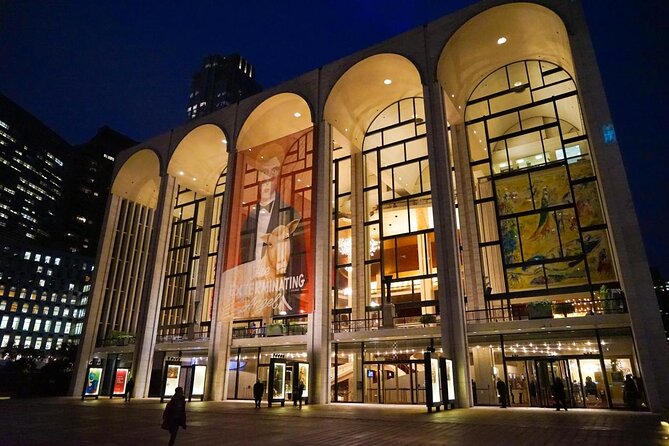
    The Met, New York

    I ❤️ Paris (part 3)

    Half of the operating costs of Paris Opera are met by government subsidy. By contrast, the subsidy Royal Ballet and Opera (RBO) receives from Arts Council England represents less than a sixth of its costs. 

    The effect of the different levels of subsidy touches on every aspect of the creative product of the two companies. Both are run as charities and therefore are not profit making. When working at Paris opera, during its previous administration, I observed the people charged with creating productions were not overly concerned by wasting money in the pursuit of their creative goals. 

    I remember a production in which the soprano, Kate Royal, was to be costumed in haute couture. Box upon box of black high healed shoes were brought in from Dior, Chanel, Louis Vuitton and so on. Kate would try them on and give a thumbs up to a pair. She’d wear them on stage and if they were not right she would try another pair – on a raked (sloped) stage, having the right shoes is important. Eventually, more boxes were brought in, more shoes were trialled and so on until Kate was happy. We found out later that all the shoes that had become scuffed in any way on stage were paid for out of the production budget. Thousands of Euros must have been budgeted for finding Kate the right shoes. That would never happen at RBO. 

    Wastage aside, the extra subsidy in Paris provides a financial buffer in which risks can be taken. In the list of stage directors for new work of each company there are a handful of names that appear on both lists. But there are names in both lists that you would not see in the other. Some of the differences are drawn along local talent lines and some differences can be observed because they suit the local taste. In the Paris list you will find Robert Wilson, Tobias Kratzer, Olivier Py, Claus Guth, Kristof Warlikowski among others. Some have produced worked at RBO but by-and-large their aesthetic is deemed to be too arthouse for London. 

    Parisian audiences now have a taste for challenging “pourquoi pas” story-telling. The risk-willing boss in Paris knows that if ticket sales fall from 95% of capacity to 85%, relatively speaking, that will be a drop in the ocean for the annual accounts of the opera house – by my rough calculation, a drop in seat sales of 10% for one new production represents a hit to the operating budget of 0.06%. It’s worth taking a risk for the reward of scoring a cause-célèbre that can be revived without risk over seasons to come. 

    For RBO, the hit is slightly less than double that because they are the company is considerably more reliant on ticket sales for their operating budget. 

    As I mentioned at the beginning of this three-parter, Paris audiences enjoy a scandal. They are happy, on occasion, to boo a production and then go and tell their friends it was a scandal. That will not stop their friends from buying a ticket, it might even encourage them because they want to be in the conversation. 

    In London, we may think we are open minded but my observation is that London audiences are more conservative, for better or for worse, than Parisian audiences. A poorly received production can be box office death in London and the RBO storage is full of scenery that didn’t get a second run out. Conversely, the talent of British directors for finding both inventive and inclusive ways to mount operas has brought about exquisitely conceived work. 

    As the UK sits between continental Europe and North America in many ways, so London sits at a halfway position between the funding model of the major European nations and that of the US where there is almost no government subsidy to speak of. The rest is raised from corporate sponsorship, private donors, ticket sales, restaurant/bar revenue and venue hire-outs for events. Private donors are incentivised with generous tax breaks for supporting good causes, including opera. 

    Fundraising in the US is complicated by the aging process of the individual donors who want to give to opera. The children of wealthy New Yorkers who donate to The Met Opera are not interested in supporting the passion of their parents. They consider opera to be old hat, a dinosaur. The result is that the productions have to be designed to appeal to an aging demographic. 

    The productions of William Kentridge and Simon McBurney, among others, have cut through the appetite for traditional-looking designs with high quality, high cost, avant-garde presentations. Slowly, The Met has turned around its dusty old-world identity by finding a seam of North American subject matter allied to a musical vernacular and high quality home-grown artists that is appealing to both older and younger audiences. The cost of the long, hit-and-miss search for the seam has been incalculably high. The young audiences are buying tickets but, generally speaking, they are not donating enough to make up the shortfall left behind by the disaffected or the natural wastage of the older generation. 

    All the above barely scratches the surface of the difficulties faced by RBO and the Met. Paris Opera sails along seemingly untroubled by the shifting sands of demographic, taste and funding to which New York and London are exposed, a situation that will only become more challenging as ACE continues to reduce its funding for RBO incrementally each year – a commitment agreed by RBO and ACE before Covid. 

    The fundamental difference between the three lies in the better provisioned arts education provided by French schools and a funding model less reliant on ticket sales, sponsorship and donations. The trend for decreased funding from ACE will force RBO to search for a style of home-spun audience-relevant opera. We can only hope government support for music education might generate interest among future generations. 

    10th Sep 2024

  • Opéra/Opera

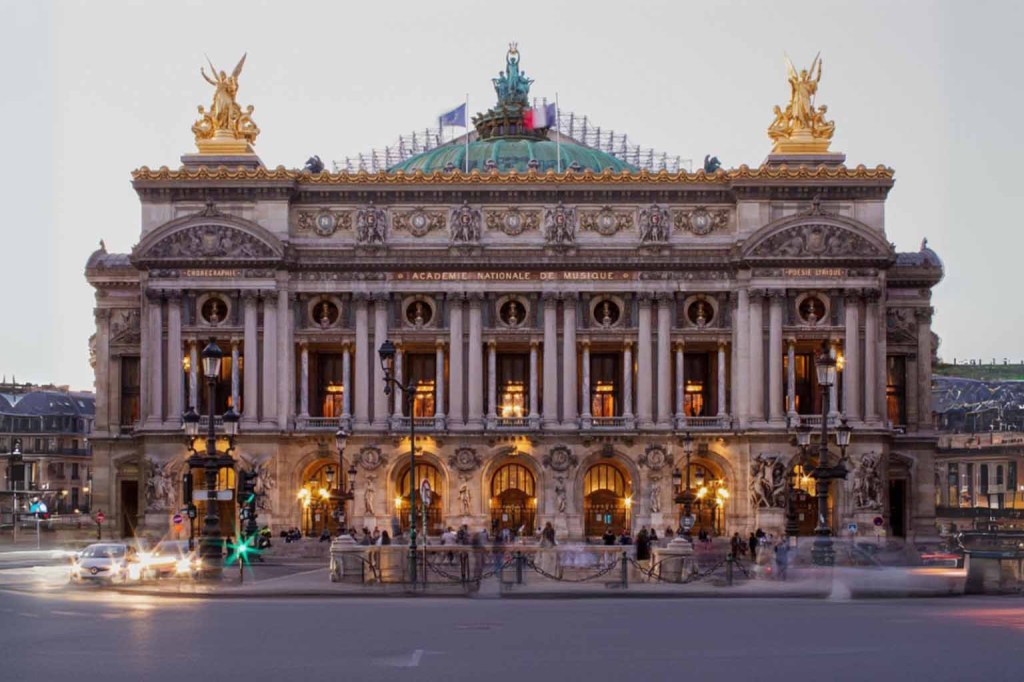
    The Opéra Garnier in Paris

    I ❤️ Paris (part 2)

    State funding for opera in France is generous compared to that of the UK. The long grass of detail in understanding the specifics of the differences between the funding models is a gift for whataboutists who prefer to create open-ended confusion than to draw concrete conclusions. 

    For clarity reasons, I will set out comparisons, focusing solely on the flagship state opera companies because they are directly comparable in terms of their top line ticket prices, iconic theatres, world class standards and world famous ballet companies. 

    My purpose in doing so is to try to understand why opera in the UK is scrutinised for access and value for money in a way that opera in France is not. 

    The first thing to observe is that France does not have the same class system we have in the UK. The UK class system has come to be defined by the way we educate children up to the age of 18. In France they have a state education system that is centralised and secular. Arts education is offered and in the Baccalaureate system, school students from 15 to 18 have to study soft subjects as well as STEM – science, technology, engineering and maths. Private schools in France do exist but not in such a way that there can be said to be a two tier system. One glaring difference between the private education systems of France and the UK is that French private schools are day schools, whereas in the UK they are mostly boarding schools. 

    In the UK, the two tier education system has created a rift and social segregation that extends upwards through all generations. Opera has come to symbolise that rift. Some people who choose not to go to opera identify those who go to opera as being from a different social class from themselves. Of course, this is a symbolic difference and is not borne out in reality. There are many people in the UK who enjoy opera who were not educated at a private school. 

    What is true is that the private sector offers education in subjects that engage with and are advantageous for the understanding of opera: music and languages in particular. Since Michael Gove’s reforms under the Cameron government, state schools have been encouraged to strip away non-essential subjects from their curriculum, since when music and languages in state schools have become casualties. 

    The difference between the two schooling systems has a profound effect on the attitude to music in all levels of society, including children in education. This in turn affects the way politicians view music. In France, music education, and therefore music understanding, is available to all. In the UK it is only available to the privileged. 

    In France, the minister for culture regards part of his role to be custodian and protector of music for it to be available to all citizens. 

    Oversight for state funding for the arts in England and Wales has been handed to Arts Council England, a quasi-autonomous non-government organisation. Government support for music as entertainment in the form of opera and orchestral concerts has become a balancing act because music education only takes place in private schools. Politicians want to support the sector while acknowledging a vocal cadre who believe music is for the privileged few and should be paid for by them. 

    I acknowledge, all of the above is very much heresay and how I see it. Now for some numbers:

    The Royal Ballet and Opera (the new brand name for the company that used to be called the Royal Opera) received £23.6 million of public funds in the 2022-2023 financial year. This funding represents about 15% of their total unrestricted income. In the same financial year, Royal Ballet and Opera generated £52.6 million from ticket sales – about 31.6% of its total costs. 

    In the same year, Paris Opera received state subsidy of €99.8 million (£84 million), nearly half of its €200 million annual budget. Revenue from ticket sales for Paris Opera was €70 million (£60 million). 

    For every €1 paid by the French tax payer to Paris Opera the company generated €0.7 in ticket revenue. For every £1 paid by the UK tax payer to Royal Ballet and Opera they generated £2.27 of ticket revenue. That is a massive difference in value for money afforded to the UK tax payer. 

    The shortfall between state funding plus ticket revenue and costs is met by donations from private individuals and corporate sponsors, hiring out the space for private events, revenue from restaurants and bars, merchandise and sharing costs with other theatres in co-produced projects. 

    The top price tickets for opera in London and Paris are comparable. The prices vary from production to production but the top price hovers around £/€230. At the other end of the scale the price difference is marked – €30 in Paris against £9 in London. 

    I’ve taken a tangent en route to my stated purpose today. How is the difference manifested in the style and quality of product from the two houses? I’ll come back to that tomorrow and for good measure I will consider the funding model at America’s flagship company, The Met in New York City. 

    10th Sep 2024

  • I ❤️ Paris

    Part 1

    For anyone who, like me, has spent long periods in Paris, last night’s opening ceremony for the Olympic Games was not a surprise. 

    I’ve been reading accounts and comments this morning from journalists and public here in Britain who found it bewildering. The faceless ghost character who ran across the roof tops with the torch; the horse galloping down the Seine towards the Eiffel Tower: the dancing blue Dionysus complete with yellow beard and chest hair lacked raison d’être for the logical British. 

    If you spend any time in Paris, or France for that matter, you will hear one phrase as often as any other and possibly more often. That phrase is “pourquoi pas?” It’s an important utterance, embodying the whimsy that liberates the French to create art, luxuries and delicacies of life-enhancing complexity. 

    The Eiffel Tower is a good example of French “pourquoi pas”. It doesn’t contain anything, symbolise anything specific, it doesn’t commemorate anyone, it doesn’t go anywhere. It’s a thing in itself. Is its value to be found in the view it offers from the platforms? No, it is valued for elegantly embodying our creative ambition. 

    I really loved the Paris opening ceremony. It was more revealing of France than even the French will know. The madcap camp, the inclusivity, the freedom within its imagination, the modesty, the toughness of those dancers kicking the Can-can in the pouring rain, the entitlement to being sexy. The imagery was about the way the French view themselves which is far more interesting than how we view the French. 

    Imagine if the direction of the ceremony were left to a Hollywood director. We’d get Emily In Paris complete with striped t-shirts, berets, baguettes and moustaches. We’d carry on with our outsider’s view of the French and their chance to reveal themselves to us would be lost. 

    The day after the London Olympics opened in 2012, a German friend who lives in New York contacted me to say “What the hey was that dreadful opening ceremony about? It was soooo bad.” I was knocked back because I’d also loved Danny Boyle’s take on British history, culture and character. I didn’t say anything but thought about my friend’s reaction. 

    The gap between what we know of ourselves and what the rest of the world knows about us can is part of nationhood and it goes both ways. We indulge in the history and detail of our own culture and block out that of others because we haven’t time to take everything in, we don’t speak the language, we don’t go there often enough to justify the time investment and, especially in the case of isolated Britain, it’s over there and not here. 

    There’s a linguistic false-friend between English and French. Prétentieu does not mean the same as pretentious. It has the quality of aspiring to something in French, like a “pretender” to the throne. In fact, there isn’t an equivalent French word that accurately translates the meaning of pretentious. 

    If you’ve ever witnessed a French person tasting and admiring wine, it’s a birthright for them to be able to articulate the experience in proud lyrical terms that jars with Anglo-Saxon reserve. 

    That was what I saw last night on the Seine. An unguarded, proud declaration of “this is me” and the uninitiated among us were surprised to see it. 

    It’s fair to say that Paris is probably the capital of opera right now. They have four opera houses and several other venues where opera is occasionally presented. Unlike Anglo-Saxons, the French have always embraced opera for its strangeness. They have a history of getting involved with the live experience and often boo a performance if they don’t like some aspect of it or it doesn’t pass the “pourquoi pas” test. 

    Parisian audiences are open to being presented with imagery they don’t quite understand and the Olympic ceremony was a classic example of something passing the “pourquoi pas” test because it was beautiful or resonated with gallic sensibility even if it didn’t fulfil a narrative arc. 

    A rambling post today, for which I make no apology because I wonder if part of this comes down to the difference in the arts funding models between Britain and France. 

    10th Sep 2024

  • Patrick Libby

    One autumn afternoon during the first term of my first year on the opera course at the Guildhall School of Music and Drama, our drama teacher, Patrick Libby, walked into the studio and announced we weren’t going to do improvisation games that week. He took a chair, carried it to the centre of the room, sat down and invited us to do the same. 

    Patrick was a lithe, elegant, slight man who had been a staff director at Glyndebourne, reviving many of their most successful productions in the ‘70s and early ‘80s. More than an opera director, he was a great teacher and seemed to enjoy helping us to find our stage feet. 

    On that day in 1993, he had a very simple purpose. “Gather round all of you. Get some paper and take notes if you want to. I’m going to give you a crash course in how theatre works.”

    He proceeded to share with us all the tricks of his trade. “First, who is the most important person in the theatre?” The director? Silence. The stage manager? Silence. The managing director? He shook his head and remained silent. We had two hours of this so we could take our time. 

    Eventually someone asked “The guy on the door?” 

    “Finally.” Patrick laughed. “The person at the door has the measure of every person who enters the theatre by the stage door. They know by the way people speak to them who is who and who is respectful. In a theatre, respect is everything.”

    “Next, what are steps called on stage?” Blank. “Treads. What about the blinds at the side of stage that prevent the audience from seeing into the wings?.. Flats. The screen across the back of the stage is called the?..” 

    “Backdrop?”

    “Hurray. You got one. The part of the stage closest to the audience is referred to as the downstage. The part furthest is called the upstage. Upstaging, the naughty habit of moving behind a colleague in a scene is so-called because you move upstage when you do it. Stage left (the right side of the stage as viewed from the audience) represents dark, bad, complex, unresolved, negative aspects of story and character. Stage right (left from the audience) represents light, good, clarity, resolution, the positive aspects of plot and character. No-one knows why but they do.”

    We began to realise this was a class in which to take notes and slowly lifted our pens and pads out of our bags. 

    “So, standing downstage, while it is a good place to be heard, is cold, weak, vulnerable. Standing upstage is empowered, confident, strong. Centre stage is neutral. Dynamic combinations of the these characteristics of stage geography can imply plot developments. Let’s take a character like Parsifal whose journey is from purity to wisdom through compassion. You can plot Parsifal’s journey visually with this architecture in his entrances, high points, exits and reinforce the audience’s sense of the narrative with visual subtext. Lighting.” He swerved into a new topic. “What do you know about it?”

    A general shrugging rippled around the studio.

    “Lighting is the undervalued element of scenography. It’s the invisible everything on the stage. If you can be seen, you can be heard. You’ll know if you can be seen because you will be blinded by the lights in your eyes. If you aren’t blinded by the lights, look on the floor and move to the nearest pool of light and adjust your shadow within it until you can see the profile of your head in the pool. You are now lit. It takes a little practice but once you get it you never look back.” He chuckled. “Literally.” A few seconds later we got his accidental joke. 

    “Okay, if the stage has a slope it is called…?”

    “The rake.”

    “Well done. Rakes help the audience to relate to the stage’s depth. It prevents up stage characters’ feet from disappearing for people in the stalls, it exaggerates perspective and makes it easier for directors like me to see and hear the chorus members who like to hang around at the back.”

    Laughter again.

    “Always be aware of what’s going on in the space above the stage called the…?”

    “Flies?”

    “Now we’re cooking. If technicians are in the flies accidents can happen. They can be attaching lights to bars with a spanner. If the spanner gets dropped it can be…” he slapped the palms of his hands in a swift motion and made a quacking sound. “…unpleasant. The same goes for trap doors. Always be aware of where they are and check they’re closed before walking on them. What else?” 

    He looked at the ceiling. “Never say” he mouthed the word Macbeth. “We call it the Scottish play. Tip your dresser and the person who does your make-up. Never wear your costume outside the theatre. Never never never. If you’re going to eat, put on a dressing gown to protect the costume from getting dirty unnecessarily.”

    He went on like this with the lore of the theatre until he started to run out of relevant wisdom. 

    “What is the system called that relays the sound of the orchestra to the stage?”

    “The tannoy?”

    “Foldback. It’s called foldback and the microphones that capture the sound are called the pickup. The tannoy is the call system in your dressing room.”

    All noted.

    “Lastly, calls to the stage: they are always five minutes early so when you hear the call “Half hour until curtain up” that means there are thirty-five minutes until the performance begins. A call for ten minutes means there are fifteen minutes. Etcetera etcetera.”

    The class drew to a close and we all drifted out of the studio and onto our next class. We never saw Patrick again.

    Two weeks later, the news reached us that Patrick had died. He had been diagnosed with an aggressive form of cancer shortly before that last class. His response to his bad news was to tell no-one and do his best to complete the work with his students by equipping us with know-how that might increase our chances of surviving the perils of the stage. 

    I often think of that last class with Patrick. 

    10th Sep 2024

  • Hit Rate

    Deborah Warner’s Peter Grimes

    Why aren’t more new productions of operas revivable hits? The number of new productions in UK opera houses is going down year on year but the scarcity of productions doesn’t seem to correlate with a rise in the quality of new work. The same can be said of new work in Europe and elsewhere. Why not?

    Fewer new productions means stage directors with experience in opera have more availability in their schedules and yet we don’t seem to live in a time of abundant detail and considered direction on stage. I’d like to consider reasons why this might be so and offer a couple of fixes. 

    It is noticeable that studio rehearsal periods are becoming shorter by a matter of weeks. When I started singing in 1995, it was normal to have four weeks in the studio before transferring to the stage for technical, orchestral and dress rehearsals. Now, studio time is more often two weeks. There is no longer time to explore ideas in the studio and, in my view, direction is more about blocking (stage traffic management) than characterisation and story telling. 

    There are, of course, exceptions. Deborah Warner insists on long rehearsal periods, even for her revivals. The extra time spent is noticeable for the detail and naturalism she finds in her performers. The difference is that Deborah fills that time, patiently trusting her cast members to make discoveries along the way. Repetition is a vital part of her process, during which she makes suggestions and adjustments until she sees what she’s looking for in the scene – truth, authenticity, balance, humanity and realism. 

    I’ve worked with directors who don’t know how to get well observed detail and credibility out of their casts. No matter how long they have, they resort to the broad brush strokes of generalised direction. Deborah is one example of a director who directs. There are others whose method is to draw out interesting portrayals but they don’t insist on the long rehearsal periods. 

    Part of the reason why they don’t is because busy singers would prefer shorter rehearsal periods so they can move onto the next job and total more productions per year. I suggest opera houses should insist on longer rehearsal periods. Singers are paid per performance so there isn’t a huge cost implication to an extra week in the studio. 

    My other fix is this: why aren’t new productions put out to tender? Why don’t opera companies announce they are doing a new production of an opera and invite directors to submit ideas, sketches and outlines for the production they would mount? Some established directors might think they are above the competition of such a process and choose not to submit. So be it. 

    The most damning criticism I ever heard of a new production was “Meh. It looked like an opera.” The person who said it meant it was unoriginal, lazily directed and the singers lacked characterisation. 

    We’d all like to see more productions that redefine what we expect from an opera.

    10th Sep 2024

  • A Classy Departure

    Sir Mark Elder

    Written on 22nd July, 2024

    I went to Sir Mark Elder’s last concert as chief conductor of the Hallé Orchestra last night. It was a great Prom. Sir James MacMillan’s Timotheus, Bacchus and Cecilia, a new piece I happened to hear at its premiere a year ago in Cincinnati, conducted then by Marin Alsop. It was followed by Mahler’s 5th Symphony. 

    I’m not writing a blog to be a critic. I want to share some thoughts about what Sir Mark has achieved during his twenty-five year tenure with the Hallé. 

    In 2000, when he took over from Kent Nagano as music director, Sir Mark inherited an orchestra with an excellent new home at the Bridgewater Hall but lacking identity and saddled with debt. 

    Sir Mark, being one of British music’s great communicators, immediately set about getting to know his players individually, learning about their skills and personalities. He then set about learning about the great history of the orchestra and its proud audience. He put down roots in Manchester, acquiring a home-from-home close to the hall and allowed himself to be embraced by the city as an honorary Mancunian. 

    He put an emphasis on raising the standard of the Hallé Chorus and brought the great C19th and early C20th choral works back to the centre of the orchestra’s core repertoire. He made the orchestra into Elgar specialists, bringing top singers to Manchester to perform and record Elgar’s choral masterpieces. The orchestra also took on bold semi-staged performances of large operatic works and the Bach Passions, all gaining the kind of coverage in the press most of us can only dream of. 

    Reviews were noticeably and consistently glowing, even to those of us who lived down in London. It seemed, at times the centre of gravity in musical Britain had shifted to Manchester. The audiences grew and it wasn’t long before the finances of the orchestra were stabilised. Sir Mark’s contract was renewed in 2005 for another five years then for another five years to 2015 and then another five years to “at least 2020”. 

    When Covid hit in March 2020, I was due to perform Beethoven’s cantata Christus am Ölberg (Christ on the Mount of Olives) just before Easter. It was cancelled when lockdown was announced but, unlike any of my cancelled contracts in continental Europe, the US or Japan, the Hallé honoured their contract, paying out at Mark’s bidding, so I believe. 

    It was a remarkable act of kindness and a godsend for a freelance musician like me for whom rescue packages and furlough were a thing of fantasy. 

    Last night I listened to Sir Mark’s well judged farewell speech after the Mahler. He didn’t mention his achievements with the orchestra. He drew our attention to the value of communion with music when other things are so uncertain. He then simply thanked the Proms, the audience and the orchestra and turned to the Hallé for the last time to conduct Elgar as their music director. 

    10th Sep 2024

Previous Page Next Page

Blog at WordPress.com.


Loading Comments...
 

    • Subscribe Subscribed
      • Toby the Tenor
      • Already have a WordPress.com account? Log in now.
      • Toby the Tenor
      • Subscribe Subscribed
      • Sign up
      • Log in
      • Report this content
      • View site in Reader
      • Manage subscriptions
      • Collapse this bar