Toby the Tenor

    • About me

  • Auditions

    To be a professional musician, first you have to be a professional auditioner. Having a good technique, a solid musicianship, a pinpoint accurate sense of pitch and an exquisite sense of phrasing is great once a musician gets a job but if they get the jitters at the thought of being judged or, worse, being rejected when it really matters, a performer may never realise their dream. 

    When I was a post graduate singing student, tenors were thin on the ground. Getting auditions was easy, even before I had an agent. I would tuck my two arias under my arm, a Mozart and a Rossini, one in German and one in Italian, neither of which I could sing very well, and set out for an unfamiliar audition venue two or three times a week. 

    I’d arrive at the audition to be greeted by an assistant who was often stressed about timings or something else beyond my control. It would often occur to me that ensuring calm and controlled conditions around those of us about to audition came second to everything else. 

    I’d be seated in a corridor with all the other candidates. A pianist would appear and ask, “How would you like this to go?”

    Resisting the temptation to say “Quite well, if possible”, I’d hand over my copy of the two arias and point to various markings I’d made – a breath here, a pause there – and hope their experience and my trust in providence would carry us through.

    It wasn’t long before I grew tired of relying on hope and resolved to control as many of the audition vagaries as I could. 

    First, my choice of audition pieces shifted to arias I knew I could sing well on any day. Out went Tamino’s difficult portrait aria from the Magic Flute and in came Tamino’s charming second aria with which the prince learns he can tame wild beasts by playing his newly acquired flute, the magic one of the title. Most tenors wouldn’t think of doing this second aria because it’s not the famous one and it ends inconclusively with an interrupted cadence, meaning it doesn’t have a rum-tee-tum ending. I gave the open+ended music a simple rewrite so as not to leave the audition aria hanging in the air like an unanswered question. 

    My thinking went the other way. I thought about the audition process from the point of view of those on the audition panel. “They must spend their lives listening to the portrait aria,” I thought to myself, “give them something they don’t hear so often.” 

    I ran with the idea of giving them something they didn’t know so well and, with the help of Emanuele Moris, the Italian coach at the Guildhall School, found an aria from Rossini’s late opera seria Elisabetta, Regina d’Inghilterra that was so obscure I had to make a facsimile of a C19th score from the British Library. 

    The aria was long but dramatic and it fitted the compass of my voice perfectly. The opening recitative started low and lugubrious, which I hoped would allow me to demonstrate the maturity and gravitas in my singing. I would perform the doom stricken central section as if through gritted teeth and the final fast E minor section allowed me to show off my trumpet-like top B♮, youthful and indefatigable as it was in those days – all these qualities I describe are to be taken with a pinch of salt; I was young. I don’t mean to boast by writing these things, they were simply my strengths and I found an aria that displayed them. 

    With the strong aria choices made, the next task was to remove the random element of working with pianists I didn’t know and who were less familiar than me with the music I was presenting, especially the Rossini in its dog-eared and sketchy, movable type, xeroxed edition. I would ask a favour from a pianist friend or pay a pianist to come with me to the audition to give a fully rehearsed rendition of the arias. 

    Then came my appearance. I found a dark blue suit that fitted well and paired it with smart shoes and a nice tie that wasn’t too clubby or public school. Back in the mid ‘90s the smart look was apposite for young men in an audition and I reckoned I looked pretty fly, which helped me feel confident. 

    And then I thought I would embody that new confidence for the panel, even if I felt nervous. I would walk into the room or onto the stage and say clearly and with assurance “Good afternoon. My name is Toby Spence and this is *name of pianist*. We are going to perform two arias for you. Tamino’s second aria from The Magic Flute and Essex’s aria from Rossini’s Elisabetta, Regina d’Inghilterra. Which one would you like to hear first?” Always hoping they would ask to hear the Mozart first because it’s a good warm-up aria. 

    At the end I would thank the panel and thank the pianist, then leave the room. It seems so basic when I write it down like this but I now sit on the other side of the room in auditions from time to time and I see young hopefuls fail to analyse the process from the perspective of the panelist’s over and over again. 

    Bel canto arias by Bellini are the Fisher-Price piecemeal of auditions. Please, don’t show me you’re an analogue of an old tradition because I will know whether you can spin a line of music, uninterrupted by consonants, from my own experience and expertise. Show me you are SOMEONE. Show me you have IDEAS. Show me something NEW.

    Tomorrow I will tell you about the worst audition I ever did, of which all the aggravating circumstances were entirely my own making. 
    10th Sep 2024

  • Revealing All

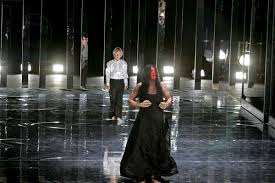
    Me as the Mad Woman in Edinburgh, 2005

    I never enjoyed sport at school, the most exercise I got then was climbing the stairs to matron’s surgery to ask for an off-games slip so I didn’t have to go to PE. Then, in 1998, I spent a balmy summer in Salzburg for which I had over-spent on a beautiful apartment in the historic centre of the city, the terrace of which backed onto the Salzach river with a stunning view of the Untersberg. My concern about my accommodation overspend brought about a strict tightening of the purse strings for my daily food and drink allowance.

    The venue for the month of rehearsals was a considerable distance from my apartment. The commute was about five miles or so for which I had transported my bicycle from London. The combination of my daily bike ride, regular walks in the hills and mountains and the cost saving crash diet resulted in my hair turning blond in the sunshine and a radical drop in weight. Before I knew it, I was no longer the chubby, ginger, PE dodger and starting to read a difference in the way some people related to me. 

    My clothes began to hang off me and, on returning to London, I set about revamping my wardrobe as I continued my new gym regime. Before long, I had reinvented myself. It wasn’t long before my new look had an effect on the way I was being cast. At the time, opera was going through its own version of a reinvention and there was a trend for casting away from operatic stereotypes. Directors were looking for cinematic realism and imagery for their productions which extended to their casts. My change in appearance hit the spot for their new demands. 

    I noticed that many of the roles for which I was subsequently being cast required me to bare my torso. I doubled down on my trips to the gym and soon I became accustomed to arriving at the first day of rehearsals for a new production and discovering that I was to be half naked. 

    In 2005, I was cast to play the Mad Woman in Benjamin Britten’s Curlew River at Edinburgh Festival. After the initial meet and greet with the performers and production team, the director, Olivier Py, asked if he could have a private conversation. We moved to the side of the room and he respectfully asked if I would mind being naked for some of the production. 

    “Do you have a good reason for me to be nude?”

    Olivier had a look on his face that told me his request was much more than an indulgence for him. “My thinking is that your transformation from one of a group of monks to the Mad Woman can be a meaningful ritual played out for everyone to witness. As the accompanying monks prepare you for the re-enactment of the Mad Woman’s story, they remove your habit, revealing you fully as man. They then paint the stigmata of Christ in red paint on your feet, hands and side. They then robe you in a black dress, concealing the signs of sacrifice and your manhood that will always be there for the performance.”

    “I hope it will.” I said glibly. 

    “Will you do it? Please, it will mean so much for me.”

    The respect with which he made his request and the beauty of the conceit had already convinced me. I also got a feeling Olivier’s vision for Britten’s chamber opera was framed by his own deep Christian faith. 

    “I will.” I said without having to think. 

    “Thank you. Thank you so much.”

    Olivier then turned to his team of designer and assistants and gave a thumbs up. 

    As rehearsals progressed, there came a day when we worked on the Mad Woman’s centrepiece, a mournful duet with unaccompanied flute in which I depict my character’s unceasing search for her lost son and her descent into destitution. As the intensity of the scene climbed with the despair in the music and text we worked on me clutching the silk of my long black dress and gathering it up as some sort of security blanket which eventually became cradled in my arms as an infant might be. In doing so, the gesture would reveal my stigmata again, as well as my manhood. To this point, I was convinced of Olivier’s ideas for the telling of Curlew River and happily went along with the new developments. 

    In passing, I had a conversation with the same good friend who had paid a compliment to Dame Judy Dench (see previous post Taking a Compliment) and asked him to give me the pass-notes for appearing naked on stage. 

    “The first mistake some people make is to try to bless themselves with more equipment than is their natural gift.”

    “You’ll have to translate that for me.”

    “Sure, don’t try to todge yourself up so you seem bigger than you actually are.”

    “Ohhh… It hadn’t occurred to me. Do people do that?”

    “And how?!”

    “What’s the problem with that?”

    “The second you are exposed, the audience will be gripped by the spectacle of the incredible shrinking penis. They won’t hear or see anything else and all the talk at the end will be about ‘Did you see his…?’ Don’t do it.”

    “Anything else? Yes, the truth about getting the old chap out on stage is that you’re the only person in the room who doesn’t have to look it so it’s easier for you to deal with than it is everyone else in the room.”

    And with these two elements of stage wisdom I felt I was now equipped (pun intended) to appear in my birthday suit to a theatre filled with a festival audience. 

    The production was tight, we had a nice cast and the ensemble of instrumentalists that had been assembled and placed on the set with us was star-studded. The rehearsals had gone smoothly and we all felt confident with the material in hand (not intended this time).

    So it eventually came to the last performance of five, having been well received by audiences and critics. I went through the ritual of the removal of the monk’s habit, the painting of the stigmata and the enrobing as the Mad Woman. I played and sang the role as if I would never get to play her ever again. As I walked down to the front of the stage for the duet with the flute, the front row of the audience not three feet from my toes, I started to gather up my dress for the last time. 

    Through the fog of my stage awareness and the pitch darkness of the auditorium, I got a sense of a man in a rugby shirt on the front row right in front of me. As the hem of my dress rose, I felt the man below me brace in his seat. The hem got to my knees, I was giving everything I could to the despair of my broken Mad Woman. My thighs were now visible and the dress continued its journey upwards. As it got to the top of my leg, the man in the rugby shirt shouted “OH NO! NOT AGAIN!!” in a broad Glaswegian accent and jammed his hands over his eyes as if he might turn to stone on seeing my you-know-what again. 

    It was everything I could do not to stop in my tracks but I managed to knuckle down (it’s a minefield of innuendo) and carry on. His outburst somewhat altered the mood I had been aiming for as giggles rippled out on stage and in the auditorium. I’m happy to report it is some years since I was last seen on stage in the altogether.

    10th Sep 2024

  • Marthaler’s Figaro

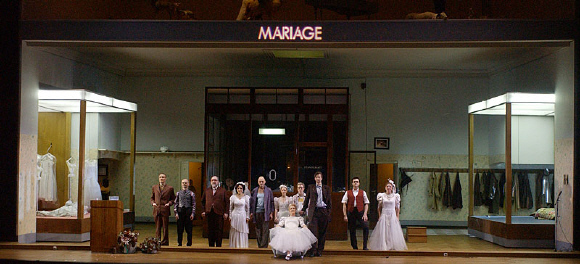
    The cast of Marthaler’s Figaro on Anna Viebrock’s set

    In 2000, I was part of a production of Berlioz’s Les Troyens at Salzburg Festival. My part was short but sweet, allowing me to drop in on other productions in rehearsal to watch and learn. 

    At that time, the festival was run by the late Belgian impresario, Gerard Mortier. I owe much to Mortier because he gave me some of my first leg-ups into a career on the opera stage. At that time, there were no apprentice programs, like the Jette Parker at Covent Garden, for young singers to learn the craft. It was a case of learn fast or don’t work in those days. 

    In the early days of my career, one of the first things I learnt to do was audition. I set about analysing what audition panels want to see and then planned an audition technique to raise my chance of fulfilling the criteria. I’ll write about that another time. 

    In 1995 I did a good audition for Gerard Mortier on the stage of La Monnaie, the opera house in Brussels where he was the intendant before taking up his role in Salzburg. My strong audition led to several contracts from La Monnaie and subsequently from Salzburg when he took up his post there. 

    Salzburg being the summer home of the Vienna Philharmonic Orchestra and generously funded by the Austrian government, is one of the most glamorous and luxuriously programmed festivals in the music world. Everyone who’s anyone goes at some point in their career. Under Mortier’s direction, the festival became known for state-of-the-art avant-garde productions by the eccentric creatives with whom Mortier surrounded himself – I will write another post about Mortier next week. 

    One of the eccentrics in Gerard’s stable was the unique stage director, Christoph Marthaler. Marthaler had been the oboist in the orchestra of the Zurich Opera and had spent a career observing the productions on the stage there. How he transitioned from pit to stage I don’t know and I never heard of anyone else making a change like it. 

    Working with Marthaler didn’t feel like work. A common theme among all the creatives Mortier returned to again and again was their bon-vivant attitude to life. Marthaler was no exception. His working process was open ended, meaning members of his casts were invited to lunch and dine together with him and the music staff. Food was accompanied by generous quantities of good wine and there was always laughter at the table. He had a light social touch and all the while he observed his cast members for material to incorporate into his productions. 

    He would sidle up to you in rehearsal and quietly say “You know that story you told last night about the time you… I want you to put that in this scene. You come up with something. Show it to me when we run the scene.” His working method was like child’s play, cherry picking our experience and weaving it into the fabric of the narrative. 

    That year in Salzburg Marthaler was directing The Marriage of Figaro on the smaller stage next to the one where I was rehearsing Les Troyens. I had never heard of Christoph Marthaler and had no idea of his working method but I observed his work in progress and kept going back to his rehearsals to see if any of his art could rub off on me. 

    Marthaler works exclusively with one designer, Anna Viebrock, whose style I would call meta-reality. Her aesthetic is Mittel Europa modernism inhabited by East German’s who had popped through the Berlin Wall at Brandenburg Gate in late 1989. Think sleek lines that were once sharp and futuristic that had fallen into disrepair with naff curtains added and eccentrics in shell suits. On top of this she has a neat ability to make interiors seamlessly morph into exteriors without needing to change the set. Her inside/outside distressed-chic visual universe creates a tangy tension on the stage and opens up a world where anything can and does happen. 

    For the Figaro she had devised a scenario in an alpine hotel with a sideline in weddings, servicing all nuptial requirements from wedding gowns to a room at the back of the set that served as a registry office where unknown characters came, waited and went. The Count, a Basil Fawlty character in this production, officiated some of the marriages, no doubt having his “droit de seigneur” with any bride-to-be who caught his eye. 

    There was neither a harpsichord nor a forte-piano in the pit to accompany the recitatives. Instead, there was a nameless character who mysteriously moved in and out of the action from his bedsit above the main acting space. He had a Yamaha electric keyboard that could approximate the sound of instruments and effects. Sacrilege! A Yamaha in Mozart? In Salzburg?? With the Vienna Philharmonic??? For purists, the thought of it could herald the end of the world. 

    The story goes that Marthaler had stayed at a mountain refuge where there had been a resident keyboard player who played strangely inappropriate music at odds with the beautiful landscape outside. Marthaler, being the eclectic eccentric that he is, asked the keyboard player for his details and waited for the opportunity to employ him for one of his productions. 

    And so it was that Jürg Keinberger found his way from hotel keyboard player to Salzburg Festival in one unlikely leap. His presence on the set was probably a simulacrum of that in the hotel of Marthaler’s mountain holiday. He would add little musical numbers to the score, sometimes he would accompany the recitatives with sound effects from his keyboard. In one recit, he and the Cherubino had beer bottles out of which they would drink to change the pitch when they blew across the opening to provide the accompaniment. Jürg would yodel ditties in between scenes. 

    The count danced the tango in one of his arias, characters appeared from inside coats hanging on a peg, Barbarina went looking for her pin in the wedding dress shop window. The conductor occasionally took photographs of the goings-on on stage with a Box Brownie. I would watch open mouthed at the freedom and inspiration. It shattered my firmly held belief that we have to be reverential to the composer’s intentions because it was all so charming and ingenious. Had Mozart been alive, I hope he would have been one of the audience members who, like me, lept to their feet to applaud and cheer the production while the stuffed shirts booed.

    It remains the joyous moment when I saw opera could be more than a reliquary for the art of yesterday. It brought The Marriage of Figaro to life. Our laughs were genuine, brought on by the need to react rather than the usual lumpy humour of the count double-taking as he reveals Cherubino hiding under a cover in an armchair. 

    I wish I could direct you to a video of it so you can share it with me. The cast was exceptional. Peter Mattei gives as good a Basil Fawlty as John Cleese and sings like a god. Christine Schäfer redefines Cherubino as a feckless gum chewing millennial. Heidi Grant Murphy provides pathos as well as cunning as Susanna. 

    As far as I know, Marthaler has never worked in London or the UK. His style is deemed to be too off-the-wall for London audiences who prefer their opera to be more literal. I wish someone would be bold enough to bring his work over here. Audiences in the UK recognise great work when they see it, no matter how irreverent it is. 

    Addendum: I went to the new Eugene Onegin at Royal Ballet and Opera this week (07/10/2024). It was half-baked and shambolic. Some of the performers were comfortable in their roles while others seemed uncomfortable and over-parted. It looked to me as if the director wanted an Ingmar Bergman style of naturalism but didn’t have enough time to find it in his cast. By all means, strip the stage bare and expose the performances but at least afford it the time to find the detail and characterisation in the studio. I don’t blame the singers, I blame the people who scheduled the rehearsal time. The cost of cutting rehearsal corners will be apparent when they come to revive it because the template will always be the director’s version and the reference will be the video of the half-baked original. The people at RBO know this because they’ve worked with Deborah Warner, who demands longer rehearsal periods, and have seen the huge benefits of four weeks in the studio over their statutory two or three weeks. For some reason they don’t learn the lesson.

    10th Sep 2024

  • Opera Shorts

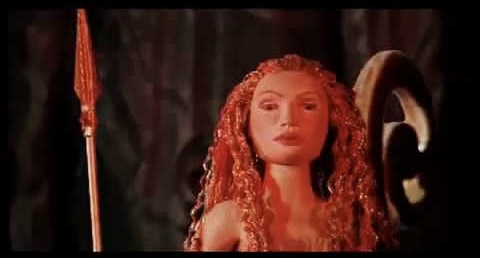
    A still from Alan Platt’s stop motion Ring

    Written in 28th August, 2024


    On Sunday there was a story in the papers about a new Italian production of Puccini’s La Boheme that has raised eyebrows. Gianluca Terranova, an Italian tenor, has produced what he calls a “pocket-sized” version of Puccini’s pot-boiler. In the coverage I read, it was claimed the opera had been reduced from 2 hours 40 minutes to 90 minutes. 

    Strange, I thought, are they working on an original version with a 15 minute interval between each of the four acts? Reducing La Boheme to 90 minutes is neither a remarkable feat nor is it likely to leave much of the opera on the cutting room floor because the full length opera is only 110 minutes long. 

    Terranova’s aim is for the opera to have appeal to the TikTok generation. Apparently, the missing pages of the score are narrated by two of the characters to speed things along. Great! But, come on, lopping 18% out of the piece is a fairly weak attempt at compressing the simple story. 

    If you want to see radically reduced opera, Alan Platt’s stop motion version of The Ring from 2000 manages to reduce Wagner’s sixteen epic hours to 30 minutes. It’s as tenderly produced a version of The Ring as you will see anywhere and the puppet figures are less wooden than many Wagnerian singers. 

    In the coverage I read of the new Boheme, it was claimed “The purists are aghast. “I consider every note written by Puccini sacred,” one Italian opera critic wrote.“ Really? Is that a weighted representation of the voices who have reservations about truncated opera or is that one shrill voice there to reinforce the fallacy that opera is for snobs?

    I consider myself to be an opera purist in so much that I believe the composer’s final version is the most complete edition of the score. I also believe we are in the business of entertainment and tightening the screws of the material makes for better drama. If you’ve ever been to The Marriage of Figaro and had to put up with Don Basilio’s act 4 aria “In quegl’anni in cui val poco” you’ll know what I mean. The stodgy aria is nearly always cut because it sits exactly where you want the action to pick up pace for the final denouement of the Count. 

    Mainstream operas like Boheme and Figaro come around too frequently, being dependable “bankers” for opera companies’ financial planning. As works of art, they are safe from being permanently damaged because they are preserved on the pages of a book that will forever be the urtext reference and starting point for new work based upon it. 

    One of the best productions I ever saw of anything took sacrilegious liberties with the original score. It took place at Salzburg Festival in 1999. I went to see as many rehearsals of it as I could to drink in its inspiration. It changed my view of what opera can be and how robust the best works are when a director moulds them to a new meaning. 

    Unlike Alan Platt’s beautiful short animated Ring (link below), you can’t find the Salzburg production I’m writing about on YouTube. I will describe it in my next post.

    10th Sep 2024

  • Taking a Compliment

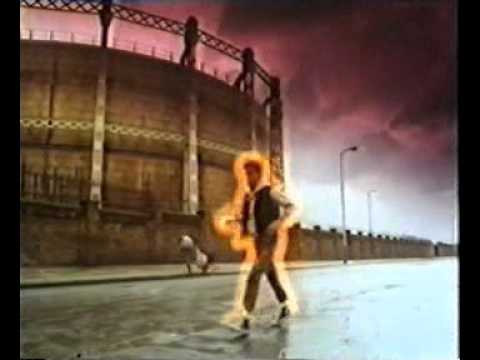
    Ready Brek TV advert, 1986

    A friend called Martin once observed me being complimented at the stage door of English National Opera following a performance. I thought I was being diffident and personable as I batted away the kind words. My embarrassment was part genuine and part solution to the problem of getting past the compliment without enjoying it and seeming big headed. 

    Later, Martin picked me up on my reaction to the person complimenting me. 

    “You haven’t learnt to take a compliment yet, have you. It’s hilarious watching you squirm and try to push it back at that poor lady.”

    “Really? How so?”

    “When you react like that you think you’re being modest and charming, don’t you?”

    “Am I not being?”

    “No. What you’re telling people when you react like that is that you don’t value their opinion.”

    “Oh.” This had genuinely never crossed my mind and I was surprised to be on the receiving end of his robust feedback. Martin is a good friend who happens to be an actor. I trust him for his insights as an experienced performer and intelligent empath. “I actually hate it when people compliment me. It’s a lack of self worth or an impostor thing. What should I do instead?”

    “Really? You want to know?”

    I nodded.

    “I once went with Judy Dench’s daughter to a play her mother was headlining. Afterwards in her dressing room, her reaction to me saying how terrific she was, and she WAS knock-it-out-the-park TER-RIF-FIC, taught me how to take a compliment.”

    “Go on.”

    “After I shuffled into her dressing room and nervously said I thought she was really really good, her face lit up. She looked at me and said “Really? Was I? How kind of you Martin. Thank you.” She then turned to her late husband and said “Michael, Michael, did you hear that? Finty’s friend Martin said the kindest thing to me.” I was bowled over by how much my not-very-imaginative appraisal had meant to her. Her reaction made me feel special. I glowed all the way home like the Ready Brek kid. That’s how to take a compliment.”

    Here endeth the lesson. 

    10th Sep 2024

  • Hall Design

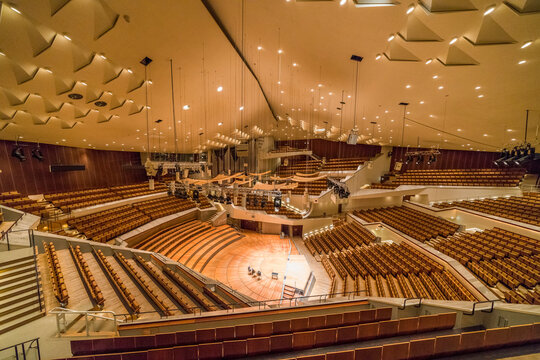
    Hans Scharoun’s 1963 Philharmonie in Berlin

    The best lay-out I know for an opera house is to be found at the Teatro Real in Madrid. The stalls and tiers of the auditorium are laid out in the shape of the classic horseshoe, the sight lines are good, the orchestra pit is roomy, the stage is a sizeable and well appointed with wing space, machinery and a storage dock at the back. The dressing rooms are next to the stage, rehearsal space is plentiful, there’s a good restaurant on the roof, a huge workshop where entire sets can be built six floors underground, all in the centre of the city on a plot the size of a large church. The architect who oversaw the modernisation, Francisco Rodríguez de Partearroyo, got it pretty well spot on from the point of view of both audience and performers. 

    I’m told Rodríguez Partearroyo approached the technical director of the Teatro Real before he started work and asked him to assist in the design of the backstage part of the theatre. What a great idea! Who knows more about what a theatre needs than the technical director, the man responsible for engineering the sets for them to be inserted and changed within the stage box?

    Too many times, big theatre and concert hall projects veer off course because of cost overruns and over-ambition on the part of the architect. Hamburg’s Elbphilharmonie by Herzog & de Meuron. The foundation stone was laid in 2007 but the hall opened in 2017. After all that time, when they played the first concerts they discovered it has a tricky acoustic. Sounds seem to come and go, cancelling each other out depending on the layout of the instrumentation. 

    After the opening of the Philharmonie in Berlin in 1963, everyone agreed the concert hall was a huge success. The public spaces were festive and ample, placing the stage centrally within the hall and ranging vineyard-like terraces of seating around the stage made even the cheaper seats feel intimately connected to the stage, the sound is precise, generous and warm, the choices of high quality stone, concrete and wood are pleasing and the backstage spaces are bountiful. Hans Scharoun aced it and now architects try to emulate his success by terracing the audience seating around the stage in a similarly democratic pattern. 

    Since Scharoun devised his asymmetrical, tent-like concert hall the science of acoustic engineering has developed markedly. Yasuhisa Toyota is the acoustician to whom all architects go when they have a hall to build. It seems architects are so trustful of the acoustician’s art that they believe they can engineer better sound into the hall after it is completed. They’re wrong and the Elbphilharmonie is living proof. 

    I once had the privilege to meet Frank Gehry after a concert at Walt Disney Concert Hall in Los Angeles. I asked him what his models were for designing the hall. He answered “Of course the Philharmonie in Berlin but I also thought about the shape of a violin and how so much resonance can be found in what’s really just a wooden box.” I’m confident there was more to it than creating a violin shape but I like his back to basics approach and his regard for the luthier’s craft as well as scientific method. 

    Aside from the comfort, sound and intimacy of the hall itself, I look for the way a hall reflects the best of the age in which it is built. The earliest halls have distinct and separate facilities for audience and performers. The priorities are clearly expressed in the luxurious audience areas with galleries and bars, sweeping stair cases. The auditoria of the first halls all had flat floors and a shoebox shape because they doubled as ballrooms. The back stage area of one such hall, the Musikverein in Vienna, is pokey to the point that one is constantly stopping in the narrow corridors to allow a player with a priceless instrument to pass without knocking it. Dressing rooms are afterthoughts, rehearsal rooms for preparatory work are airless, unwelcoming spaces that double as storage. 

    There was a time at the crossover of societal change brought on by the revolutions of the late C18th when musicians worked in both royal household orchestras and civic orchestras. Musicians were employed as servants and navigated through the servants entrance and passages of the household, not to be seen until their music was required. When the first purpose-built concert hall was opened in Leipzig in 1781, the musicians had their own entrance separate from the audience and drapers guild (hence Gewandhaus) members who had paid for the new hall. Naturally, the stage and auditorium are at opposite ends of the hall and so having a separate entrance negates the need for a passageway to the other end of the building but having separate entrances creates complications and missed opportunities. 

    As a performer, I like to talk to friends and family over a drink after a performance. Most halls these days have the auditorium suspended above ground level. The ground level is a collecting space in which to cast off coats and get a drink. Why don’t we all enter and leave through the same doors? It would offer the opportunity to talk about the concert and for performers to answer questions about the work. What if, at the end of a concert, the bars were licensed to 11pm for audience members to remain behind, if they choose, to have an open forum in which to discuss the music with the professionals? You might ask what if the performers don’t want to. It could be a good investment to incentivise the performers with a free first drink. 

    At the Philharmonien in Bergen, Norway, the orchestra has a performance space in the large bar area where orchestra members are encouraged to play their less formal musical projects for lingering audience members after their concerts. 

    Were I to commission a concert hall, the one thing that I would prioritise is that there be no separate artist entrance. I would have a pass door once inside the hall through which performers enter the backstage area but the enclosed collecting area for audience and musicians would be the same space at the beginning and end of the evening. 

    10th Sep 2024

  • Performance Anxiety

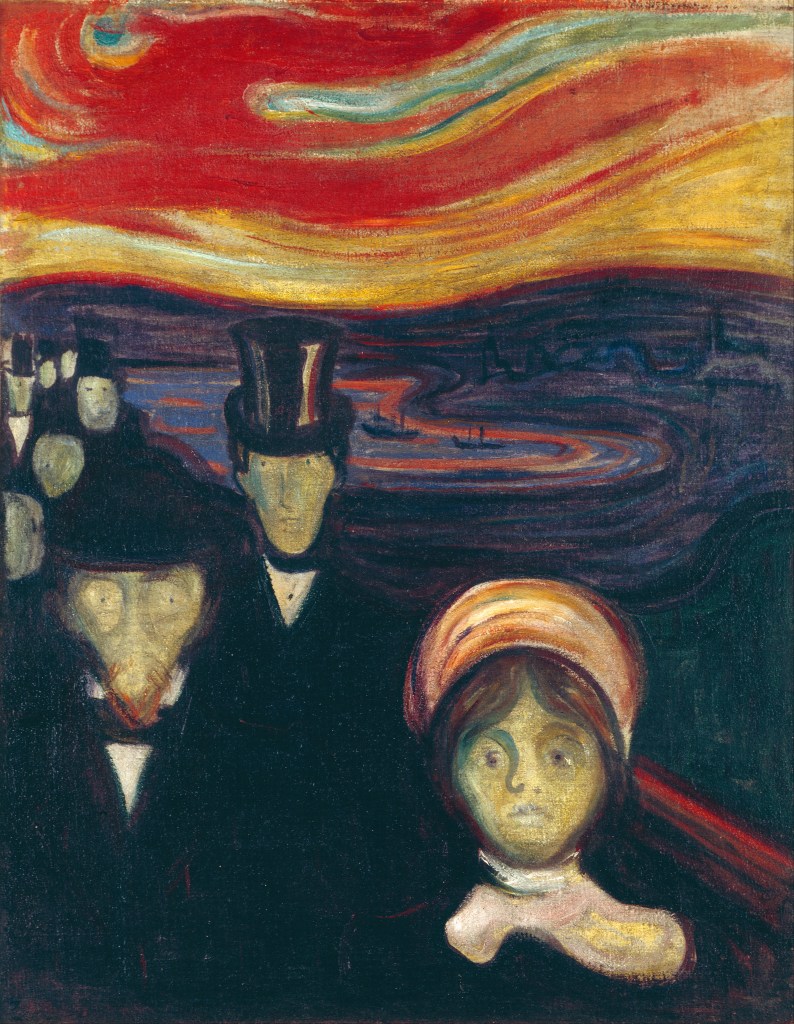
    Anxiety – Edvard Munch, 1894

    I will have to dig deep to write this one. 

    There are performancesf when I don’t feel particularly nervous beforehand. There are others when I would prefer the ground to open up and swallow me than walk out on stage. The latter performances are usually conditioned by forces outside my control.

    Since I can remember, in the lead up to a performance, I live in a state of excited anticipation. The first time I sang a solo in public was when I was eleven. My whole life was consumed by the event and everything else went on hold. I worked myself into such a lather that by the time the concert came, I was exhausted and distracted. It was the Pie Jesu in Fauré’s Requiem, in case you were wondering. It passed by in a flash. Looking back on it, the change in me from before the song to afterwards set in motion an addiction pattern of anticipation – fear – exhilaration – satisfaction that I would seek to repeat for the rest of my life. 

    The next significant solo I sang was when I was fourteen. My voice had dropped to a baritone and I was chosen to sing The Three Kings, a carol for Epiphany, in front of my school in Sunday chapel. Again, I put my life on hold and began the cycle of obsession. The thought processes revolved around the same set of fixations for days in the run up. Will people like it? Will they like me more for it? What if it goes badly? What will it feel like to be the centre of attention for the whole school for a few minutes? What if I sing it better than it’s ever been sung before? Will I enter into some kind of immortal brotherhood reserved for the great? But what if I make a mess of it? And round and round I would go. 

    On the day, the school director of music saw me shuffling around on the chapel steps, nervously going over contingencies in my head.  He saw the state I was getting myself into and sidled up to me. “You know, they only want you to do well.” Hallelujah!

    I have recalled his words countless times since that January day in 1984. The comforting truth within them is that audiences want to enjoy themselves. I sometimes wonder what course my life would have taken without his wise, well timed intervention. 

    I went through a long phase of telling myself and others that I don’t get performance nerves. I was in denial and the effort that went into maintaining the lie went some way to having the desired effect of suppressing the negative effects. It was a version of “fake it to make it”, I suppose, but at the back of my mind I was always mindful of specific challenges. 

    At some point I acknowledged my performance anxiety cycle. I learnt to be objective about which factors lay within my control and those outside my control, like a sore throat, other people’s mistakes, things like that. The factors inside my control are preparation, sleep, avoiding unnecessary distraction, living a healthy life, looking after my mental health, sobriety etc etc. 

    It can happen that a colleague gets ill and I step in as a replacement. If I know the music well and the performance is a concert there’s nothing to worry about. However, I have been asked to replace people at the last moment in an opera production. A certain amount of improvisation and chutzpah is required to get through those nights. I remember one occasion in Munich, I was 26 and relatively new to the professional stage. I had performed the role of Idamante in Mozart’s Idomeneo at Welsh National Opera eight months previously. My agent rang while I was recording some Beethoven folk songs. He told me Munich State Opera had lost their Idamante for the performance the next day in their prestigious July festival. 

    I agreed a contract, finished my recording session and headed to Munich. On arrival at the theatre that evening, I was taken to a room with a television and a video tape player. I watched the video of the production and tried to translate what I saw to the dimensions and mirror opposites of a stage. The next morning, I woke up to discover I remembered nothing of what I had seen on that screen. I then had a studio session with one of the cast members. We went through the basic entrances and exits of the production, worked on the principle of a gun that came and went inexplicably in the conceptual staging –  an idée fixe that never went anywhere. 

    I was asked If I’d prefer to work or rest in the afternoon. I chose to work for an hour with the assistant director and then went to my hotel to lie down. I didn’t sleep at all and instead went over and over what I could remember of the involved staging. I then headed to the theatre, put on my costume, received my makeup and waited in my dressing room for the call to come over the tannoy for me to make my way to the stage for my first entrance. 

    As the call came, there was a knock on my door. I opened the door to see a tall, well-built man in a powder blue uniform. 

    “Herr Spence, I am here to accompany you to the stage.”

    “Let’s go.” I said. 

    He then placed a hand on my shoulder and took hold of my elbow with a firm grip. He walked me to the stage – to this point I had never set foot on the a stage of Munich Opera. He guided me round to the far side of the stage where my entrance would be. My dry throat tightened as I heard the soprano sing her lines before my entrance and on my cue the door to the enclosed set opened. The orderly in the powder blue uniform then placed a hand on my back and pushed me through the doorway. On my first appearance to the Munich audience I must have looked startled. 

    I asked afterwards about the big man in the uniform. It was explained away as a precaution that the opera house took as a matter of course with stand-ins since a replacement tenor had bolted in fear at the last minute on one occasion. The performance had to be cancelled and the audience were reimbursed. 

    Munich was my first and last brush with extreme anxiety. Over the years I have developed techniques to help mitigate the negative effects of performance anxiety. 

    1. Meditation helps me objectify obsessive cyclical thinking. Accepting negative thought processes are part of the performance experience was a significant step forward for me. 

    2. Prioritising sleep. 

    3. Be punctual. Allow plenty of time to get to the venue but don’t arrive too early. Milling around with nothing to do can be unsettling. 

    4. No alcohol the night before the performance. 

    5. At the side of the stage, before my entrance, I remember my director of music at school saying the audience wants me to do well. 

    6. The last thing I do is keep in mind that something might go wrong and if it does it won’t matter. Singing is not brain surgery. 

    10th Sep 2024

  • The Elite

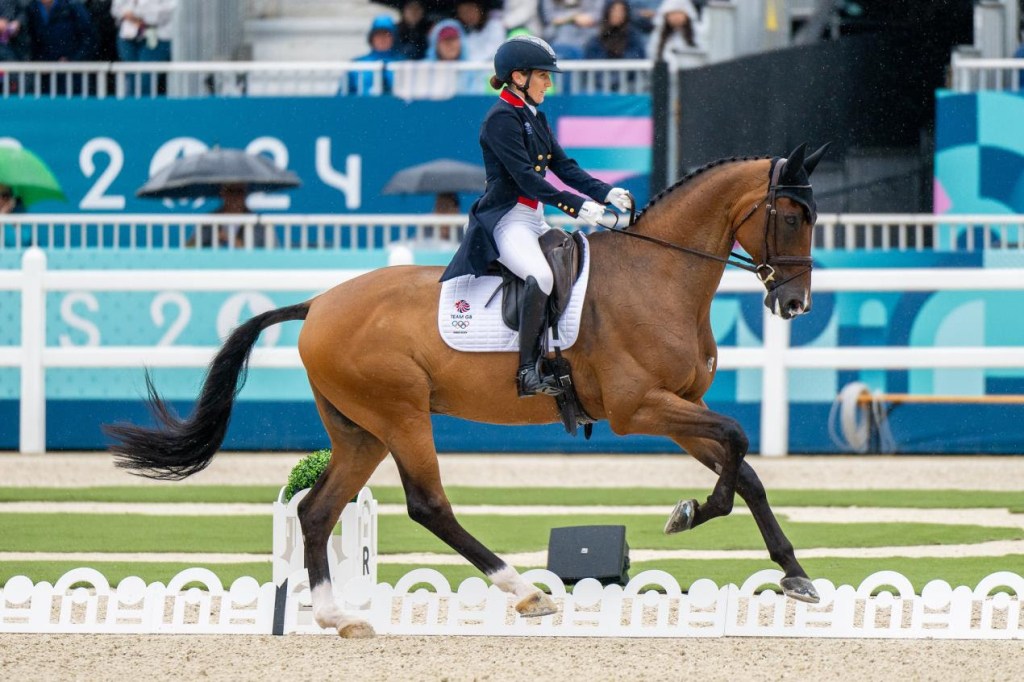
    Richard Morrison of The Times wrote an excellent piece yesterday in his arts editorial column. He had done some digging around in the numbers of Team GB at the Olympics. His opening shot was that every one of the 65 medals our team gained in Paris cost £3.78m in funding from the Lottery and the Department of Culture Media and Sport. The total cost to train and send Team GB to the Olympics was £245.8m. “Put even more brutally,” he writes, “it cost an average of £17.5 million in public funding to produce each of our outright winners.”

    Wow!

    He goes on to ask if that level of funding for two weeks of sporting entertainment is reasonable and fair in the light of arts organisations who are being defunded by Arts Council England. He points to the two hockey teams which between them were funded to the tune of £22.8m, gained no medals and were knocked out early on. £22.8m is the same as the subsidy the Royal Ballet and Opera receives from ACE each year. For that, 1000 people are sustained in full time employment along with 2000 freelancers all working under the same roof, presenting 500 performances each year. This is all Richard’s work, by the way.

    He goes on to point out that rowing, equestrian and canoeing teams together received £50m in subsidy, adding that rowing and equestrian sports are as exclusive as the Ritz Hotel. 

    Towards the end of his piece he considers the perception of accessibility to sport being different from the arts when it isn’t at all. A ticket to a Premiership football match is the same as a good seat at the Festival Hall or the Proms. 

    Richard continues by highlighting that when the word “elite” is deployed in relation to sport, we refer to the level of athletic excellence top flight sports people perform at. “To call athletes elite is a compliment”, he says. He then asks how the same word can be turned around and used to attack arts organisations as elitist, or the observation that it is supporting elite performers, a slur that leads to arts organisations being excluded from public funding. 

    “The weird reality is that although our most renowned musicians, actors and artists have had to train as long and hard as Olympic athletes, and are as talented in their respective fields, they must somehow pretend not to be exceptional at all, for fear of fostering what would be regarded as an unhealthy aura of privilege around their art forms.”

    I’m quoting at length because these are balanced and important points to make at a time when the arts are being unfairly targeted as snobbish and exclusive, when they are anything but. The Times sits behind a pay wall so it is not available to everyone but Richard’s message should be available to all. 

    I disagree with Richard that the word elite carries a negative connotation when connected to top artists and performers. The problem is more complex in that we musicians tend to perform in anachronistic white tie and tails. When we speak about what we do, the words fail to be relatable for non-musicians and the music can be off-puttingly opaque for the uninitiated. 

    I know I know, I’m like a broken record but we musicians have to take responsibility for some of it. Having done so, we can make the changes that undermine any accusation of exclusivity. 

    Richard is right when he says arts organisations are perceived to be elitist, even if they are not in reality from the point of view of the performers and artists. From the point of view of the audience, yes, there is a case for claiming the organisations cater for certain strata of society. That comes back to education. Successive British governments have failed swathes of generations of school children by withdrawing music and arts from the state education system.

    The solution is not to defund sport. The solution is to stop politely turning the other cheek when someone wrongly bad-mouths the arts as being elitist. Challenge them on the numbers and use the Olympic funding to undermine their argument. We performers will do our best to keep step with the zeitgeist by changing the way we dress on stage, present the work and talk about the art. 

    10th Sep 2024

  • Immortal Beloved 2

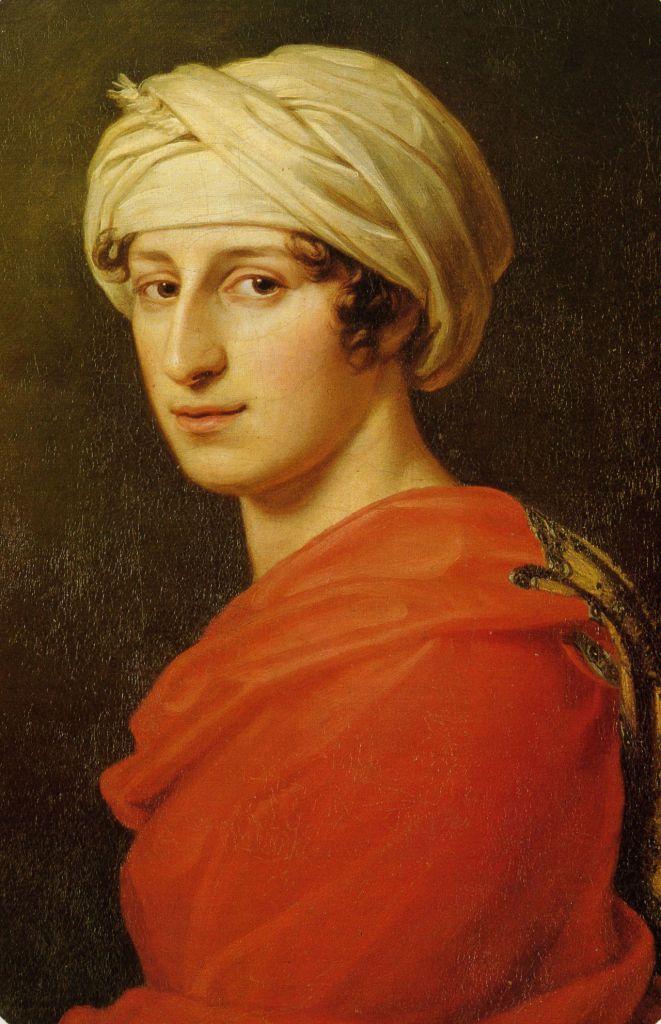
    Antonie “Toni” Brentano. Portrait by Joseph Karl Steiler, 1808

    Part 2

    After his death, a letter known as “Immortal Beloved” was discovered by Beethoven’s assistant and biographer, Anton Schindler, locked in a secret drawer. The letter, scrawled in the composer’s hand and dated 5th to 7th July, 1812, was addressed to “Unsterblicher Geliebte” or Immortal Beloved and written in four sections over three days. There is no further indication of the addressee. 

    The letter reads like the helter-skelter passages of his 7th Symphony, itself written at about the same time. There’s no logic or structure in his words. With sentences like “My heart overflows with a longing to tell you so many things – Oh – there are moments when I find that speech is inadequate – Be cheerful – and be forever my faithful, my only sweetheart, my all, as I am yours”, it is an outpouring of ardent longing, pure and simple.

    Why didn’t he send it? 

    Beethoven never married but we do know he had a string of intense crushes for aristocratic Viennese women by way of close associations. In 1801, Julie “Giulietta” Guicciardi began taking piano lessons with him. He almost immediately became besotted with her despite her marriage to a count, who also happened to be a composer. He dedicated his “Moonlight” Sonata to Guicciardi and, according to Schindler, claimed she had been a great love of his some years later. 

    Not long after his crush for Guicciardi petered out his eye turned to another student, Josephine Brunsvik. Again, Beethoven seems to have quickly developed a passion for his pupil and remained close to her after her marriage to a nobleman. Beethoven pursued Josephine after she was widowed several years later but she rebuffed him, mindful that she could lose her children if she were to marry a commoner. 

    Some time later, Josephine bore a child out of wedlock and hastily married a commoner with disastrous results. The ill-matched couple quarrelled and soon separated. We know all this because Josephine’s sister, Teréz, kept a cryptic journal in which she indicated her sister would have been better off with Beethoven.

    Intriguingly, the diaries of both sisters go silent for much of the summer of 1812, when it is believed Josephine was in Prague, where Beethoven stayed for a few days en route to Teplitz, a spa town between Prague and Dresden. Nine months after Beethoven wrote his “Immortal Beloved” letter, Josephine gave birth to a daughter. There is no proof she was Beethoven’s child but the rumour lingers even today. 

    In 1810, Beethoven developed a close association with Antonie “Toni” Brentano, the daughter of an Austrian diplomat and matron of the arts. She too was in Prague in early July, 1812 as she passed through on her way to Karlsbad, the same week Beethoven wrote his unsent letter. Later in 1812 he wrote a song “An Die Geliebte” and dedicated it to Toni. A picture of her was found in the same drawer as the letter after his death. 

    Brentano was happily married and bearing her sixth child in the summer of 1812. She and her banker husband remained friends with Beethoven until his death. 

    You can draw your own conclusion as to whom the letter was intended. I’m interested in what we know about Beethoven for sure, the patterns of behaviour Beethoven displays and the effect his rebuffed advances had on his mental state. 

    Along with Byron, Beethoven was the celebrity of the age. We know he cut an almost comically caricature physical presence. He was dyspraxic and stumbled as he walked, depending on a cane to keep him upright. He drank heavily, was flatulent and known not to spare time for grooming or cleanliness. Famously, he was deaf and carried various contraptions around with him to help him communicate. Stravinsky claimed he played the piano bent forward with a pencil between his teeth so he could feel the vibrations of the instrument. 

    His tendency to fall for unavailable women fits with the image of a famous and successful artist who lacks the outward appeal of good looks or elegance. By falling for women who were above his station or already taken he didn’t have to face up to his lack of comeliness.

    After writing and not sending his letter, Beethoven closed out 1812 by completing his hugely popular 7th Symphony. He then descended into a blue funk and barely wrote any music at all in 1813, tickling the manuscripts of his 8th Symphony, the Op.95 “Serioso” Quartet, and writing one song “An Die Hoffnung” (To Hope). 

    In 1814 he finished the quartet, the symphony, the great “Archduke” Trio and started his mawkish Op.90 E minor piano sonata. In 1815 he fell more or less silent again. 

    In 1816, Beethoven set A Die Ferne Geliebte. Nobody knows whether he approached Alois Jeitteles to write the poem that underpins the songs or Jeitteles had already written and published the poems. The young man Jeitteles, an interesting figure himself, had already published some poetry in Viennese periodicals. He was 21 at the time and became a friends with Beethoven through their collaboration. 

    My guess, and it is no more than a guess, is that Beethoven went to Jeitteles with his commission for a specific text to fit his requirements for a song he had to write and dedicate for personal reasons. My guess is that he specified the poem should be strophic and depict nature, landscape and seasons that divide two lovers and that it should be cyclical. I think this first song-cycle ever written is intended as the classification he gives it: a song circle or Liederkreis. I also think An Die Ferne Geliebte is symbolic of completion and coming full circle through the experience of love, separation, longing, heartache and finally acceptance. It’s possible that it also represents a wedding band and a betrothal.

    As noted in yesterday’s blog, An Die Ferne Geliebte turned the page on Beethoven’s failure to find fulfilment in love and opened a new chapter of creativity and invention in the final fruitful decade of his life. 

    10th Sep 2024

  • Immortal Beloved

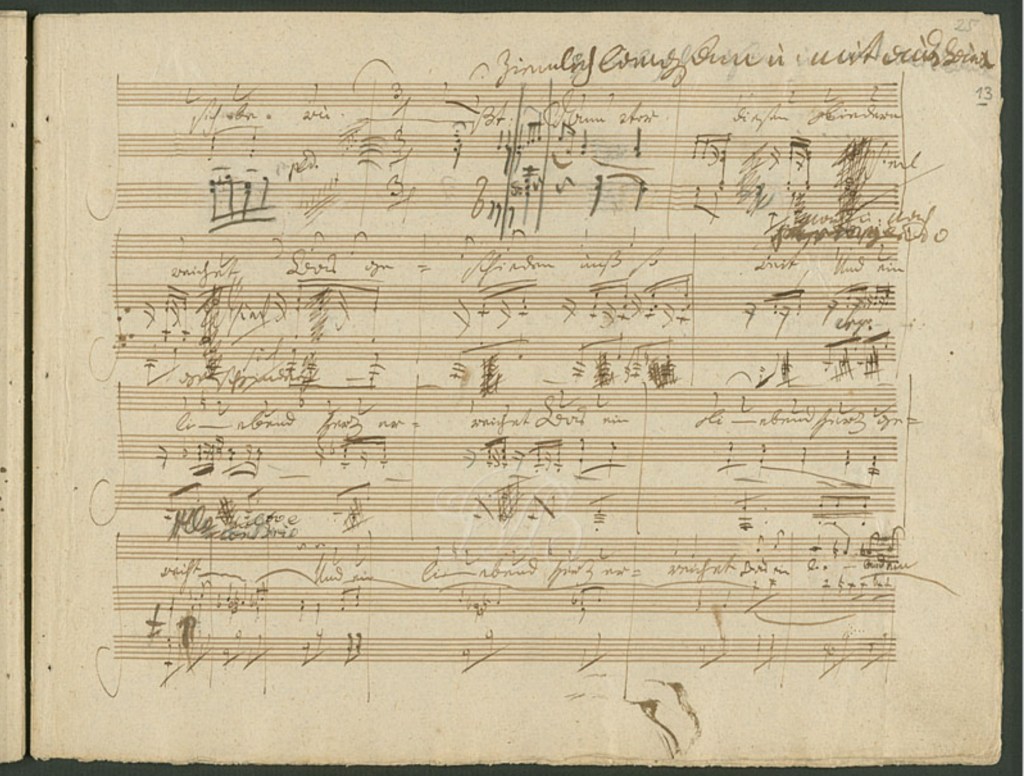
    The opening of the last song of An Die Ferne Geliebte in Beethoven’s manuscript

    Part 1

    My blog today is an extension of Subsidised Vowels. First, a warning: when I write about Beethoven, I always start with the ambition to skewer him but invariably fail. 

    I’ve decided Beethoven is like Venice in that everyone has their own personal relationship with his music. I spent two months of last summer in Venice, working on a production at the opera house, La Fenice. During that time I had various friends come to visit and learnt very quickly that everyone likes to have their own private affair with the city. Sharing my newly acquired knowledge of the best spots required self-censorship and timing. 

    Beethoven is similar. It’s because Beethoven composes in the most personal terms, allowing his ruminations, his obsessions and his unbridled passions to shine through. He is deeply intimate with us and so we are with him. 

    I recently blew the dust off his 1816 cycle, An Die Ferne Geliebte (To The Distant Beloved). This time I delved deeper into the six songs that make up the cycle than I have done previously. I asked myself why I keep coming back to this set of songs. Why do I love them so much? Alois Jeitteles’s quaint verse on which the songs are based is not great poetry – if anything, it’s doggerel – and Beethoven’s settings are mostly strophic, relying on interludes and variation in the piano accompaniment to draw out the textual shifts in colour. The samey rhymes are difficult to memorise and if I have a slip it can lead to catastrophe. 

    Part of the reason I keep going back to the cycle is the challenge the cycle poses in performance, I get a kick from the jeopardy. Placing it at the beginning of a recital programme gives me a sense of relief once it’s over and I greet the songs that follow it like old friends. 

    But the real reason for running the gauntlet with the text and the (cata-)strophic songs is the sense of arrival as the final song begins. 

    The six songs are through-composed, as one uninterrupted movement with no break between them. The first five songs are written strictly in verse form as if the poet is searching for the truth behind his feelings of longing and detachment by going over the same imagery of season, landscape and nature over and over again. 

    Eventually, the verse melts into warmer sentiments as the poet surrenders the songs to his beloved saying “Take then these songs which I have sung for you. Sing them again in the evening to the accompaniment of the sweet lute, when the red light of evening draws down into the calm blue lake and the last rays fade behind the mountain peak. And you sing…” As I write these words the glow of Beethoven’s dusk comes to me and I am wrapped in the warm blanket of melancholy that is long distance loving.

    Finally, after twelve minutes of the poet’s pathetic fallacy, Beethoven returns to the music of the first song – An Die Ferne Geliebte was the first song cycle to be conceived. The wheel of the cycle has turned fully but by giving voice to his longing the poet has changed. He raises the temperature of the human emotion and his projections onto nature fall away. Focusing his gaze in the direction of the distant beloved, he wills her to sing the songs that he also sings with a full heart and without artifice, aware only of the longing. And in doing so, he tells her the distance that separates them will be as nothing and a loving heart will be reached by what a loving heart holds sacred. 

    In the three years leading up to writing An Die Ferne Geliebte, Beethoven fell into a fallow period. Nothing of note came from his pen. The manuscript of An Die Ferne Geliebte reveals that it was written in a burst of energy. The lightning speed with which he wrote the songs can be seen in the strikes, jabs and slashes of his pencil. His hand moves so fast across the pages that he only manages to annotate three bars of music onto the staves of the broad sheets of paper. It is as if a build up of nuclear creative energy explodes in one short song. 

    Beethoven’s feverish eruption gave way to his richest decade of composition before his death in 1827. The last great piano sonatas, the Late Quartets, Missa Solemnis and the 9th Symphony burst into existence. Each one a masterpiece and worthy to be considered his greatest work. What lay behind his creative log jam and the subsequent outpouring of sublime music?

    I’ll tell you in my next post. 

    10th Sep 2024

Previous Page Next Page

Blog at WordPress.com.


Loading Comments...
 

    • Subscribe Subscribed
      • Toby the Tenor
      • Already have a WordPress.com account? Log in now.
      • Toby the Tenor
      • Subscribe Subscribed
      • Sign up
      • Log in
      • Report this content
      • View site in Reader
      • Manage subscriptions
      • Collapse this bar