This week, in a message to the Leeds Piano Competition, Sir Keir Starmer wrote “(Music) gave me the confidence to perform, and taught me so much about culture and creativity. Above all, it made me believe that music was something for me. I want that same belief for everyone. So as Prime Minister I am determined to put creativity at the heart of our school curriculum and ensure that every young person has access to music and all the arts – something I know was a lifelong passion of this competition’s long-time Founder, Chair and Artistic Director, the late Dame Fanny Waterman.”
At last we have a PM who recognises the value of music and the arts in education. Let’s hope he has some small change left over to fund arts in education after he fixes the NHS and fills the £22bn hole in government finances.
Following the loss of her seat at the general election on 4th July, champion for music (and the arts in general) Thangam Debbonaire is not Secretary of State for the Department of Culture, Media and Sport (DCMS). Instead, the post has been filled by Lisa Nandy, we’re told because she has a passion for football – I suspect she has a numbness for the arts.
Yet again, the expanding DCMS portfolio is represented by a minister for whom the post is a stepping stone to better things. Chris Smith was the last Secretary of State who had a genuine passion for the arts. Since Chris Smith stepped down in 2008, the post has been taken by eighteen ministers in succession, including Matt Hancock for six months in 2018. The worst was Nadine Dorries, who was set on executing the populist impulses of her buddy, Boris Johnson. “Level up” she said, to which ACE’s answer was to give us the parochial “Let’s Create” initiative and then level down London by setting ENO a disastrous ultimatum, axing support for the Britten Sinfonia and pulling funding from the Glyndebourne Tour. This to an industry which has been hammered by touring restrictions, thanks to Brexit, and struggles to lure aging audiences back to the concert hall since the Covid lockdowns. One could be forgiven for thinking someone has it in for classical musicians.
In an address for the International Opera Awards this year, Thangam Debbonaire chided parliamentarians when she said, “I’m never going to be a secretary of state who pretends they were at the football when they were at the opera.” She went on to say, “When you reduce funding for the arts, you make them more elitist”. Amen that.
I know I know, this is now a tired old trope. Rather than trot out numbers to reinforce why we should value culture and the arts, I thought I’d name a few people who are or were classical music enthusiasts. They tend not to shout about it.
So, Edward Heath aside – terrible, awful, dreadful conductor – I’m outing the following:
Frank Skinner (comedian and so much more) has the opera bug. If you don’t know his poetry podcast, I highly recommend it.
Ruth Bader Ginsburg (RBG) went to every production at The Met in New York and holidayed at opera festivals. She would always come backstage to meet the cast and glowed in the company of musicians.
Alan Greenspan (Director of the Federal Reserve) studied clarinet at the Juilliard School in New York and started his career playing in various New York ensembles.
Condoleezza Rice studied piano at University of Denver, attending the famous Aspen Summer School before switching to academia.
Meryl Streep studied to be an opera singer at Yale.
Albert Einstein was an accomplished violinist and often said music helped him with his scientific thinking.
The novelist, James Ellroy, claims to have an affinity with Beethoven. When he appeared on Desert Island Discs, all his music choices were recordings of Beethoven.
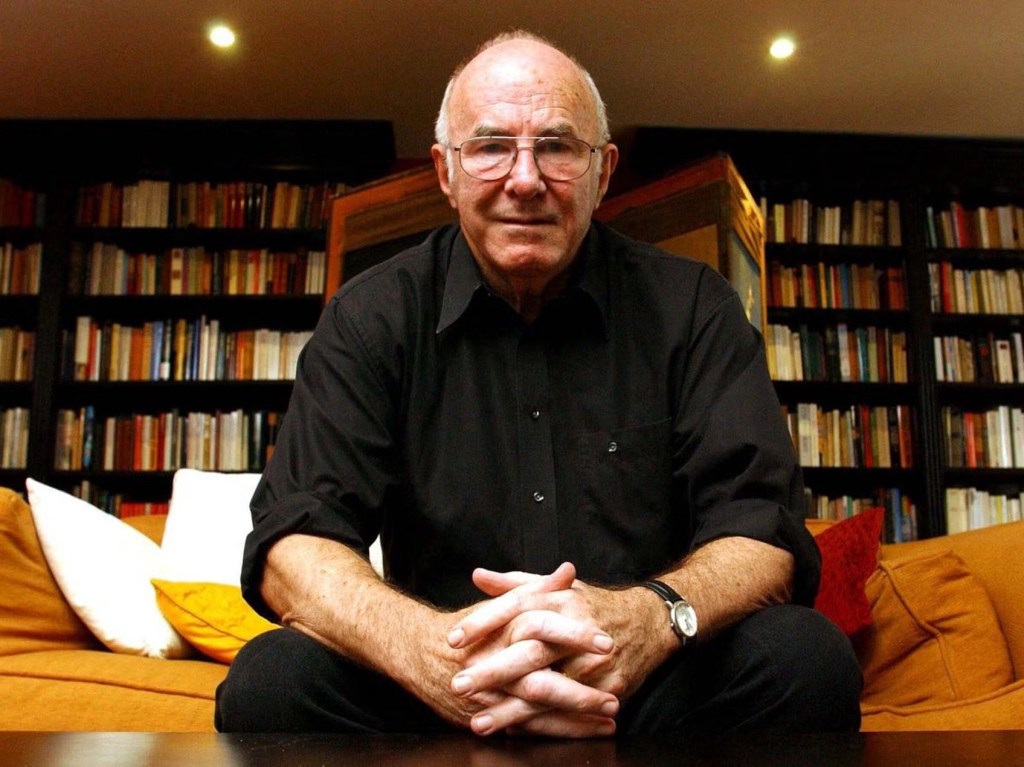
The great Clive James had such a deep love of music that he chose not to write or talk about it for fear of failing to do it justice. His knowledge of C17th music was encyclopedic.
Hugh Laurie is a very fine pianist.
James May, the TV presenter, is a keen pianist and a frequent concert goer.
Angela Merkel has Berlin Philharmonic season tickets for herself and her husband. Even when she was Chancellor, they would go to everything with no fanfare or pomp. They would simply show up, listen and leave.
I once saw Mark Rutte (Netherlands PM) at a performance of Bach’s St Matthew Passion. He sat in the front row, involved and visibly moved by the music.
French presidents Jacques Chirac and Francois Mitterand often went to L’Opéra de Paris. Mitterand prioritised the building of the Opéra de la Bastille as one of his Grands Projets.
Macron often attends concerts at the new Philharmonie concert hall in Paris.
The actor Simon Russell Beale was a chorister as a boy and remains a fine pianist.
Recent England cricket captain, Alastair Cook, was head chorister at St Paul’s Cathedral.
Matt Bellamy, lead singer of Muse, started his musical life as a classical pianist. Muse’s a cappella track “Drones” is a direct lift of the Benedictus from Palestrina’s Missa Papae Marcelli – niche!
Stanley Kubrick listened to an eclectic mix of classical music when he edited his films. His quirky soundtrack choices often came as a result of happy accidents during the process.
Sir David Attenborough is a recording nerd with a huge collection of CDs and records, I hear.
The late Barry Humphries, another Australian melophile.
And last but not least, King Charles III loves and knows music, as we all witnessed at his Coronation, which was planned around the music.
If you like classical music, you’re in good company and if you know of any more to add to my list, please do so in the comments.
 Toby the Tenor
Leave a comment