Part 1
The word is a catch-all for the music of serious composers, even the ones who are anything other than conventional, formal or conservative. Despite forging careers out of writing music that questions the formalities of classical music, Charles Ives and John Cage are themselves pigeonholed as “classical” composers.
Where did the term come from and when was it first applied to music? There are no prizes for knowing the word derives from Latin. “Classicus” denotes the top stratum of Roman society who were the landowners. We still deploy the word when we refer to the British class system.
In time, the Latin word came to denote anything that was of the highest quality. The Roman author Aulus Gellius ranked writers such as Demosthenes and Virgil as “classicus”. Come the renaissance, the term took on a more general meaning. Randle Cotgrave’s 1611 A Dictionarie of the French and English Tongues gives us one of the earliest extant definitions, translating classique as “classical, formall [sic], orderlie, in due or fit ranke; also, approved, authenticall, chiefe, principall”.
Soon the word came to define qualities of literature in two ways: that of 1. formal discipline and 2. a model of excellence. In France, the reign of Louis XIV(1638–1715) saw a cultural renaissance, by the end of which writers like Molière, Jean de La Fontaine and Jean Racine were considered to have surpassed the achievements of classical antiquity. They were thus characterised as “classical”, as was the music of Jean-Baptiste Lully and Jean-Philippe Rameau.
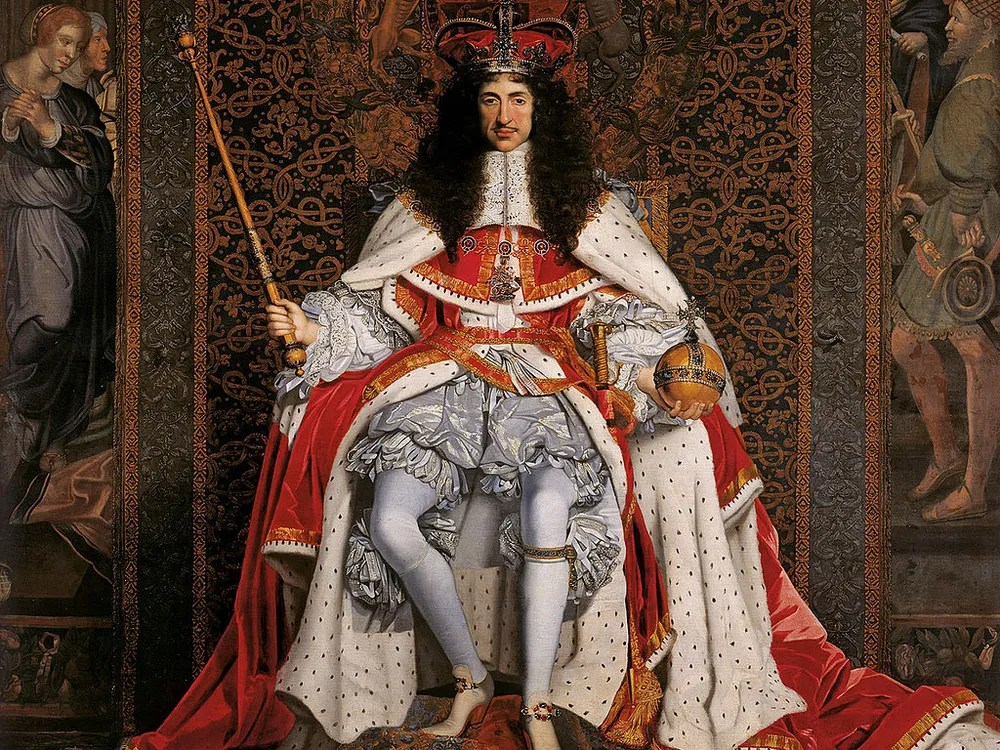
How did the word jump to Great Britain and the English language? My gut tells me it made the crossing with the court of Charles II after the Restoration, as he adopted all the cultural trappings of the French court for his own. Sheridan’s plays and, in time, Handel’s operas were deemed classical for both their formal discipline and their excellence.
The new music that came after Handel until Beethoven was characterised by the development of new structures allowing composers – Mozart, Glück and Haydn – to probe deeper psychological complexities. With sonata form, a cohesive architecture was established in which thematic and tonal argument could be explored while holding the audience’s attention for a movement’s duration. The longer a piece of music, the harder it is for the composer to maintain the audience’s interest. Conversely, the deeper a composer wants to explore complexity, the longer the piece will tend to be and, in kind, the more engineered the structure must be to sustain a sense of cohesion and orientation for the listener.
The state of the art structure for composers at the end of the C18th was sonata form. Its basic framework of exposition – development – recapitulation – coda formed the backbone of nearly all symphonies, concertos and sonatas for eighty years. The music of this period became known as “classical” music because it adhered to the strict formal qualities that were recognised to be both aesthetically complete and satisfying.
The term “classical music” began to spread into an umbrella term for all serious music towards the end of the C19th. In 1879 the British composer Charles Kensington Salaman, who was influential in his time, categorised Bach, Handel, Haydn, Mozart, Beethoven, Weber, Spohr and Mendelssohn as all being classical composers. From this point, the term was applied to all the composers we now categorise with the all-encompassing term, “classical”.
Apology, the above is more boggy than bloggy. If you’re still with me, thanks for hanging in there.
Tomorrow I will consider whether “classical” is the best word with which to categorise the music of all composers from Guillaume de Machaut through to Max Richter.
 Toby the Tenor
Leave a comment