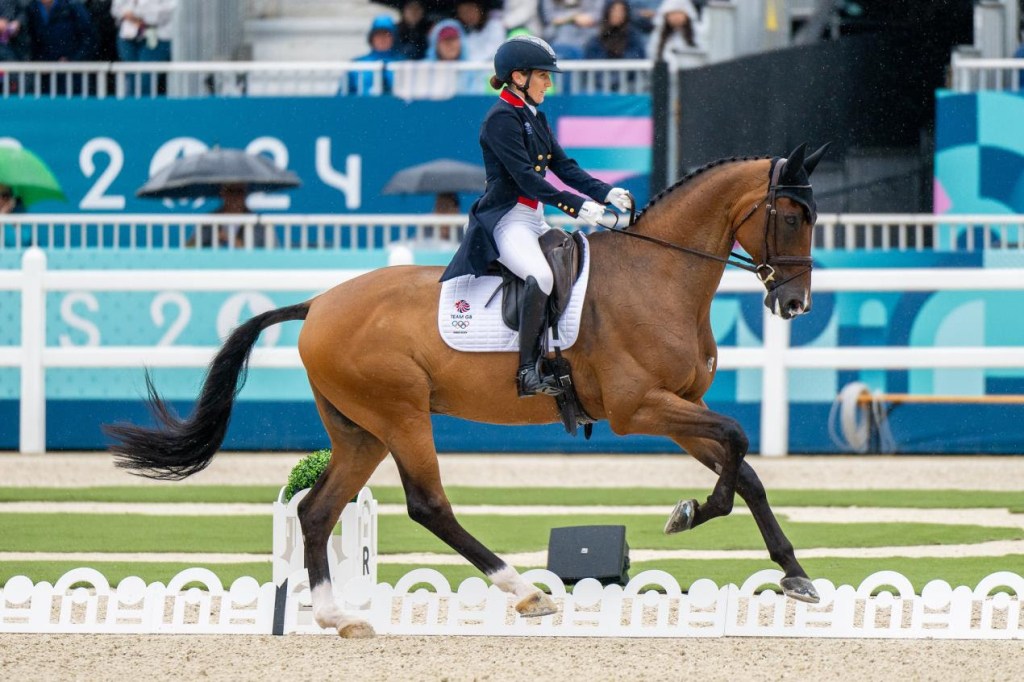
Richard Morrison of The Times wrote an excellent piece yesterday in his arts editorial column. He had done some digging around in the numbers of Team GB at the Olympics. His opening shot was that every one of the 65 medals our team gained in Paris cost £3.78m in funding from the Lottery and the Department of Culture Media and Sport. The total cost to train and send Team GB to the Olympics was £245.8m. “Put even more brutally,” he writes, “it cost an average of £17.5 million in public funding to produce each of our outright winners.”
Wow!
He goes on to ask if that level of funding for two weeks of sporting entertainment is reasonable and fair in the light of arts organisations who are being defunded by Arts Council England. He points to the two hockey teams which between them were funded to the tune of £22.8m, gained no medals and were knocked out early on. £22.8m is the same as the subsidy the Royal Ballet and Opera receives from ACE each year. For that, 1000 people are sustained in full time employment along with 2000 freelancers all working under the same roof, presenting 500 performances each year. This is all Richard’s work, by the way.
He goes on to point out that rowing, equestrian and canoeing teams together received £50m in subsidy, adding that rowing and equestrian sports are as exclusive as the Ritz Hotel.
Towards the end of his piece he considers the perception of accessibility to sport being different from the arts when it isn’t at all. A ticket to a Premiership football match is the same as a good seat at the Festival Hall or the Proms.
Richard continues by highlighting that when the word “elite” is deployed in relation to sport, we refer to the level of athletic excellence top flight sports people perform at. “To call athletes elite is a compliment”, he says. He then asks how the same word can be turned around and used to attack arts organisations as elitist, or the observation that it is supporting elite performers, a slur that leads to arts organisations being excluded from public funding.
“The weird reality is that although our most renowned musicians, actors and artists have had to train as long and hard as Olympic athletes, and are as talented in their respective fields, they must somehow pretend not to be exceptional at all, for fear of fostering what would be regarded as an unhealthy aura of privilege around their art forms.”
I’m quoting at length because these are balanced and important points to make at a time when the arts are being unfairly targeted as snobbish and exclusive, when they are anything but. The Times sits behind a pay wall so it is not available to everyone but Richard’s message should be available to all.
I disagree with Richard that the word elite carries a negative connotation when connected to top artists and performers. The problem is more complex in that we musicians tend to perform in anachronistic white tie and tails. When we speak about what we do, the words fail to be relatable for non-musicians and the music can be off-puttingly opaque for the uninitiated.
I know I know, I’m like a broken record but we musicians have to take responsibility for some of it. Having done so, we can make the changes that undermine any accusation of exclusivity.
Richard is right when he says arts organisations are perceived to be elitist, even if they are not in reality from the point of view of the performers and artists. From the point of view of the audience, yes, there is a case for claiming the organisations cater for certain strata of society. That comes back to education. Successive British governments have failed swathes of generations of school children by withdrawing music and arts from the state education system.
The solution is not to defund sport. The solution is to stop politely turning the other cheek when someone wrongly bad-mouths the arts as being elitist. Challenge them on the numbers and use the Olympic funding to undermine their argument. We performers will do our best to keep step with the zeitgeist by changing the way we dress on stage, present the work and talk about the art.
 Toby the Tenor
Leave a comment