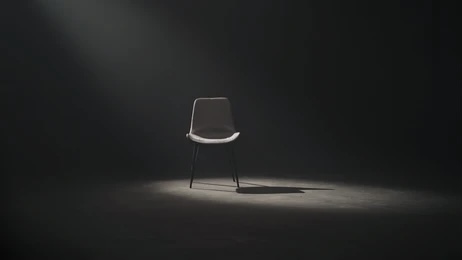
One autumn afternoon during the first term of my first year on the opera course at the Guildhall School of Music and Drama, our drama teacher, Patrick Libby, walked into the studio and announced we weren’t going to do improvisation games that week. He took a chair, carried it to the centre of the room, sat down and invited us to do the same.
Patrick was a lithe, elegant, slight man who had been a staff director at Glyndebourne, reviving many of their most successful productions in the ‘70s and early ‘80s. More than an opera director, he was a great teacher and seemed to enjoy helping us to find our stage feet.
On that day in 1993, he had a very simple purpose. “Gather round all of you. Get some paper and take notes if you want to. I’m going to give you a crash course in how theatre works.”
He proceeded to share with us all the tricks of his trade. “First, who is the most important person in the theatre?” The director? Silence. The stage manager? Silence. The managing director? He shook his head and remained silent. We had two hours of this so we could take our time.
Eventually someone asked “The guy on the door?”
“Finally.” Patrick laughed. “The person at the door has the measure of every person who enters the theatre by the stage door. They know by the way people speak to them who is who and who is respectful. In a theatre, respect is everything.”
“Next, what are steps called on stage?” Blank. “Treads. What about the blinds at the side of stage that prevent the audience from seeing into the wings?.. Flats. The screen across the back of the stage is called the?..”
“Backdrop?”
“Hurray. You got one. The part of the stage closest to the audience is referred to as the downstage. The part furthest is called the upstage. Upstaging, the naughty habit of moving behind a colleague in a scene is so-called because you move upstage when you do it. Stage left (the right side of the stage as viewed from the audience) represents dark, bad, complex, unresolved, negative aspects of story and character. Stage right (left from the audience) represents light, good, clarity, resolution, the positive aspects of plot and character. No-one knows why but they do.”
We began to realise this was a class in which to take notes and slowly lifted our pens and pads out of our bags.
“So, standing downstage, while it is a good place to be heard, is cold, weak, vulnerable. Standing upstage is empowered, confident, strong. Centre stage is neutral. Dynamic combinations of the these characteristics of stage geography can imply plot developments. Let’s take a character like Parsifal whose journey is from purity to wisdom through compassion. You can plot Parsifal’s journey visually with this architecture in his entrances, high points, exits and reinforce the audience’s sense of the narrative with visual subtext. Lighting.” He swerved into a new topic. “What do you know about it?”
A general shrugging rippled around the studio.
“Lighting is the undervalued element of scenography. It’s the invisible everything on the stage. If you can be seen, you can be heard. You’ll know if you can be seen because you will be blinded by the lights in your eyes. If you aren’t blinded by the lights, look on the floor and move to the nearest pool of light and adjust your shadow within it until you can see the profile of your head in the pool. You are now lit. It takes a little practice but once you get it you never look back.” He chuckled. “Literally.” A few seconds later we got his accidental joke.
“Okay, if the stage has a slope it is called…?”
“The rake.”
“Well done. Rakes help the audience to relate to the stage’s depth. It prevents up stage characters’ feet from disappearing for people in the stalls, it exaggerates perspective and makes it easier for directors like me to see and hear the chorus members who like to hang around at the back.”
Laughter again.
“Always be aware of what’s going on in the space above the stage called the…?”
“Flies?”
“Now we’re cooking. If technicians are in the flies accidents can happen. They can be attaching lights to bars with a spanner. If the spanner gets dropped it can be…” he slapped the palms of his hands in a swift motion and made a quacking sound. “…unpleasant. The same goes for trap doors. Always be aware of where they are and check they’re closed before walking on them. What else?”
He looked at the ceiling. “Never say” he mouthed the word Macbeth. “We call it the Scottish play. Tip your dresser and the person who does your make-up. Never wear your costume outside the theatre. Never never never. If you’re going to eat, put on a dressing gown to protect the costume from getting dirty unnecessarily.”
He went on like this with the lore of the theatre until he started to run out of relevant wisdom.
“What is the system called that relays the sound of the orchestra to the stage?”
“The tannoy?”
“Foldback. It’s called foldback and the microphones that capture the sound are called the pickup. The tannoy is the call system in your dressing room.”
All noted.
“Lastly, calls to the stage: they are always five minutes early so when you hear the call “Half hour until curtain up” that means there are thirty-five minutes until the performance begins. A call for ten minutes means there are fifteen minutes. Etcetera etcetera.”
The class drew to a close and we all drifted out of the studio and onto our next class. We never saw Patrick again.
Two weeks later, the news reached us that Patrick had died. He had been diagnosed with an aggressive form of cancer shortly before that last class. His response to his bad news was to tell no-one and do his best to complete the work with his students by equipping us with know-how that might increase our chances of surviving the perils of the stage.
I often think of that last class with Patrick.
 Toby the Tenor
Leave a comment