I ❤️ Paris (part 3)
Half of the operating costs of Paris Opera are met by government subsidy. By contrast, the subsidy Royal Ballet and Opera (RBO) receives from Arts Council England represents less than a sixth of its costs.
The effect of the different levels of subsidy touches on every aspect of the creative product of the two companies. Both are run as charities and therefore are not profit making. When working at Paris opera, during its previous administration, I observed the people charged with creating productions were not overly concerned by wasting money in the pursuit of their creative goals.
I remember a production in which the soprano, Kate Royal, was to be costumed in haute couture. Box upon box of black high healed shoes were brought in from Dior, Chanel, Louis Vuitton and so on. Kate would try them on and give a thumbs up to a pair. She’d wear them on stage and if they were not right she would try another pair – on a raked (sloped) stage, having the right shoes is important. Eventually, more boxes were brought in, more shoes were trialled and so on until Kate was happy. We found out later that all the shoes that had become scuffed in any way on stage were paid for out of the production budget. Thousands of Euros must have been budgeted for finding Kate the right shoes. That would never happen at RBO.
Wastage aside, the extra subsidy in Paris provides a financial buffer in which risks can be taken. In the list of stage directors for new work of each company there are a handful of names that appear on both lists. But there are names in both lists that you would not see in the other. Some of the differences are drawn along local talent lines and some differences can be observed because they suit the local taste. In the Paris list you will find Robert Wilson, Tobias Kratzer, Olivier Py, Claus Guth, Kristof Warlikowski among others. Some have produced worked at RBO but by-and-large their aesthetic is deemed to be too arthouse for London.
Parisian audiences now have a taste for challenging “pourquoi pas” story-telling. The risk-willing boss in Paris knows that if ticket sales fall from 95% of capacity to 85%, relatively speaking, that will be a drop in the ocean for the annual accounts of the opera house – by my rough calculation, a drop in seat sales of 10% for one new production represents a hit to the operating budget of 0.06%. It’s worth taking a risk for the reward of scoring a cause-célèbre that can be revived without risk over seasons to come.
For RBO, the hit is slightly less than double that because they are the company is considerably more reliant on ticket sales for their operating budget.
As I mentioned at the beginning of this three-parter, Paris audiences enjoy a scandal. They are happy, on occasion, to boo a production and then go and tell their friends it was a scandal. That will not stop their friends from buying a ticket, it might even encourage them because they want to be in the conversation.
In London, we may think we are open minded but my observation is that London audiences are more conservative, for better or for worse, than Parisian audiences. A poorly received production can be box office death in London and the RBO storage is full of scenery that didn’t get a second run out. Conversely, the talent of British directors for finding both inventive and inclusive ways to mount operas has brought about exquisitely conceived work.
As the UK sits between continental Europe and North America in many ways, so London sits at a halfway position between the funding model of the major European nations and that of the US where there is almost no government subsidy to speak of. The rest is raised from corporate sponsorship, private donors, ticket sales, restaurant/bar revenue and venue hire-outs for events. Private donors are incentivised with generous tax breaks for supporting good causes, including opera.
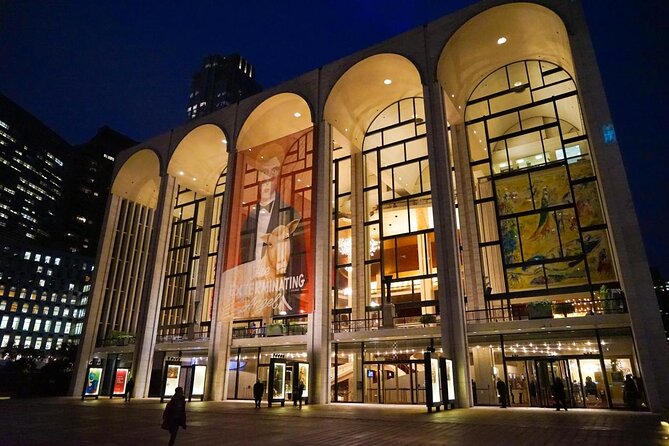
Fundraising in the US is complicated by the aging process of the individual donors who want to give to opera. The children of wealthy New Yorkers who donate to The Met Opera are not interested in supporting the passion of their parents. They consider opera to be old hat, a dinosaur. The result is that the productions have to be designed to appeal to an aging demographic.
The productions of William Kentridge and Simon McBurney, among others, have cut through the appetite for traditional-looking designs with high quality, high cost, avant-garde presentations. Slowly, The Met has turned around its dusty old-world identity by finding a seam of North American subject matter allied to a musical vernacular and high quality home-grown artists that is appealing to both older and younger audiences. The cost of the long, hit-and-miss search for the seam has been incalculably high. The young audiences are buying tickets but, generally speaking, they are not donating enough to make up the shortfall left behind by the disaffected or the natural wastage of the older generation.
All the above barely scratches the surface of the difficulties faced by RBO and the Met. Paris Opera sails along seemingly untroubled by the shifting sands of demographic, taste and funding to which New York and London are exposed, a situation that will only become more challenging as ACE continues to reduce its funding for RBO incrementally each year – a commitment agreed by RBO and ACE before Covid.
The fundamental difference between the three lies in the better provisioned arts education provided by French schools and a funding model less reliant on ticket sales, sponsorship and donations. The trend for decreased funding from ACE will force RBO to search for a style of home-spun audience-relevant opera. We can only hope government support for music education might generate interest among future generations.
 Toby the Tenor
Leave a comment