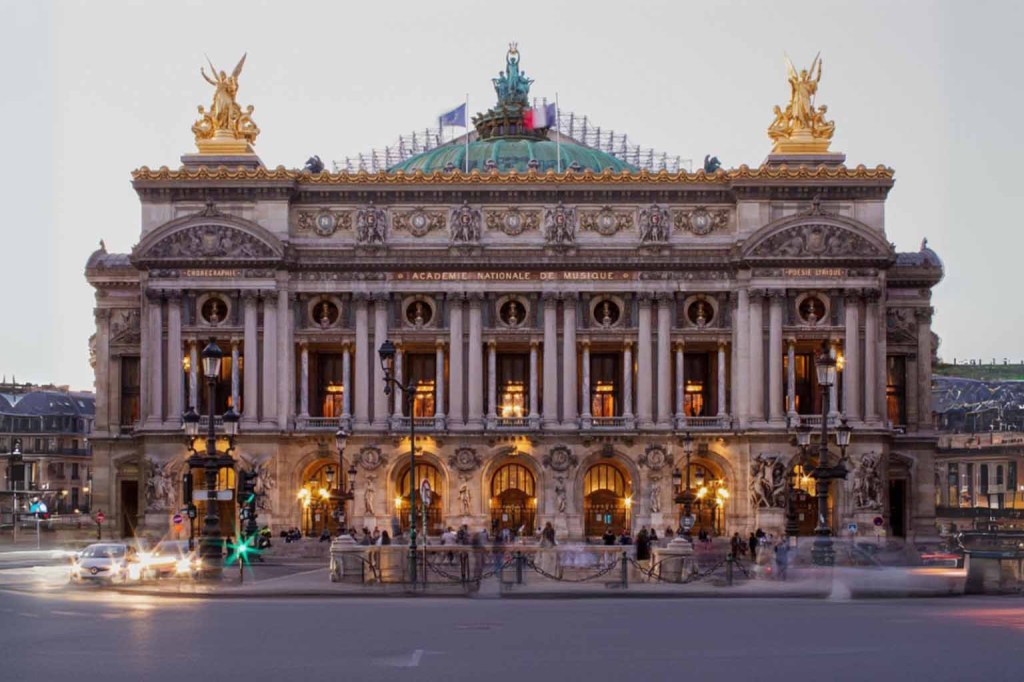
I ❤️ Paris (part 2)
State funding for opera in France is generous compared to that of the UK. The long grass of detail in understanding the specifics of the differences between the funding models is a gift for whataboutists who prefer to create open-ended confusion than to draw concrete conclusions.
For clarity reasons, I will set out comparisons, focusing solely on the flagship state opera companies because they are directly comparable in terms of their top line ticket prices, iconic theatres, world class standards and world famous ballet companies.
My purpose in doing so is to try to understand why opera in the UK is scrutinised for access and value for money in a way that opera in France is not.
The first thing to observe is that France does not have the same class system we have in the UK. The UK class system has come to be defined by the way we educate children up to the age of 18. In France they have a state education system that is centralised and secular. Arts education is offered and in the Baccalaureate system, school students from 15 to 18 have to study soft subjects as well as STEM – science, technology, engineering and maths. Private schools in France do exist but not in such a way that there can be said to be a two tier system. One glaring difference between the private education systems of France and the UK is that French private schools are day schools, whereas in the UK they are mostly boarding schools.
In the UK, the two tier education system has created a rift and social segregation that extends upwards through all generations. Opera has come to symbolise that rift. Some people who choose not to go to opera identify those who go to opera as being from a different social class from themselves. Of course, this is a symbolic difference and is not borne out in reality. There are many people in the UK who enjoy opera who were not educated at a private school.
What is true is that the private sector offers education in subjects that engage with and are advantageous for the understanding of opera: music and languages in particular. Since Michael Gove’s reforms under the Cameron government, state schools have been encouraged to strip away non-essential subjects from their curriculum, since when music and languages in state schools have become casualties.
The difference between the two schooling systems has a profound effect on the attitude to music in all levels of society, including children in education. This in turn affects the way politicians view music. In France, music education, and therefore music understanding, is available to all. In the UK it is only available to the privileged.
In France, the minister for culture regards part of his role to be custodian and protector of music for it to be available to all citizens.
Oversight for state funding for the arts in England and Wales has been handed to Arts Council England, a quasi-autonomous non-government organisation. Government support for music as entertainment in the form of opera and orchestral concerts has become a balancing act because music education only takes place in private schools. Politicians want to support the sector while acknowledging a vocal cadre who believe music is for the privileged few and should be paid for by them.
I acknowledge, all of the above is very much heresay and how I see it. Now for some numbers:
The Royal Ballet and Opera (the new brand name for the company that used to be called the Royal Opera) received £23.6 million of public funds in the 2022-2023 financial year. This funding represents about 15% of their total unrestricted income. In the same financial year, Royal Ballet and Opera generated £52.6 million from ticket sales – about 31.6% of its total costs.
In the same year, Paris Opera received state subsidy of €99.8 million (£84 million), nearly half of its €200 million annual budget. Revenue from ticket sales for Paris Opera was €70 million (£60 million).
For every €1 paid by the French tax payer to Paris Opera the company generated €0.7 in ticket revenue. For every £1 paid by the UK tax payer to Royal Ballet and Opera they generated £2.27 of ticket revenue. That is a massive difference in value for money afforded to the UK tax payer.
The shortfall between state funding plus ticket revenue and costs is met by donations from private individuals and corporate sponsors, hiring out the space for private events, revenue from restaurants and bars, merchandise and sharing costs with other theatres in co-produced projects.
The top price tickets for opera in London and Paris are comparable. The prices vary from production to production but the top price hovers around £/€230. At the other end of the scale the price difference is marked – €30 in Paris against £9 in London.
I’ve taken a tangent en route to my stated purpose today. How is the difference manifested in the style and quality of product from the two houses? I’ll come back to that tomorrow and for good measure I will consider the funding model at America’s flagship company, The Met in New York City.
 Toby the Tenor
Leave a comment