In an interview for my entrance to university, I was asked “What effect did the Industrial Revolution have on music in Great Britain?” To that point, I had never considered music in terms of it being influenced by history or vice versa. I was stumped. I umm-ed and ah-ed for what felt like ten minutes. I eventually offered an answer that was both shallow and inaccurate. After the interview, I felt such a deep sense of failure and humiliation that I never got the question out of my head.
The question festered until I was working in Leeds during Covid in 2020. I had taken my bike to Leeds so I could commute easily back and forth to rehearsal. On a sunny day off I went for a ride along the canal that joins Leeds to Manchester and Liverpool in the West and Castleford in the East. It follows the course of the River Aire in its western reaches.
After riding for about twenty minutes I came to an old brick mill where a sign advertised that it contained the Leeds Industrial Museum at Armley Mills. I walked in and bought a ticket and in doing so, like Alice, fell down a rabbit hole that was to become a fascination and continues to be today.
As I walked around the museum I reflected on John Milsom’s question in that interview in 1987. Walking around the museum, I could see no direct links to music in the shift from the waterwheels that drove the spinning machinery at the beginning of the industrial age to the steam turbines of the C19th.
Then I read about the rapid growth down the river in Leeds, where the newly built canal had allowed for the transport of coal from County Durham to power the turbines that drove the Industrial Revolution.
After realising the effect of the industrial age on musical Britain was sociological I saw its influence everywhere. The most profound change to life in Britain was the move from a rural, agriculture based economy to an urban, industrial economy. Towns and cities became hubs for the surrounding counties.
The Quakers and Methodists who developed the new industrial processes of the age, were as concerned for the welfare of the communities they built as they were for their profit margins. Schools and music societies were encouraged for the benefit of social cohesion. Town halls with impressive organs were built for events and concerts. Huddersfield Town Hall is an example of the draw of music in new urban growth. the home of the great Huddersfield Choral Society which, to this day, promotes loud and hearty performances of the great oratorios.
Perhaps more consequential than all of this was the rise of the new middle class that sprang out of the need for management and experts in the new technological age. Add the new stratum of society, with their bigger rooms in their now larger homes, and the economies afforded by simple advances like warehouses and manufactories in which new architectural developments allowed for wide open factory spaces for new mechanised construction lines. The profits rose as the economies of scale increased.
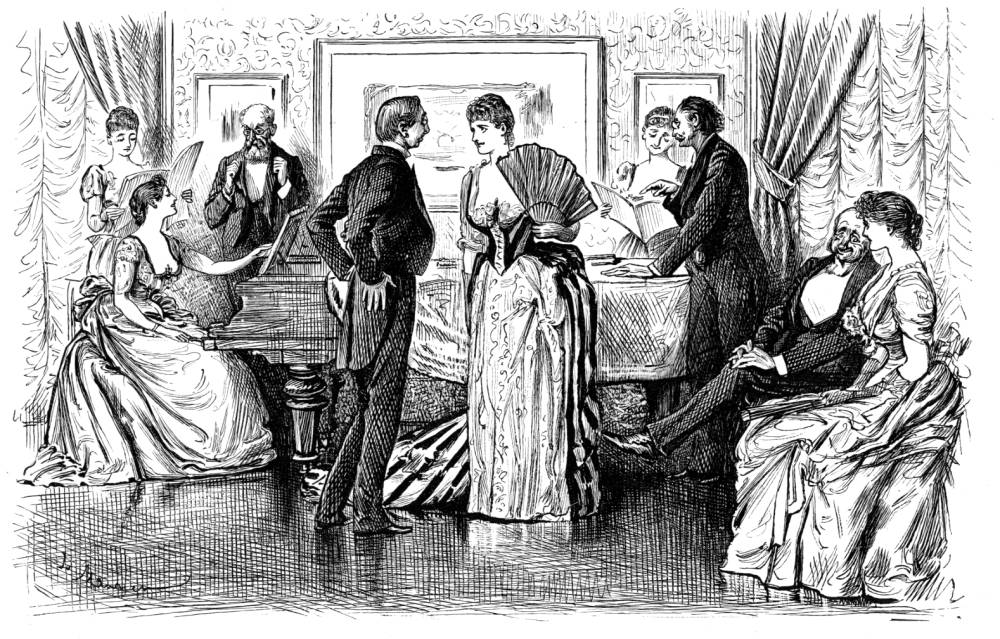
One of the new must-have status symbols of the industrial age was a piano. Soon the business of building pianos itself was industrialised and it wasn’t long before every middle class home had one. My own grandfather, Eric Squire, was the son of a piano builder in Kentish Town, London – I still see Squire pianos advertised for sale from time to time. In the patrician world of Victorian Britain, the role of piano player within each home fell to daughters and suddenly homes had home-grown entertainment.
Composers and music publishers responded to the new market for sheet music, playable at varying standards. The Victorian ballad became an opportunity for men, accompanied by their daughters, to show off their sentiments and their baritone voice in song.
The knock-on effects of these developments roll on and on. Women who could play the piano could get regular work as piano teachers, enabling them to live happily as spinsters if they so desired. Choral societies grew in size and standard. German composers, starting all the way back at the beginning of the industrial age, from Haydn to Beethoven to Felix Mendelssohn, beat a path to Britain to have their choral works commissioned by the new large and wealthy choral societies.
Oskar Adolf Hermann Schmitz’s observation that Britain was “Das Land ohne Musik” (the country without music) was old-hat even as he coined the phrase in 1904. Parry, Sullivan, Stanford and especially Elgar couldn’t write fast enough to keep up with the demand for their new works.
The industrialisation of music culminated with London becoming one of the world’s hubs for recording companies. British musicians and orchestras specialised in studio work, churning out and exporting reams of recordings all the way through the C20th. There was enough work to support four full-time orchestras and London became the European capital of the music business.
So, to John Milsom, I say thank you for the awkward silence as I fumbled for an answer in that interview in Oxford back in 1987. You spurred me to think differently about music. I now never hear a piece without wanting to know more about the time and place in which it was written.
This was the springboard that turned my passion for music into a passion for history, and where music sits within its wider context.
 Toby the Tenor
Leave a comment